Comparing Asphalt Repair Products: Sakrete Blacktop vs. QPR Patch vs. Rust-Oleum EpoxyShield
When a driveway or parking lot shows its first crack or pothole, the choice of repair product can mean the difference between a lasting fix and a recurring nuisance. Property owners and paving contractors alike often compare Sakrete Blacktop, QPR Patch, and Rust-Oleum EpoxyShield for their distinct formulations and performance traits. This article examines each product across multiple use cases, cost points, and application methods to help you make an informed investment.
What Makes Each Repair Product Unique?
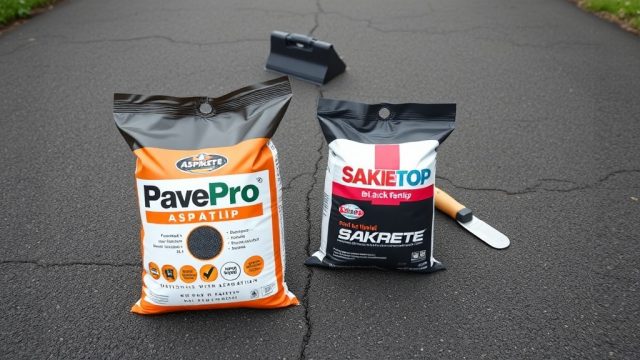
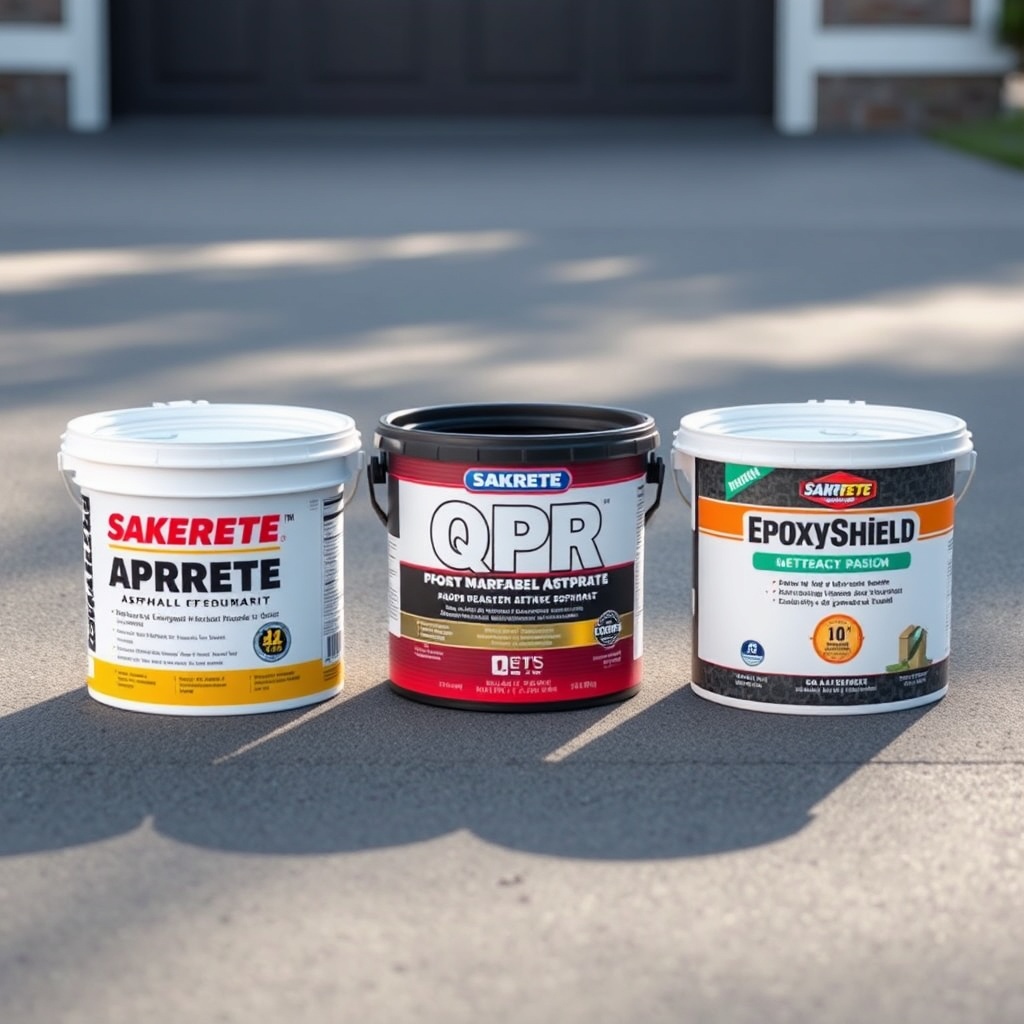
Sakrete Blacktop Repair is a polymer-modified, high-strength concrete mix designed for patching large potholes and deep cracks in asphalt. It sets in about two hours and reaches full cure within 24 hours, making it suitable for areas under moderate traffic. QPR Patch, short for Quick Patch Repair, is a hot-applied or cold-applied asphalt patch widely used by municipalities for pothole repairs; it remains flexible and adheres aggressively to existing pavement. Rust-Oleum EpoxyShield is a two-part epoxy coating primarily formulated for garage floors but often misapplied to outdoor asphalt cracks; its high bonding strength works well on clean, sound surfaces but lacks UV stability and flexibility for thermal expansion.
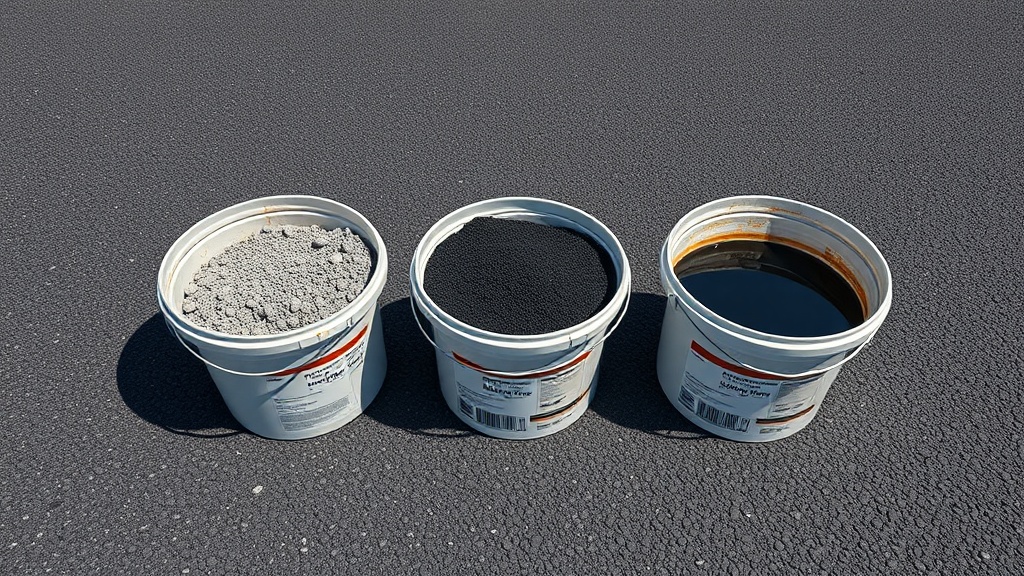
Key differences lie in material composition: Sakrete relies on cement and polymer reinforcement for rigidity, QPR uses asphalt emulsion and aggregate for flexibility, and EpoxyShield uses epoxy resin and hardener for extreme adhesion. For residential driveways, QPR is typically favored for its weather resistance, while Sakrete excels in structural repairs. EpoxyShield is best reserved for sealed concrete floors or cosmetic crack filling in sheltered areas.
Which Product Offers the Best Performance for Heavy Traffic?
For driveways that see daily vehicle loading of 3,000–6,000 lbs, performance hinges on compression strength and flexibility. According to manufacturer data and field tests, Sakrete Blacktop Repair achieves a compressive strength of 4,000 psi after 28 days, making it a solid choice for patch areas that bear constant weight. However, its rigidity can lead to edge cracking in freeze-thaw cycles if the base isn’t compacted properly.
QPR Patch, when applied hot (typically 300°F), bonds with existing asphalt and maintains flexibility down to 0°F, resisting thermal cracking. Independent tests show QPR patches lasting up to three years on heavy-traffic rural roads. Rust-Oleum EpoxyShield provides adhesion of over 600 psi to clean concrete but does not bond well to oily or loose asphalt; moreover, its low flexibility (elongation under 10%) causes cracking under vehicle loads above 2,000 lbs in cold weather. For most asphalt applications, QPR outperforms the others in high-traffic scenarios.
| Product | Compressive Strength (PSI) | Flexibility (Elongation %) | Peak Traffic Rating | Cost per sq. ft. (GBP) |
|---|---|---|---|---|
| Sakrete Blacktop Repair | 4,000 | Low (<5%) | Medium (cars, light trucks) | £1.90 |
| QPR Patch (cold-applied) | 2,800 | High (>25%) | Heavy (trucks, buses) | £1.15 |
| Rust-Oleum EpoxyShield | 8,000 | Very low (<10%) | Light (foot traffic, parked cars) | £2.60 |
Note: Costs are approximate per square foot at ½-inch thickness. QPR’s lower price combined with superior flexibility makes it the go-to for long-term road and driveway repairs.
How Do These Products Compare in Cold-Weather Application?
Cold weather can defeat many repair products if the material doesn’t bond or cures too slowly. Sakrete Blacktop Repair requires temperatures above 50°F for proper curing, making it unsuitable for winter patching in northern climates. If applied in near-freezing conditions, it can develop micro-cracks and lose compressive strength by up to 30%. QPR Patch is much more forgiving; its cold-applied variety can be applied down to 20°F, and hot-applied QPR works even at 0°F if the asphalt surface is preheated.
Rust-Oleum EpoxyShield demands temperatures between 60°F and 90°F for correct chemical crosslinking. Below 50°F, the epoxy thickens and may not cure fully, leaving a tacky surface that attracts dirt and fails within months. For UK winters, QPR is the clear winner, and many professional paving teams carry a propane torch to heat the patch for extra adhesion on frosty days.
Which Product Is Easiest for DIY Homeowners to Apply?
DIY friendliness depends on mixing requirements, drying time, and cleanup. Sakrete Blacktop Repair comes as a dry powder requiring water addition; mixing with a drill and paddle is straightforward but messy. The material can be troweled into shallow cracks or poured into deep holes. It dries to a grey colour that often doesn’t match black asphalt, requiring a sealcoat for aesthetics.
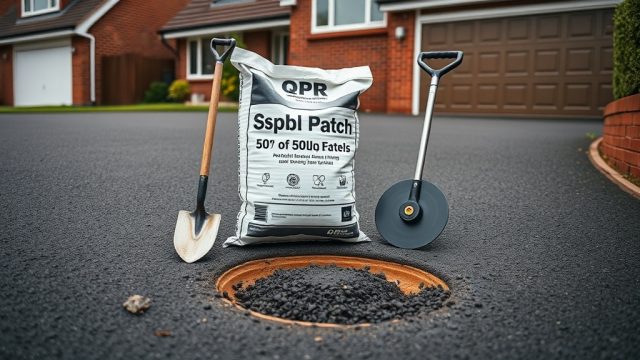
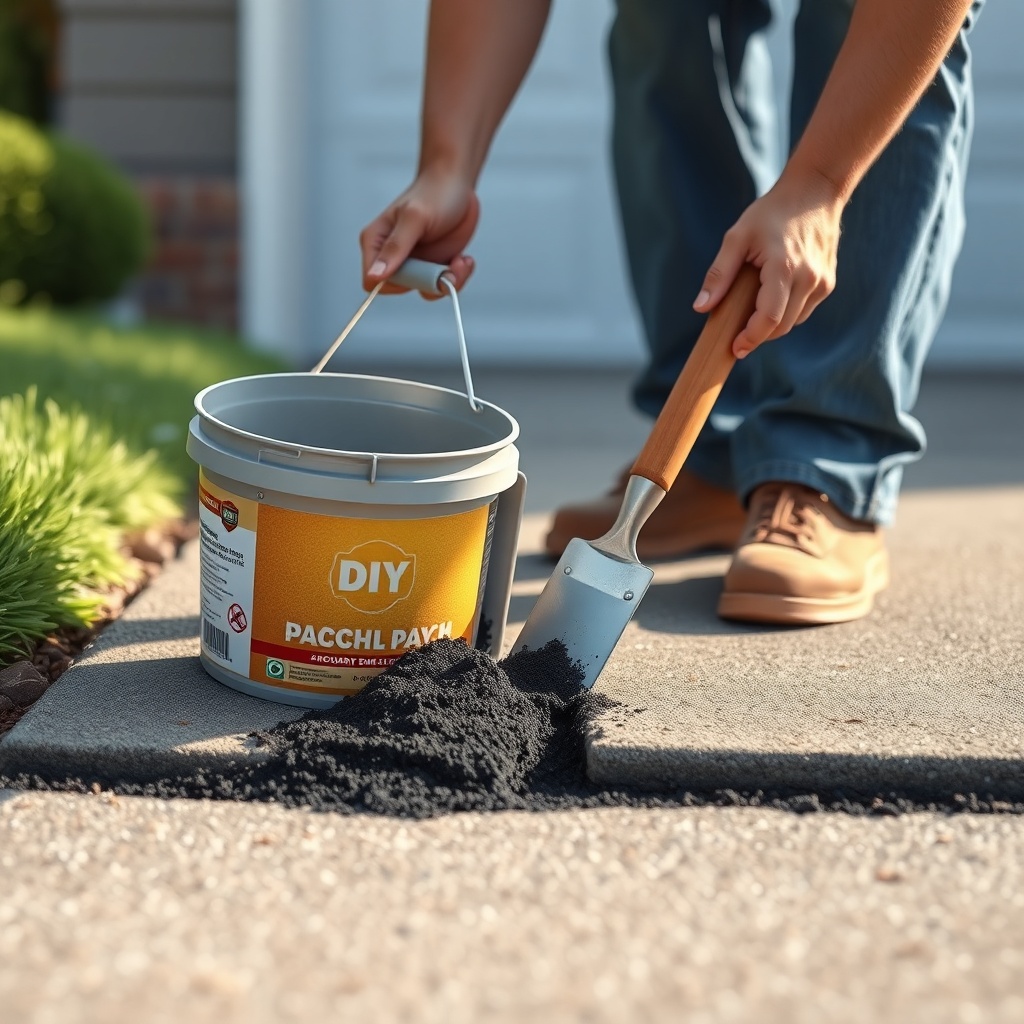
QPR Patch is sold in pre-mixed buckets ready for direct application. For small patching, you simply remove debris, compact the base, pour the patch, and tamp it down. No mixing, no water, and minimal tools. Cleanup involves wiping tools with mineral spirits. Rust-Oleum EpoxyShield requires precise mixing of resin and hardener in a 1:1 ratio, using a stir stick; any deviation ruins the batch. The epoxy runs thin and can drip on vertical edges, and cleanup requires acetone. Most homeowners find QPR the easiest, with Sakrete a close second for those comfortable mixing concrete.
What Is the Long-Term Durability and Maintenance Like?
Durability over three to five years reveals stark differences. Sakrete Blacktop Repair holds up well if the underlying subgrade is stable and drainage is good. Over time, it may crack along the edges due to thermal stress. Applying a quality sealcoat every two years extends its life significantly. QPR Patch, being flexible, generally outlasts rigid patches in temperature swings. Some contractors report QPR lasting five years on residential driveways before requiring renewal. The product’s ability to expand and contract with the asphalt prevents delamination.
Rust-Oleum EpoxyShield forms a hard, glossy surface that resists oil spills but becomes brittle under UV exposure. After one year of direct sunlight, it may yellow and crack. On outdoor asphalt, it rarely lasts more than 18 months before chipping begins. The epoxy also requires thorough surface preparation: all oil and grease must be removed, and the asphalt must be roughened, which complicates maintenance. For most homeowners, QPR’s balance of longevity and ease makes it the most cost-effective over a decade.
What Owners Say About These Asphalt Repair Products
Feedback from paving professionals and homeowners offers practical insights. On landscaping forums, users report that Sakrete Blacktop Repair works well for filling deep potholes (over 2 inches) on driveways, but many dislike its grey colour after curing. One contractor in Manchester noted that Sakrete lasted 18 months on a heavy-traffic cul-de-sac but needed crack sealing around the edges by year two.
QPR Patch receives consistently high marks for ease of use and flexibility. A verified buyer on a UK tool site wrote, “Applied QPR cold patch in November at 5°C—bonded perfectly. No cracking after two harsh winters.” Some users caution that the cold-applied version is less durable than hot-applied but still excellent for home use. Rust-Oleum EpoxyShield has a mixed reputation: praised for garage floor repairs but criticised for asphalt use. “It looked great for a month, then peeled off like plastic,” said one Brighton homeowner. Overall, QPR leads in owner satisfaction for outdoor asphalt repair.
Frequently Asked Questions About Asphalt Repair Products
Can I use Rust-Oleum EpoxyShield on an asphalt driveway?
While possible, it is not recommended. EpoxyShield is formulated for concrete and lacks the flexibility asphalt expands and contracts with temperature changes. It may delaminate within months.
Is QPR Patch better for potholes than Sakrete?
Yes, for potholes deeper than 1 inch, QPR’s flexibility and adhesion to existing asphalt make it superior. Sakrete can be used but risks cracking unless the base is perfectly compacted.
Do I need to sealcoat after using Sakrete Blacktop Repair?
Not immediately, but sealcoating after 30 days improves colour matching and protects the patch from UV and water intrusion, prolonging its life.
How long does QPR Patch take to set before driving on it?
Cold-applied QPR typically allows light foot traffic after 2–4 hours and vehicle traffic after 24–48 hours depending on temperature. Hot-applied sets faster: 1–2 hours.
What tools are required for Sakrete Blacktop Repair?
You need a mixing drill with paddle, a bucket, water, a trowel, and a tamper. For large areas, a concrete edger helps finish edges cleanly.
Can these products be used on concrete surfaces?
Only EpoxyShield is suitable for concrete. Sakrete and QPR are designed for asphalt; using them on concrete will result in poor adhesion and premature failure.