Why Does My QPR Patch Keep Falling Out? Troubleshooting Tips
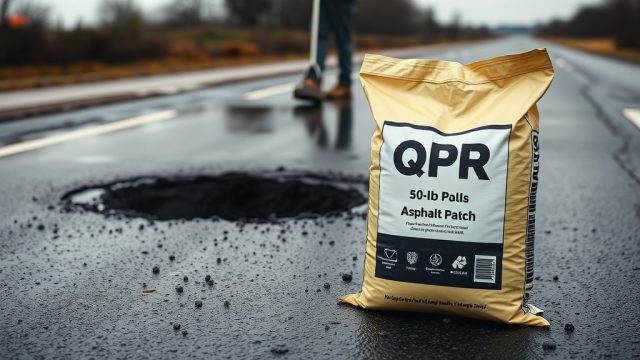
You’ve filled a pothole with QPR 50-lb Asphalt Patch, compacted it, and driven away—only to return the next day and find the patch sitting loose in the street or, worse, scattered in pieces. This is a common frustration among DIY driveway owners and small maintenance crews. The patch isn’t the problem; most failures trace back to three factors: insufficient compaction, cold or wet base conditions, or incorrect edge preparation.
In this guide, Mike Turner walks you through the six most frequent causes of QPR patch failure, ranked by severity, so you can diagnose the issue before your next repair. We’ll show you exactly which step in your process needs adjustment—whether it’s the application technique, the weather window, or the mix itself.
1. Did I compact the patch with enough weight?
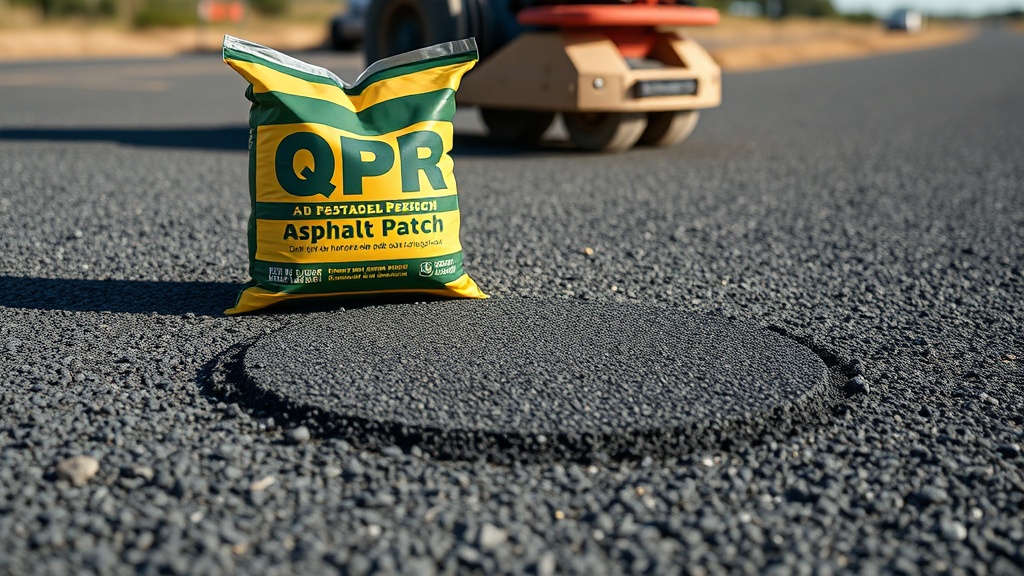
The single most common reason a QPR 50-lb Asphalt Patch falls out is inadequate compaction. This cold mix stays workable for weeks, but it only gains structural strength when compressed to about 92–95% of its maximum density. If you’ve been using a hand tamper or the back of a shovel, you’re likely leaving the patch at 80–85% density.
For a standard 4-inch deep pothole repair, you need a compaction force of at least 2,500 psi (pounds per square inch) at the surface. A hand tamper delivers roughly 200–300 psi. The physics gap is the culprit. Even a vibrating plate compactor (with a 4-hp engine and 90,000 N/m² centrifugal force) will achieve proper consolidation in three to four passes if you overlap each pass by half the plate width.
If the patch looks flush with the pavement right after you tamp it but settles or crumbles after a few vehicles roll over it, you’re under-compacting. The solution: use a plate compactor rated for asphalt (minimum 120 lb plate weight) and add the patch in 2-inch lifts (layers), compacting each lift fully before adding the next.
2. Was the base or surrounding pavement too wet or cold?
QPR ’s cold mix relies on a chemical emulsifier that needs a dry, above-40°F (4°C) surface to bond. If you poured the mix onto a pothole that had standing water, frost, or even damp gravel, the water molecules can prevent the asphalt binder from sticking to the aggregate and the existing pavement. The patch then acts like a loose rock in a wet hole—it displaces on the first truck that hits it.
Check the temperature at the pavement surface, not the air temperature. A 38°F air might mean 35°F pavement in early morning. If the aggregate is wet or muddy, you’re building a patch that’s only adhesive when it’s dry—problematic in spring or rainy climates. Use a clean, dry broom to remove debris and moist patches. Let the hole air-dry for several hours if necessary.
For cold-weather applications (down to 20°F), you can pre-warm the QPR bags in a heated storage area for 24 hours. But the real fix is to wait for ambient conditions above 40°F and three consecutive dry days before patching.
3. Did I cut vertical edges, not feathered edges?
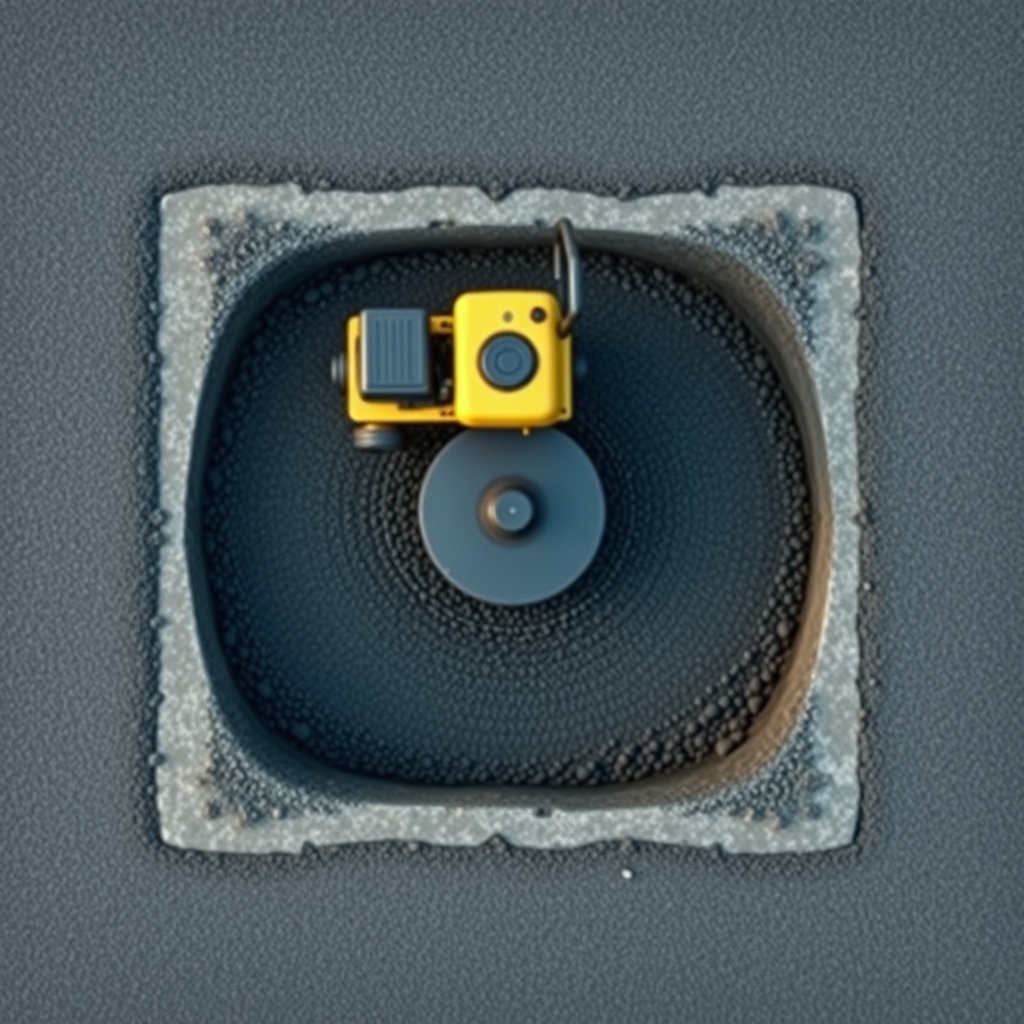
Many DIY patchers follow the “saw-cut square” method for potholes—cutting straight 90-degree walls. While that works for hot mix, QPR cold mix performs best with feathered edges. A straight vertical edge creates a sharp transition where the patch meets old pavement. Water seeps into that seam, freezes, and pushes the patch upward (frost heave). When the ice melts, the patch sits as a loose pancake on top.
Instead, use a small squaring shovel or a cold chisel to undercut the pavement edge slightly—about 10–15 degrees outward from vertical—so the patch’s edges interlock with the existing asphalt. The Laying QPR Asphalt Patch: Best Compaction and Application Techniques page covers the exact tool angle and edge profile for longer-lasting repairs. If you’re seeing regular edge breakage on your patches, this undercut step is your fix.
4. Did I leave air pockets or trapped moisture under the patch?
A patch that looks solid on top but breaks away from beneath is often a victim of trapped air or water. When you dump a full bag of QPR into a deep pothole and compact only the surface, you’re compressing the top layer while the bottom remains loosely stacked. The lower aggregate can settle over time, creating a void beneath the compacted crust. That void collapses under traffic, and the crust breaks into large flakes that pop out.
The fix: add the QPR mix in 2-inch lifts. For a 6-inch-deep pothole, that means three lifts of 2 inches each. After each lift, compact with a plate compactor or a heavy hand tamper (at least 20 pounds, with a 6×6-inch footprint). Check for uniformity—if the tamper bounces or sounds hollow after compacting, you still have air. Add a little more mix, then re-compact.
This technique is detailed in Using QPR 50-lb Patch for Pothole Repair: A Complete Guide, which includes a step-by-step sequence for deep repairs.
Severity Table: Diagnosing Patch Failure Types
| Failure Observation | Likely Cause | Severity Level |
|---|---|---|
| Patch collapses inward within a week | Under-compaction of lower lifts | Needs attention soon |
| Patch edges crack and flake off | Feathered edge not used, or over-compaction on edges | Needs attention soon |
| Patch sits flush but shifts laterally under turning wheels | Base was wet or frozen when applied | Usually not urgent (repack after drying) |
| Patch surface pocks and ravels into loose stones | Traffic applied before 30-minute set time or too cold | Usually not urgent (re-patch with proper timing) |
| Patch rises above pavement level (bump formation) | Over-compaction or too much mix in final lift | Needs attention soon |
| Patch completely displaces as one solid piece | Base separation due to water or poor adhesion | Needs attention soon |
5. Did I apply the patch too thick or too thin in a single lift?
QPR 50-lb Asphalt Patch is designed for lifts between 1.5 and 3 inches. If you spread a 50-lb bag over a pothole that’s only 1 inch deep, you’ve got too much surface area and not enough binder-to-stone ratio to hold together. The patch will dry out faster, crack, and fall out in small chunks. Conversely, if you pour a full bag into a hole that’s 8 inches deep without layering, the bottom half never gets compacted properly.
Calculate your fill volume: a 50-lb bag covers roughly 0.3 cubic feet when compacted. A typical pothole measuring 12 inches x 12 inches x 4 inches deep equals 0.33 cubic feet. One bag is perfect for that size, but only if you add it in two 2-inch lifts. For larger holes, you’ll need two or three bags depending on the depth.
Always mound the repair about ½ inch above the surrounding pavement before compacting, because the mix will settle to flush after compaction. If you level it exactly flush before compaction, you’ll end up with a slight depression that collects water—and that water will eventually break the patch loose.
6. Is the aggregate gradation wrong for the traffic level?
QPR ’s 50-lb patch uses a dense-graded aggregate with a maximum size of about ⅜ inch. This works well for light passenger vehicle traffic (cars, SUVs) but may not hold up under heavy truck traffic or high-speed turning loads on commercial lots. The small aggregate can break out of the binder matrix if the stresses exceed its internal friction capacity.
If you’re patching a loading dock, a bus turnaround, or a driveway that gets delivery trucks daily, consider whether the 50-lb QPR bag is the right product for that use. For heavy traffic, you might need a high-performance cold patch with larger aggregate and polymer-modified binder. Read QPR 50-lb Asphalt Patch Gradation: Understanding the Aggregate to compare the 50-lb gradation curve against heavy-traffic specifications. The article also explains how to interpret the sieve analysis data printed on every bag.
Even with the right gradation, if you’ve applied the patch on a raised edge or crowned surface, the patch may be too thin at the crown and get scraped loose by vehicle undercarriage. Check the patch thickness at the center—it should be at least 2 inches deep after compaction.
What Owners Say
Linda from Ohio: “I patched the same hole three times with QPR last fall. Each time it popped out after three weeks. Finally, I borrowed a neighbor’s plate compactor and did two lifts—hasn’t moved in six months. The bag instructions don’t emphasize compaction enough.”
Gary, maintenance supervisor at a church parking lot: “We switched from hot mix to QPR for winter repairs. The first batch failed because we poured it onto damp gravel. Once we started blowing the hole dry with leaf blowers and waiting for a 45°F day, patches lasted all winter. Temperature and moisture matter more than anyone talks about.”
These real-world stories echo what we see in the field: proper compaction and base preparation are non-negotiable. The QPR mix itself is fine—it’s the application environment and method that make or break the repair.
Frequently Asked Questions
Can I reuse QPR patch material that fell out of a pothole?
No. Once the mix has been compacted and then displaced, the binder has already set and the aggregate is coated with old, oxidized binder. If you try to re-compact it, you’ll get poor adhesion and it will fail again quickly. Always use fresh QPR from a sealed bag.
How long should I wait before driving on a QPR patch?
Wait a minimum of 30 minutes after compacting for light passenger vehicles. For heavy trucks or buses, wait at least 2 hours, and ideally 24 hours. The cleaner the compaction, the faster the binder sets. In hot weather (above 80°F), you can reduce waiting time to 15 minutes.
Does QPR work in below-freezing temperatures?
Yes, down to 20°F (-7°C), provided the surface is dry and the bag has been stored in a heated space (above 40°F) for 24 hours. At temperatures below 20°F, the binder becomes too stiff to bond. Never apply to frost or ice—that creates a slip plane.
Can I top-dress a failing old QPR patch with fresh mix?
Only if you remove the loose failing material first. Scrape or chisel out any patch that moves, clean the hole, and then treat it like a fresh repair. Adding new mix on top of loose old mix guarantees the same weak layer beneath.
Why does my QPR patch sink below the pavement after a few months?
This typically means the base wasn’t compacted enough, or you used too few lifts. Over time, the lower layers settle under repeated traffic. The only permanent fix is to dig out the patch, compact the subgrade (add gravel base if needed), and re-patch in proper lifts.
Is QPR 50-lb patch suitable for cracks or only potholes?
It’s intended for potholes and large surface depressions deeper than 2 inches. For narrow cracks (less than 1 inch wide), use QPR crack filler or an emulsified crack sealant. QPR cold mix in a crack will lose aggregate because the stone is too large to stay retained in a narrow gap.