What Exactly Is in the QPR 50-lb Asphalt Patch Aggregate Blend?
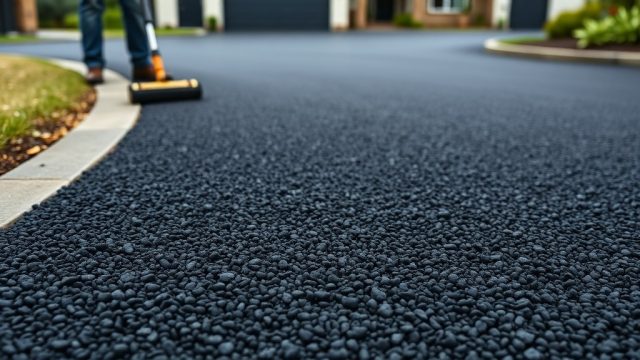
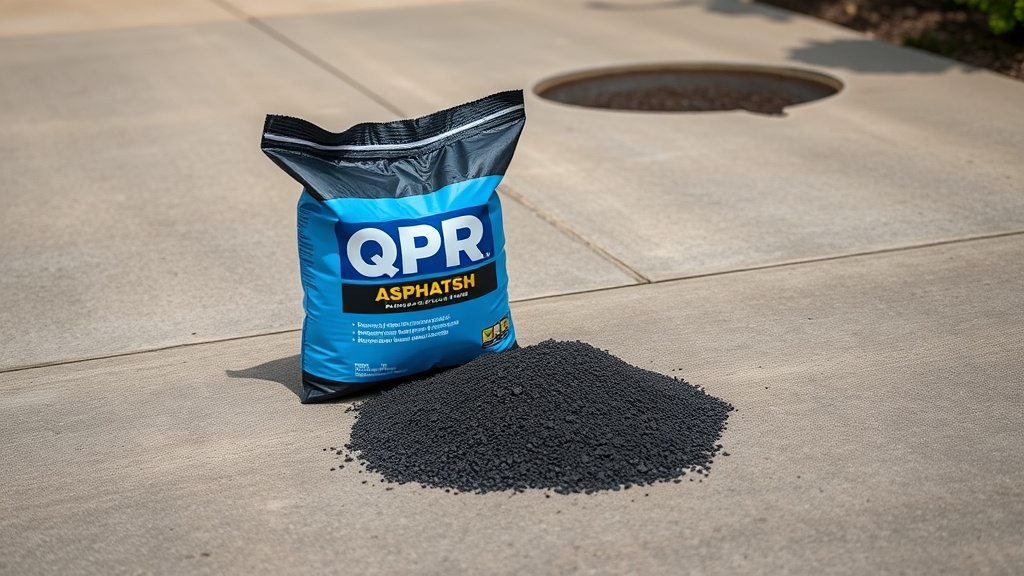
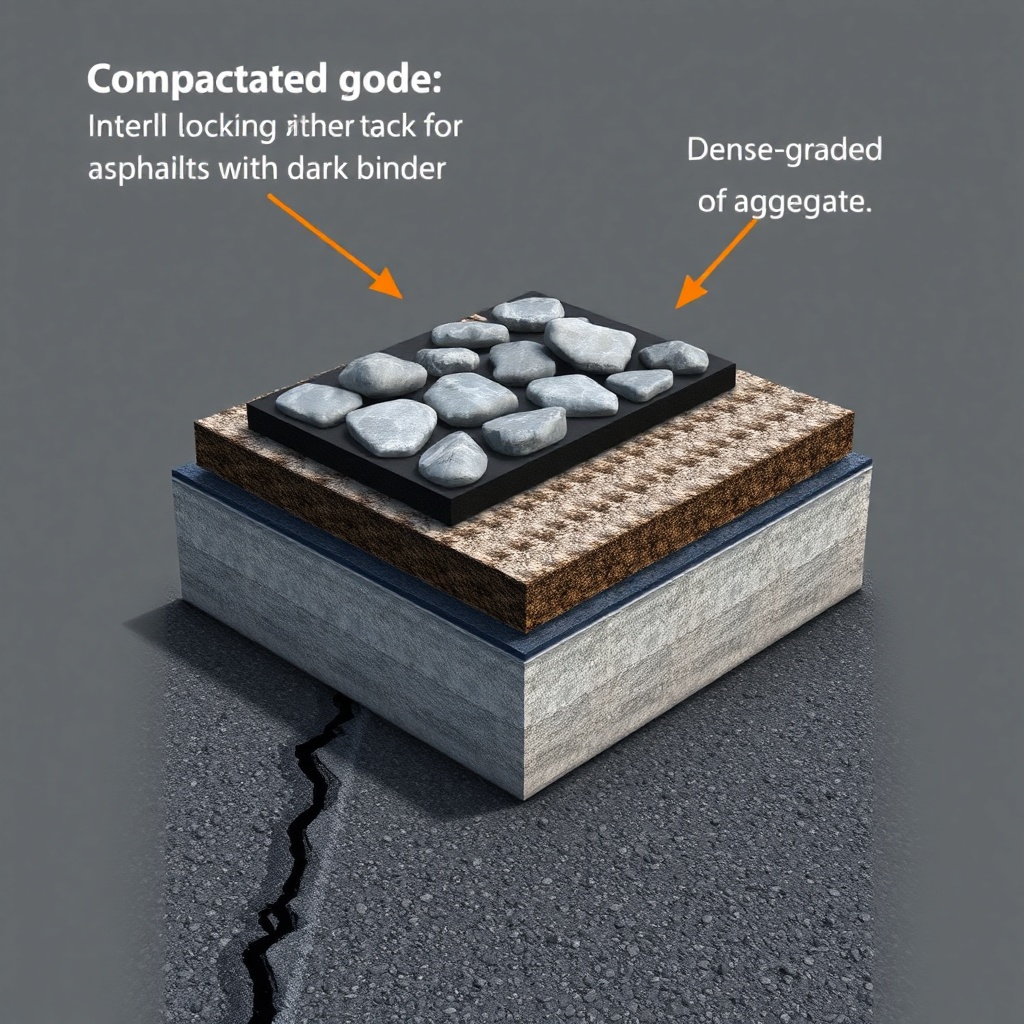
The QPR 50-lb Asphalt Patch is a cold-applied, polymer-modified asphalt repair material. The aggregate gradation is the backbone of its performance. Understanding the stone sizes and the blend’s particle distribution allows you to predict how it will compact, resist raveling, and bond with the existing pavement. The material uses a dense-graded mix design, meaning it contains a controlled range of particle sizes from fine dust to coarse aggregate, which creates a tight, interlocking matrix once compacted. The nominal maximum aggregate size in the QPR 50-lb bag is typically around 1/2 inch (12.5 mm). This is deliberate: large enough to provide structural strength for pothole and edge repairs, but small enough to allow proper compaction with hand tools without excessive void space.
For practical application, this gradation means the material will compact into a dense layer that sheds water and resists deformation under traffic. It is not a porous patch; the fines (sand and mineral filler) fill the gaps between larger stones. This is crucial for longevity. A poorly graded patch (all one size) would leave air voids that allow moisture infiltration and cause early failure. The QPR blend is designed to target a void content of around 3% to 6% after proper compaction—comparable to hot-mix asphalt. If you are looking at the bag, you will not see a detailed sieve analysis, but you can feel the consistency: it should feel slightly abrasive but not sharp, with a noticeable amount of fines that make it cohesive when compressed.
For more detail on the actual process of spreading and compacting this specific blend, see our guide on Laying QPR Asphalt Patch: Best Compaction and Application Techniques. Proper technique is critical to achieve the target density the gradation was designed for.
Is the QPR 50-lb Gradation Suitable for Deep Potholes?
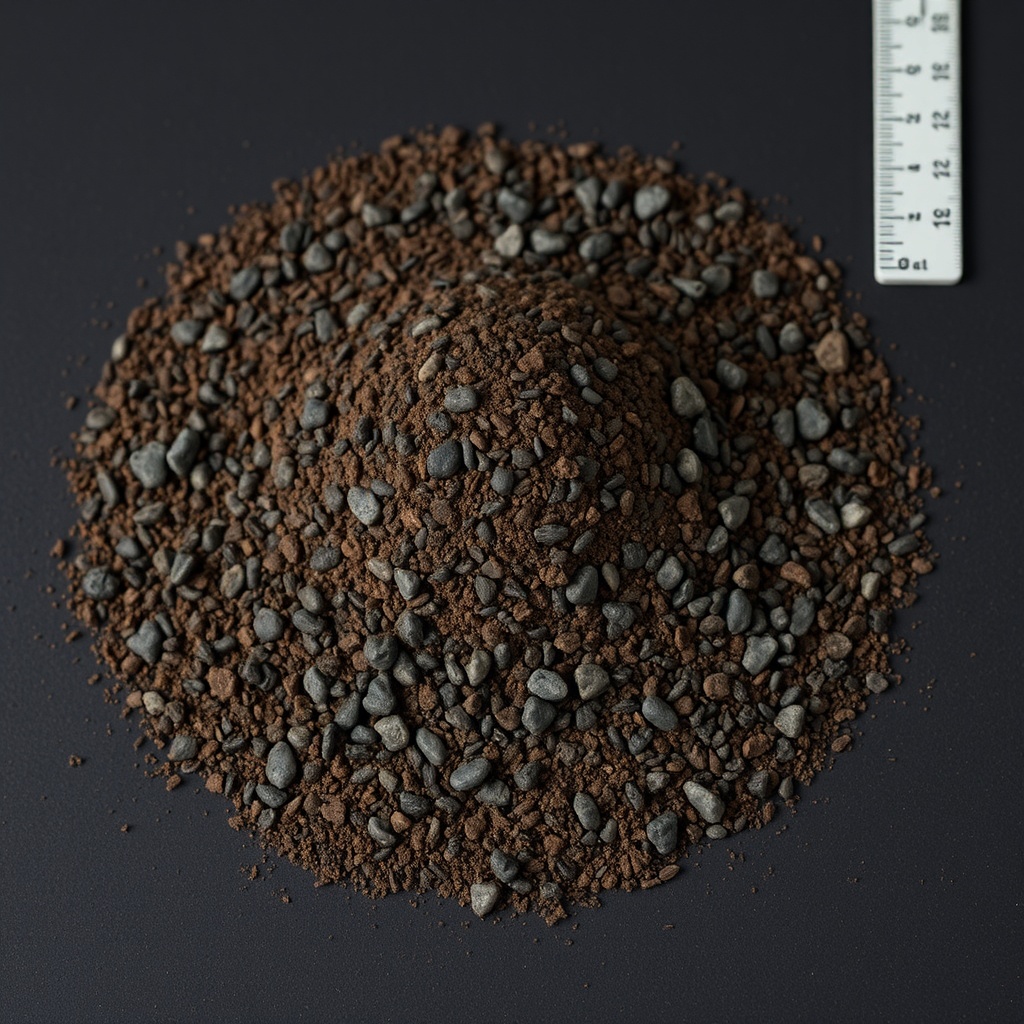
Yes, but with a key caveat. The dense gradation of the QPR 50-lb material (with aggregate up to 1/2 inch) is a good choice for potholes up to about 4 to 6 inches deep. The reason is compaction force. Deep potholes—say 8 inches or more—require significant compaction energy to achieve uniform density from the bottom up. With a hand tamper or vibrating plate, the top few inches get compacted well, but the bottom layers might remain loose. The dense gradation of QPR helps because the fines can settle under moderate pressure, but if you have a very deep cavity, you risk having a soft lower half.
A better approach for deep potholes is to fill in lifts. Do not dump the entire 50-lb bag into one deep hole. Instead, place the QPR material in 2- to 3-inch layers and compact each layer fully. This ensures the aggregate interlock is achieved at each level. The material’s gradation actually performs better in lifts because the fines from one lift can help seal the interface with the next. If you try to compact a 6-inch layer all at once, the bottom will have too many voids, and the patch will settle or crack out. For a complete procedure on multi-lift pothole repair with this product, see Using QPR 50-lb Patch for Pothole Repair: A Complete Guide.
| Pothole Depth | 4–6 inches |
|---|---|
| Recommended Lifts | 2 lifts (2–3 inches each) |
| Compaction Method | Vibrating plate compactor (preferred) or heavy hand tamper |
| Expected Surface Density | Good—target 95%+ of HMA density |
| Typical Service Life | 1–3 years depending on traffic |
| Symptom | Usually Not Urgent | Needs Attention Soon |
|---|---|---|
| Fine dust comes off the bag (excess fines) | Normal for cold patch; should not affect bond if compacted. | If the material is dry and crumbly, it may have lost its oil. Do not use. |
| Patch feels gritty after compaction | Normal texture; stones will lock under traffic. | If grit is loose and powder-like, the patch was not compacted enough. |
| Coarse aggregate (1/2-inch stones) visible on surface | Expected; indicates proper gradation. | If stones are popping out (raveling) within days, compaction was insufficient or the hole was not clean. |
| Patch surface looks smooth and almost like concrete | Too smooth may mean too many fines; possible future cracking. | N/A (usually just under-compacted with excess fines at top). Re-compact. |
How Does the Gradation Affect the Material’s Workability and Storage Life?
The aggregate gradation directly impacts how long the QPR material stays workable in the bag and once opened. Because the blend is dense-graded, there is less air space between particles. This means the volatiles in the cold patch binder (the solvents that keep it soft) evaporate more slowly. A bag of QPR can sit on a shelf for 12 to 18 months if kept sealed in a dry place. Once opened, you have about 30 to 45 minutes of good workability for a 50-lb bag in moderate temperatures (60°F to 80°F). In hotter conditions, the material stiffens faster as the solvent evaporates.
The coarse fraction—the 1/2-inch stone—creates friction during mixing and placement. This is a two-edged sword. It makes the material harder to trowel into a thin patch (like a crack fill), but it also makes it more stable once compacted. For large area repairs, the friction is an advantage because the material stays put on sloped surfaces and does not flow like water. If you need a material for shallow, wide repairs, you might want to consider a finer-graded cold patch, but for structural potholes and edge breaks, the QPR’s gradation is ideal.
Storage tip: Store the bag in a cool, shaded area. Heat accelerates the loss of the volatile oils that keep the aggregate coated. If the material becomes too stiff, it will not compact properly, and the gradation will fail to interlock. You cannot add solvent back in effectively. If your bag is old, test a handful: if it crumbles when squeezed, the binder has degraded. Discard it.
What Role Does the Filler (Mineral Filler) Play in the QPR Gradation?
Mineral filler—particles smaller than 200 mesh (0.0029 inches)—makes up about 4% to 8% of the QPR 50-lb blend. This fine dust is not just filler; it serves a structural purpose. Filler stiffens the binder, increases the mix’s resistance to permanent deformation (rutting), and helps fill microscopic voids between the larger aggregate. Without enough filler, the patch would be porous and water would infiltrate, leading to freeze-thaw damage. With too much filler, the mix becomes too brittle and may crack under traffic.
In the QPR formulation, filler also aids in adhesion. The fine particles increase the surface area that the binder must coat, so the oil content is carefully balanced. The result is a patch that, when compacted, has a slight “greasy” feel—this is the binder-and-filler paste. Too little binder leaves the stones dry and the patch will ravel (lose stones). Too much binder, and the patch becomes unstable, bleeding to the surface in hot weather. QPR’s recipe hits a middle ground. You can test this: after compaction, the surface should be dark and uniform, not shiny from excess oil, nor dusty from a dry mix.
The filler also helps the material “set up” faster. When compacted, the filler and binder combine to form a mastic that rapidly bonds to the existing pavement edges. This is why a properly compacted QPR patch can carry light traffic within an hour. The fine particles lock into the micro-texture of the surrounding asphalt, creating a chemical and mechanical bond that holds the patch in place.
For troubleshooting if your patch does not seem to be bonding, read Why Does My QPR Patch Keep Falling Out? Troubleshooting Tips.
Can You Sieve Test the QPR Blend at Home, and Should You?
If you are a meticulous contractor or an engineer, you can perform a basic sieve analysis to verify the gradation of a bag of QPR. However, for most owners, it is not necessary. The manufacturer (unique Paving Materials) consistently produces a blend meeting ASTM D6857 or equivalent cold-mix specifications. But if you want to confirm the aggregate size distribution, here is a simplified procedure:
- Take a representative sample of about 2 pounds from a bag. Wear gloves; the material is sticky.
- Heat it gently (do not burn) to soften the binder. Use a heat gun on low setting or place the sample in an oven at 250°F for 15 minutes. This allows you to separate the aggregate from the binder without affecting the stone.
- Wash the sample in a solvent (kerosene or diesel) to remove the binder. Be careful with fumes and flammability.
- Pass the dried aggregate through a set of standard sieves: No. 4 (4.75mm), No. 8 (2.36mm), No. 16 (1.18mm), No. 30 (600 micrometers), No. 50 (300 micrometers), No. 100 (150 micrometers), and No. 200 (75 micrometers).
- Weigh the fraction retained on each sieve.
What should you expect? For the QPR 50-lb blend, a typical sieve result (by percentage passing) might look like this:
| Sieve Size | Percentage Passing (typical QPR range) |
|---|---|
| 1/2 inch (12.5 mm) | 99–100% |
| 3/8 inch (9.5 mm) | 85–95% |
| No. 4 (4.75 mm) | 50–70% |
| No. 8 (2.36 mm) | 35–50% |
| No. 16 (1.18 mm) | 20–35% |
| No. 30 (600 µm) | 10–20% |
| No. 50 (300 µm) | 5–15% |
| No. 100 (150 µm) | 2–8% |
| No. 200 (75 µm) | 3–7% |
Take note: a simple table like this is not a substitute for a certified laboratory test, but it will let you quickly see if the bag has an imbalance—too much sand (large No. 4 retention) or too much dust (excess passing No. 200). In practice, minor variations in gradation between bags are common and do not affect performance if you compact correctly. The real issue is binder condition, not aggregate size. If your sieve test shows the aggregate is mostly 1/2-inch pebbles with little fines, that bag might be a bit lean on the fine fraction. For wide area patches, you could mix two bags together to smooth out the variation.
Does the Gradation Affect How Many Bags You Need for a Repair?
Yes, absolutely. The volume of a single 50-lb bag of QPR is roughly 0.5 cubic feet when dumped loose. After compaction, that volume shrinks by about 20% to 30% because the dense gradation settles into a much tighter arrangement. For a simple rectangular pothole—say 12 inches long, 10 inches wide, and 4 inches deep—the loose volume needed is about 2.8 cubic feet (12×10×4 ÷ 1728). Divide by 0.5 cubic feet per bag, and you need about 6 bags. But after compaction, that same hole will actually only consume about 4 to 5 bags because the compacted density is higher.
Here is a practical rule: for a pothole 4 inches deep, one bag (50 lb) will cover approximately 2.5 to 3 square feet after compaction. For a 6-inch deep hole, expect about 1.5 to 2 square feet per bag. If you over-compact (which is difficult to do with hand tools), you might get more coverage, but under-compaction will waste material. The dense gradation means that if you do not compact fully, you leave large air voids, and the material will not reach its specified density. This wastes binder and stone because the patch will fail prematurely—requiring you to redo the repair, using even more material.
For cost planning, a single 50-lb bag of QPR retails for around $12 to $18 depending on your location and supplier. For a typical driveway pot hole (3 square feet, 4 inches deep), you would spend roughly $36 to $50 on material. At that price, getting the compaction right is the best way to protect your investment.
If you are trying to estimate for a larger area, remember that the material does not flow like asphalt concrete. It must be placed, shaped, and compacted. For edge breaks or utility cuts, you might need a 4-inch lift. For thin overlays (1.5 inches), this product is too coarse; a finer polymer cold patch would be better. But for structural repairs, the 1/2-inch top size is optimal.
What Owners Say
Many property owners and DIYers have shared their real-world experiences with the QPR 50-lb asphalt patch. The consensus is that the material performs well when the user pays attention to the compaction step. One owner mentioned, “I patched a 6-inch-deep pothole in my gravel driveway approach. I used three bags and a hand tamper. After a year, the patch is still solid—no cracking. The key was cleaning the hole well and tamping each layer. The aggregate seemed to lock together nicely.” Another owner reported, “I used a bag for a shallow edge crack (2 inches deep). It did not bond well; I think the aggregate was too large for such a thin patch. I should have used a fabric mesh or a finer cold patch that fills cracks better. For potholes, it is great.” A third user commented, “I left a bag in my garage for two winters. It was still soft and workable when I used it this spring. The gradation seems to keep the solvent sealed in. Cost was about $14 per bag at the local hardware store.”
Frequently Asked Questions
1. What is the maximum stone size in the QPR 50-lb asphalt patch?
The nominal maximum aggregate size is 1/2 inch (12.5 mm). The blend is designed so that 99% to 100% passes the 1/2-inch sieve, meaning there should be no stones larger than that. In practice, you might occasionally see a stone slightly larger than 1/2 inch, but this is rare.
2. Can I use QPR for crack sealing?
It is not recommended for narrow cracks (under 1/2 inch wide). The coarse aggregate will not fit into the crack, and compaction will be inadequate. For crack sealing, use a dedicated crack filler or a polymer-modified sand mix. QPR is best for potholes, edge breaks, and depressions wider than 2 inches and deeper than 1.5 inches.
3. How thick should I place the QPR patch for best results?
The recommended minimum compacted thickness is 1.5 inches. Below that, the large aggregate cannot properly interlock, and the patch may debond. Maximum lift thickness is about 4 inches; for deeper holes, place and compact in multiple 2- to 3-inch lifts.
4. Does the gradation change if the material is old?
No, the aggregate size itself does not change with age. However, as the binder ages and the volatiles evaporate, the fine particles (filler and sand) can become less effective because the binder loses its ability to coat them. The material will become stiffer and crumbly, leading to poor compaction. Discard bags that are dry and brittle.
5. Is the QPR blend uniform across all bags?
In general, yes. The manufacturing process uses a batch blending system that ensures consistent gradation from bag to bag. However, if you buy from a supplier that stores bags outdoors in extreme heat or moisture, segregation can occur (coarse stones settle to the bottom). Before using, shake the bag gently to redistri bute the aggregate. This is good practice for any cold patch product.
6. Can I add sand or gravel to the QPR mix to extend it?
No. Adding any material changes the gradation. Adding fine sand would make the mix too dusty, reducing bond strength. Adding more gravel would increase void content and reduce durability. Use the product as is. If you need to cover more area, buy extra bags rather than diluting the blend.