Short Direct Intro
Every bag of Sakrete Blacktop is a pre-blended, performance-oriented asphalt patch and resurfacing material, but its real value lies in the precise recipe inside. Understanding the mix composition—aggregate gradation, binder content, and additives—transforms a routine repair into a durable, weather-resistant surface. This article breaks down exactly what’s in the bag, why each component matters, and what homeowners need to know before spreading it.
What Aggregate Gradation Does Sakrete Blacktop Use?
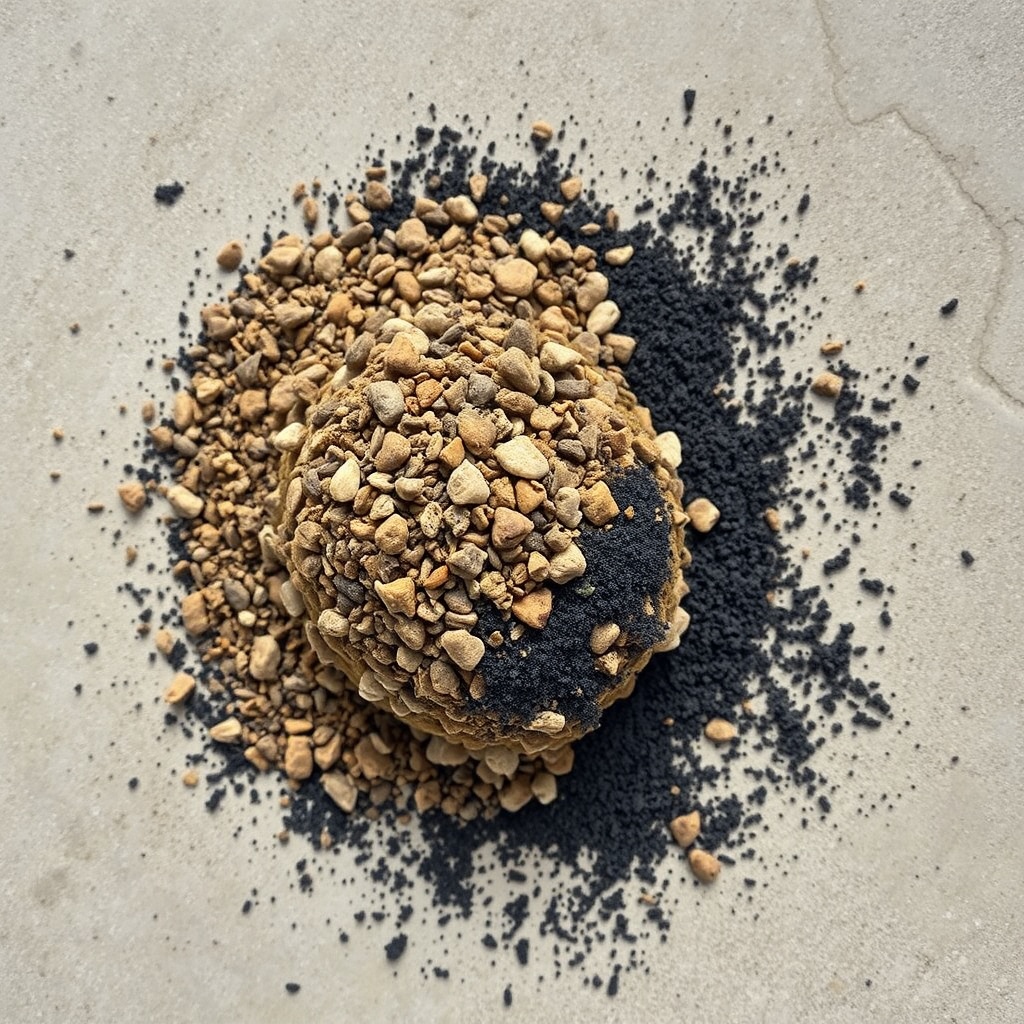
Sakrete Blacktop uses a dense-graded aggregate blend with particles ranging from 3/8-inch (9.5 mm) down to fine dust. The gradation curve is designed to achieve maximum packing density while leaving enough void space for the asphalt binder to coat every particle. According to the manufacturer’s technical data, the aggregate splits roughly as follows:
| Aggregate Size | Typical Percentage by Weight |
|---|---|
| 3/8-inch (9.5 mm) to No. 4 (4.75 mm) | 10-15% |
| No. 4 to No. 8 (2.36 mm) | 25-30% |
| No. 8 to No. 50 (0.30 mm) | 30-35% |
| No. 50 to No. 200 (0.075 mm) | 15-20% |
| Mineral filler (minus No. 200) | 5-8% |
This gradation ensures the mix can be compacted to a low air void content (typically 3-6%), which is critical for resisting water infiltration and freeze-thaw damage. The fine fraction (minus No. 200) includes limestone dust or hydrated lime, which improves adhesion between the binder and aggregate.
What Type of Asphalt Binder Is Used in Sakrete Blacktop?
The binder in Sakrete Blacktop is a performance-grade (PG) asphalt cement, specifically PG 58-28 or equivalent (suitable for typical U.S. climates). This binder has a high temperature grade of 58°C (136°F) to resist rutting in summer heat and a low temperature grade of -28°C (-18°F) to prevent cracking in winter. The binder content is roughly 5.5-6.5% by weight of the total mix, which is within the typical range for dense-graded hot mix asphalt used in driveways.
Sakrete adds a proprietary polymer modifier to the binder to improve elasticity and resistance to aging. This modified binder helps the mix remain flexible after compaction, reducing the formation of reflective cracks in patched areas. Unlike traditional asphalt cement, this formulation also has a slightly lower viscosity when cold, which aids in workability—a key factor for DIY users who must work the material quickly after opening the bag.
How Do Additives Affect the Performance of Sakrete Blacktop?
Beyond binder and aggregate, Sakrete Blacktop includes several additives:
- Anti-strip agent: Prevents moisture damage by improving binder-to-aggregate adhesion. This is especially critical in regions with frequent rainfall or heavy snowmelt.
- Fibers: Short cellulose or polyester fibers (0.1-0.3% by weight) reduce draindown during mixing and improve crack resistance after compaction.
- Hydrated lime (1-2%): Stabilizes the mix chemically and helps reduce water sensitivity.
- Coloring pigment (if applicable): For the standard dark black appearance, carbon black is added. Some regional variants include iron oxide for a slightly warmer tone.
These additives are pre-blended in controlled conditions at the factory, so the user doesn’t need to add any separate chemicals or liquids. This is a significant advantage over bulk asphalt that often requires on-site modification.
What Is the Moisture Level in Sakrete Blacktop Mix?
Sakrete Blacktop is delivered at a low moisture content—typically below 0.5% by weight. This is because the mix is designed to be used either cold (direct from the bag, after adding a small amount of water to activate the binder) or after heating to around 300°F (149°C) for hot-applied repairs. For cold applications, the manufacturer recommends adding 1-2 cups of clean water per 50-pound bag. This water is not for hydration (as in cement) but to temporarily reduce friction during compaction and improve coating of the binder.
If the mix sits in an unsealed bag in humid conditions, moisture absorption can increase up to 2-3%, which can cause clumping and reduced compaction. Always store bags in a dry location and use within 60 days of purchase. A moisture level below 1% ensures proper particle lubrication without diluting the binder.
How Does Sakrete Blacktop Compare to Traditional Hot Mix Asphalt?
| Property | Sakrete Blacktop (Bagged) | Traditional Hot Mix Asphalt |
|---|---|---|
| Binder content | 5.5-6.5% | 5-7% |
| Air voids (after compaction) | 3-6% | 3-8% |
| Aggregate maximum size | 3/8-inch | 1/2-inch to 3/4-inch |
| Polymer modification | Yes | Optional (costly) |
| Mix temperature at application | Ambient to 300°F | 300-350°F |
| Cost per 50-lb bag (typical) | $8–$12 | N/A (sold by ton) |
The smaller aggregate size in Sakrete Blacktop (maximum 3/8-inch vs. 1/2-inch for many hot mixes) makes it ideal for thin overlays and patch repairs, though it means less structural strength for full-depth driveways. For full installations, you should follow Installing a Driveway with Sakrete Blacktop: Step-by-Step Guide for proper preparation procedures.
Does the Composition Affect Compaction Effort Required?
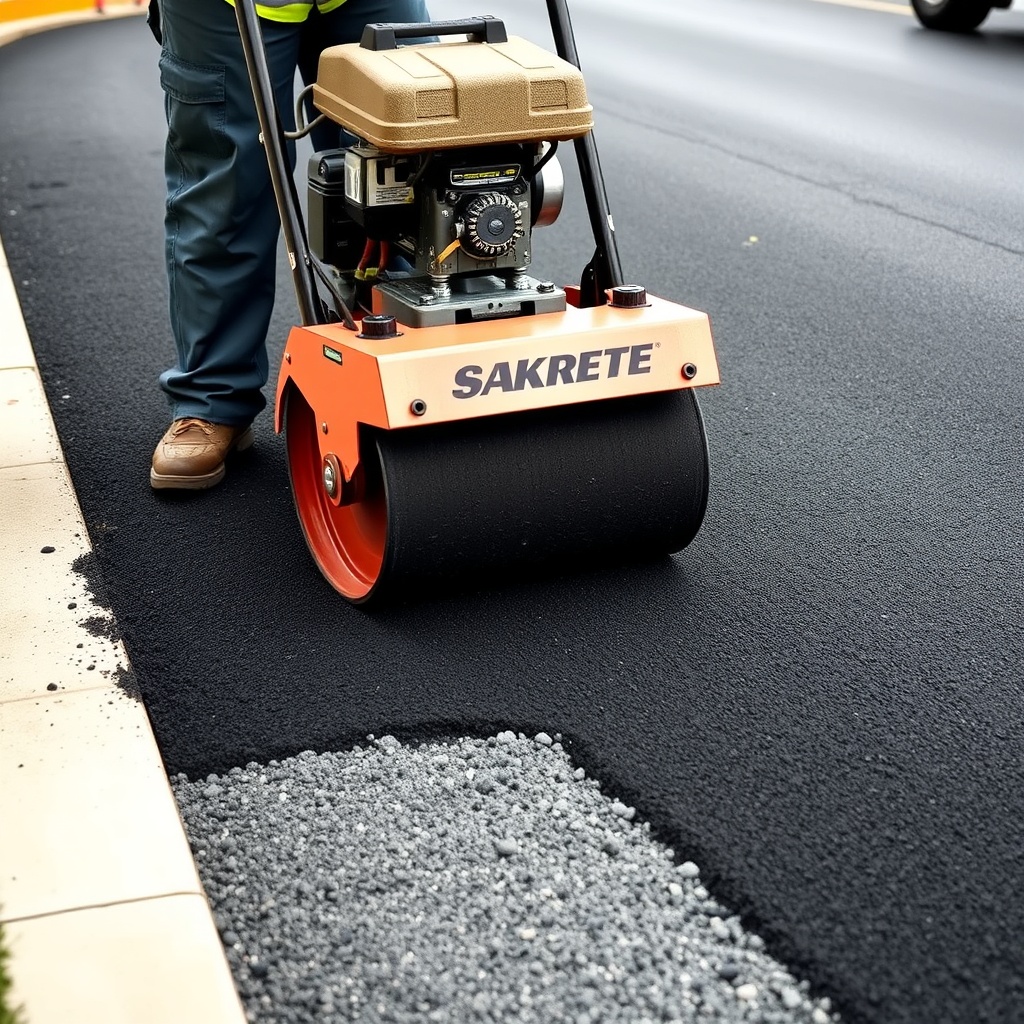
Yes, drastically. Because of the dense gradation and polymer-modified binder, Sakrete Blacktop requires heavier-than-average compaction effort compared to generic cold patch mixes. The mix has a lower void content before compaction (around 12-14%), meaning it’s already fairly dense out of the bag. To achieve the target 3-6% air voids after placement, you need either a vibratory plate compactor (minimum 4000 lbs force) or a hand tamper for small patches. Insufficient compaction results in high permeability and premature cracking. For specific compaction techniques, refer to How to Properly Compact Sakrete Blacktop for a Smooth Driveway.
The binder’s low viscosity at ambient temperature means the mix stiffens quickly when spread. You typically have about 20-30 minutes of workability at 70°F before the binder becomes too stiff to compact effectively. This time window shrinks on hot days and expands slightly in cooler weather.
What Owners Say
“The bag composition is consistent, but you need to follow the water addition carefully.”
Many homeowners report that adding too much water (more than 2 cups per bag) turns the mix into a sloppy paste that won’t compact uniformly. Users who measure water precisely find the mix packs down to a hard, durable surface.
“I appreciate knowing the aggregate size—no more gravel balls in my patches.”
Several owners comment that the 3/8-inch top size means they don’t get the large stones common in bulk asphalt, making it easier to trowel smooth. The polymer additive also gets praise for reducing edge curling during the first winter freeze-thaw cycle.
Frequently Asked Questions
Can I use Sakrete Blacktop for a full driveway overlay?
Yes, but it’s best for thin overlays (1-2 inches thick) over an existing sound asphalt surface. For deep repairs or new construction, use it with a compacted base of 4-6 inches of crushed stone. For full installation steps, read Installing a Driveway with Sakrete Blacktop: Step-by-Step Guide.
Does Sakrete Blacktop require sealcoating?
While not mandatory immediately, sealcoating after 90 days of curing extends lifespan. Use a coal tar or asphalt emulsion sealer compatible with polymer-modified surfaces. See Sealcoating a Sakrete Blacktop Driveway: Products and Methods.
How long does a Sakrete Blacktop patch last in cold climates?
With proper compaction (achieving 3-6% air voids) and a sealed edge, patches typically last 3-5 years in freeze-thaw zones. The polymer modifier helps resist cracking compared to non-modified cold mixes.
Can I add leftover Sakrete Blacktop to a hot mix asphalt batch?
No. Sakrete’s binder and additives are formulated for its own gradation. Mixing with another batch can alter performance and void ratios. Use leftover material for small patches within six months.
Does the mix contain any recycled asphalt (RAP)?
According to Sakrete’s 2024 material safety data sheet, the mix may include up to 15% recycled asphalt pavement (RAP) content, sourced from millings. This is consistent with industry sustainability standards.
What tools do I need for proper compaction?
A vibratory plate compactor weighing at least 400 lbs (or a hand tamper for spots smaller than 2 sq ft) is required. Rollers are not necessary for thin patches. See How to Properly Compact Sakrete Blacktop for a Smooth Driveway for detailed techniques.
Sakrete Blacktop’s composition—dense-graded aggregate, PG binder with polymer modification, and select additives—gives DIYers a reliable material for patching and resurfacing. Understanding what’s inside the bag helps you judge workability, compaction needs, and long-term performance. For best results, always follow manufacturer mixing instructions and complete compaction within the workability window.