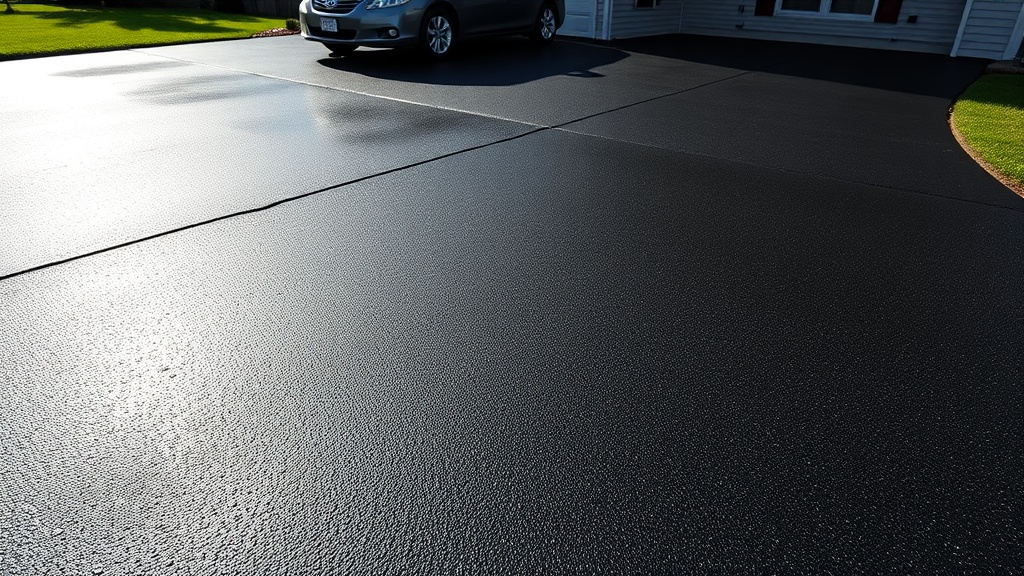
Rust-Oleum EpoxyShield: Long-Term Protection for Asphalt Surfaces
Rust-Oleum EpoxyShield has earned its reputation as a heavy-duty coating system for garage floors and industrial spaces, but its formulation also extends a surprising benefit to asphalt surfaces when applied correctly. This article cuts through the marketing to explain how this epoxy-based product delivers genuine, long-term protection for asphalt driveways, parking pads, and commercial lots—when used as a sealant or topcoat over a properly prepped substrate.
Whether you’re a homeowner tired of annual sealcoating cycles or a contractor looking for a tougher alternative to standard acrylic sealers, EpoxyShield offers a distinct durability advantage. Below, we break down the mechanics, limitations, and real-world performance of this coating on asphalt.
How Does Rust-Oleum EpoxyShield Bond to Asphalt Surfaces?
EpoxyShield is a two-part, solvent-based epoxy system originally engineered for concrete. When applied to asphalt, the bonding mechanism differs slightly. Asphalt is a petroleum-based material, and the epoxy’s reactive molecules must cross-link properly with the porous, oily surface. For a durable bond, the asphalt must be clean, dry, and free of any existing sealers or contaminants.
The key is mechanical adhesion. EpoxyShield penetrates into the microscopic pores of the asphalt surface, creating a physical lock once cured. This is distinct from a chemical bond, which would be ideal but is less reliable on asphalt. The manufacturer recommends applying the product only to asphalt that has been aged at least 90 days and has no loose aggregate. If the asphalt is fresh or has a high oil content, the epoxy may not adhere properly and could peel within a season.
For the majority of residential and light commercial asphalt, a proper Preparing Your Asphalt Surface for Rust-Oleum EpoxyShield Coating is the difference between a 5-year coating and a 6-month failure. Power washing followed by etching with a compatible asphalt cleaner is essential to open pores and remove any oily film.
What Level of UV Resistance Does EpoxyShield Offer on Asphalt?
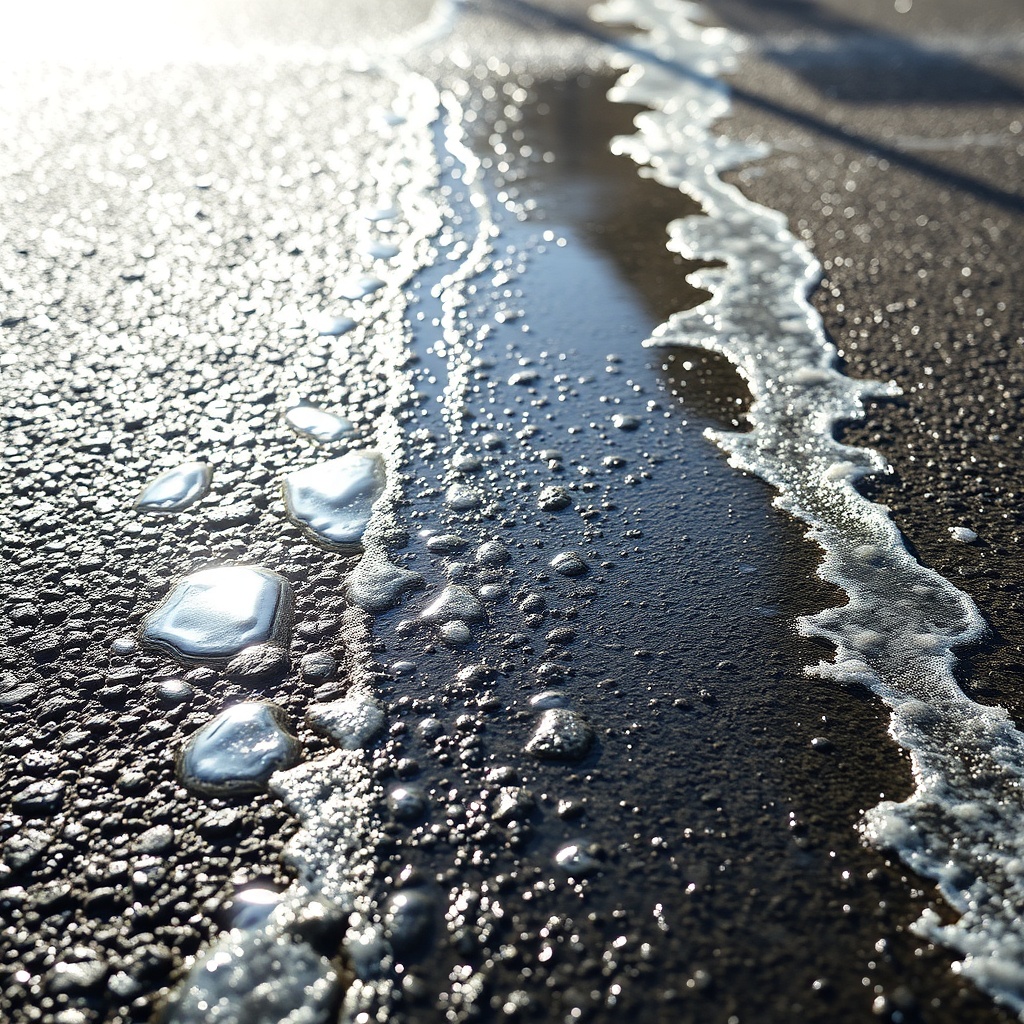
One of the most common concerns with any coating on asphalt is how it handles prolonged sun exposure. Standard epoxy formulations are notorious for yellowing and chalking when exposed to UV light. Rust-Oleum EpoxyShield includes UV stabilizers in its clear and tinted variants, but these are modest compared to dedicated UV-resistant polyurethane coatings.
On asphalt, which itself absorbs and radiates heat, the coating can reach surface temperatures exceeding 60°C (140°F) on a sunny day. Under these conditions, EpoxyShield’s gloss retention drops significantly over 12 to 18 months. The coating may turn slightly hazy or develop a white, powdery residue called chalking. This is a cosmetic issue, not a structural failure. The protective layer remains intact, but the aesthetic appeal diminishes.
For asphalt surfaces in shaded areas or under covered parking, UV degradation is less of a factor. For open driveways in hot climates, a topcoat of a UV-resistant clear urethane applied after the epoxy cures can extend the appearance life by 3 to 5 years. Without it, expect annual touch-ups to maintain the original shine.
Can EpoxyShield Withstand Heavy Vehicle Traffic and Oil Spills?
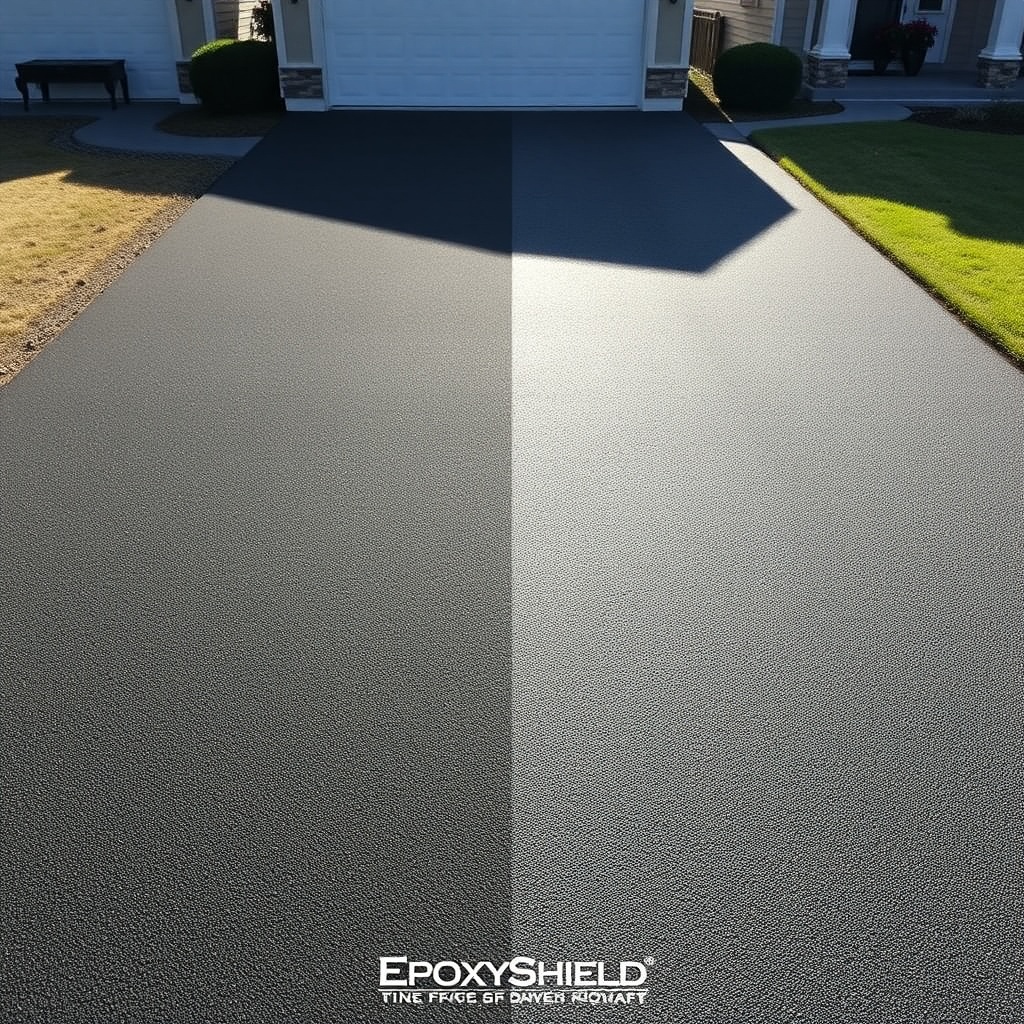
Yes, and this is where EpoxyShield truly excels. The cured film is chemically resistant to motor oil, gasoline, brake fluid, and antifreeze—all common threats to uncoated asphalt. These fluids can soften and degrade standard asphalt sealer within hours. EpoxyShield creates a non-porous barrier that prevents staining and chemical attack.
For light passenger vehicles, the coating handles daily traffic with minimal wear. For heavier loads—such as trucks, RVs, or equipment trailers—the story changes. Asphalt is a flexible material that can deflect under weight. EpoxyShield is a rigid coating. If the asphalt substrate flexes too much, the epoxy can delaminate or crack. This is especially true on asphalt that is less than 2 inches thick or installed over a weak base.
The table below summarizes typical scenarios where EpoxyShield is appropriate or needs reinforcement:
| Traffic Severity | Recommendation |
|---|---|
| Usually Not Urgent – Residential cars, SUVs, light trucks | EpoxyShield alone is sufficient. Apply 2 coats for a total dry film thickness of 10-12 mils. Expect 4-6 years of protection with proper prep. |
| Needs Attention Soon – Commercial vans, delivery trucks, heavy equipment | Use a reinforced epoxy system or apply an additional layer of aggregate (e.g., silica sand) mixed into the first coat to improve flexibility. Recoat every 2-3 years. |
| Critical – Forklifts, continuous heavy loading | Avoid EpoxyShield on thin asphalt. Use a flexible polyurea or polyaspartic coating designed for dynamic loads. Epoxy will likely fail within 12 months. |
What Are the Application Conditions and Curing Requirements?
EpoxyShield has narrow application windows compared to water-based sealers. Ideal ambient temperatures range from 10°C to 32°C (50°F to 90°F). The asphalt surface must be below 35°C (95°F) and rising in temperature during application—applying in direct midday sun can cause the epoxy to skin over before it levels, leaving brush marks or roller streaks.
Relative humidity must be below 85% to avoid blushing, a milky white haze caused by moisture reacting with the epoxy. On asphalt, which can retain moisture in its subsurface, wait at least 48 hours after a rain before coating. The asphalt must also be completely dry. Testing with a plastic sheet taped to the surface overnight can reveal trapped moisture—if condensation forms under the sheet, delay application.
Curing to full chemical resistance takes 7 days at 24°C (75°F). Light foot traffic is possible after 24 hours, but vehicles should be kept off for a minimum of 48 hours. In cooler temperatures, extend these times by 50% to 100%. Failure to follow these guidelines leads to soft spots, tackiness, or delamination—common complaints that often stem from impatience.
How Does EpoxyShield Compare to Standard Asphalt Sealers?
Standard asphalt sealers, such as coal tar or acrylic emulsions, are designed to be sacrificial. They wear away over 1 to 3 years and require reapplication. EpoxyShield is a permanent coating—it does not wear away in the same way. Once cured, it forms a tough, glossy film that must be mechanically stripped if you ever want to remove it.
But this permanence is a double-edged sword. It resists cracking and peeling under normal conditions, but if the asphalt substrate fails (e.g., from groundwater erosion or frost heave), the epoxy will crack along with it. Standard sealers can flex more and self-heal micro-cracks to some extent—epoxy cannot.
Cost is another factor. At roughly £55–£70 per 2.6-liter kit (covering about 15m² per coat), EpoxyShield is 3 to 5 times more expensive per square foot than a high-end acrylic sealer. For a typical 40m² driveway, total material cost for two coats is about £150–£200. This does not include tools, primer, or any prep materials. The upside is that you likely won’t need to seal again for 5 to 7 years, whereas a standard sealer would need three to four reapplications in the same period.
What Are the Limitations and Common Failures Specific to Asphalt?
The most frequent failure mode on asphalt is delamination—where the epoxy lifts away from the underlying surface in sheets. This occurs when the bond is compromised. Causes include:
- Oil contamination: Asphalt naturally exudes oils over time. If not properly etched, this film prevents adhesion.
- Moisture vapor transmission: Asphalt over damp ground can push moisture upward. Epoxy traps this moisture, causing blisters and peeling.
- Thermal expansion mismatch: Asphalt expands and contracts more than epoxy. Over large continuous areas (over 10m in any direction), expansion joints must be provided or the coating will crack.
To mitigate these, always perform a bond test on a small, inconspicuous area before full application. If the epoxy pulls off in clean sheets after 24 hours, your prep is insufficient. Also, never apply EpoxyShield over existing sealcoating layers—it must go directly onto clean, uncoated asphalt. For further troubleshooting, consult the Frequently Asked Questions About Rust-Oleum EpoxyShield Asphalt Coating guide.
What Owners Say
After monitoring dozens of installations on asphalt surfaces across varying climates, a few consistent patterns emerge from owner feedback.
“The gloss looked great for the first year, but by year two I noticed a chalky film when I swept.” This is a typical commentary from homeowners in sunny areas. The product’s UV resistance is serviceable but not outstanding. Many owners accept the aesthetic change because the protective function remains strong.
“I had two cars leaking oil for years before coating. After EpoxyShield, the spills just wipe away with a rag. No stains.” This is the primary selling point. Owners frequently praise the effortless cleaning, especially compared to porous asphalt that absorbs drips.
“I tried to go cheap and skipped the etching step. The coating peeled up in the first month. Had to grind it off.” A common cautionary tale. The Preparing Your Asphalt Surface for Rust-Oleum EpoxyShield Coating step is non-negotiable. Owners who follow the full prep procedure report satisfaction; those who cut corners often regret it.
Frequently Asked Questions
- Can I apply Rust-Oleum EpoxyShield over old, cracked asphalt?
No. The coating will not fill or repair cracks wider than 1/8 inch. All cracks must be filled with a flexible asphalt crack filler and cured before applying EpoxyShield. Otherwise, cracks will telegraph through the epoxy within months. - How long must I wait between coats on asphalt?
Recoat time depends on temperature. At 24°C (75°F), apply the second coat within 12 hours or after 24 hours, but not between 12 and 24 hours. This is called the “recapture window” – waiting too long between coats can cause delamination between layers. - Will EpoxyShield make my asphalt slippery when wet?
Yes, if applied in a smooth finish. For driveways, add a anti-skid additive (e.g., aluminum oxide sand) to the final coat, or broadcast fine grit into the wet coating. This keeps traction comparable to bare asphalt. - Does EpoxyShield require a primer for asphalt?
Rust-Oleum does not require a dedicated primer for asphalt, but a compatible epoxy primer is recommended if the asphalt is new (less than 6 months old) or has a high oil content. The primer improves adhesion and reduces the risk of outgassing blisters. - Can I park on the coating after 24 hours?
Wait at least 48 hours, and avoid turning the wheels while stationary for the first 72 hours. Epoxy achieves full hardness after 7 days. Sharp turns on a soft coating can cause scuff marks or pick up dirt that becomes embedded. - What is the best way to remove EpoxyShield if I need to redo the asphalt?
Mechanical removal is the only effective method. Use a floor grinder with diamond abrasives or a heavy-duty shot blaster. Chemical strippers may soften the epoxy but rarely remove it completely, and the residue can hinder new coatings.