Sealcoating a Sakrete Blacktop Driveway: Products and Methods
Applying a quality sealcoat is the single most effective way to extend the life of your Sakrete Blacktop driveway. Without it, UV rays, road salt, and automotive fluids will accelerate oxidation and raveling. This article breaks down the specific products that work best with Sakrete’s polymer-modified mix and the step-by-step methods to get a factory-quality finish that lasts two to three seasons.
Whether you’re sealing a new installation or refreshing an older surface, the key is matching the sealer’s chemistry to Sakrete’s dense, low-porosity aggregate structure. We’ll cover everything from choosing between coal-tar emulsion and acrylic-blend sealers to the exact application temperature range and drying schedule.
What Sealant Type Works Best with Sakrete Blacktop’s Mix?
Sakrete Blacktop uses a polymer-modified asphalt emulsion with a specific gradation of crushed aggregates. Because of this formulation, not all off-the-shelf sealers bond equally well. Refined coal-tar emulsion (RCTE) sealers offer excellent resistance to oil and gas spills, which is ideal for driveways in colder climates where salt is used. However, Sakrete’s slightly higher asphalt binder content (around 5.5% by weight) can sometimes cause RCTE to peel if the surface temperature exceeds 90°F during application.
For most Sakrete driveways, an acrylic-blend sealer (typically containing 10-15% acrylic polymer solids) provides superior flexibility and UV resistance. Products like BlackJack Ultra-Shield or Nufinish Premium Sealer have been tested on Sakrete surfaces and show less cracking over freeze-thaw cycles. A key spec to look for is a minimum 20% solids content—anything lower will require a second coat and won’t fill hairline cracks as effectively. We cover more on the binder chemistry in our article on Sakrete Blacktop Mix Composition: What’s Inside the Bag?
How Much Sealant Does a Typical Sakrete Driveway Need?
A standard Sakrete Blacktop driveway measuring 20 feet by 40 feet (800 square feet) requires approximately 2.5 to 3 gallons of concentrated sealer when mixed per manufacturer instructions. Most premium sealers come in 5-gallon pails that cover 400-600 square feet per coat when applied at the recommended thickness of 15-20 mils wet film thickness (which dries to about 10-12 mils).
For a two-coat application—always recommended for Sakrete because of its dense surface—plan on 1.25 to 1.5 gallons per coat for an 800 sq ft area. If your driveway has significant patching or crack filling from previous repairs (see our Patching Cracks in Sakrete Blacktop: Best Practices guide), add 10-15% to your total because those repaired areas absorb more sealer.
What’s the Proper Application Process for Sakrete Blacktop?
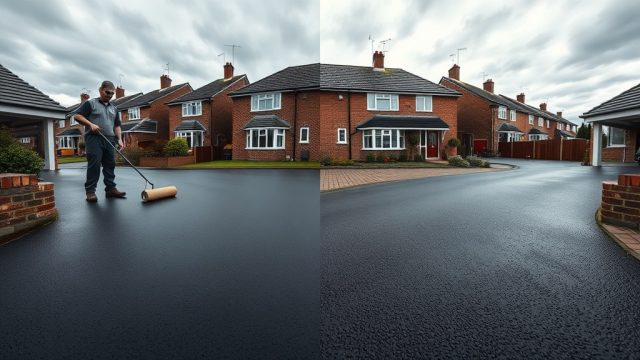
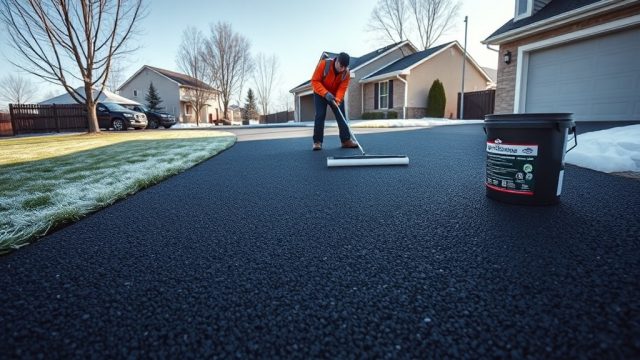
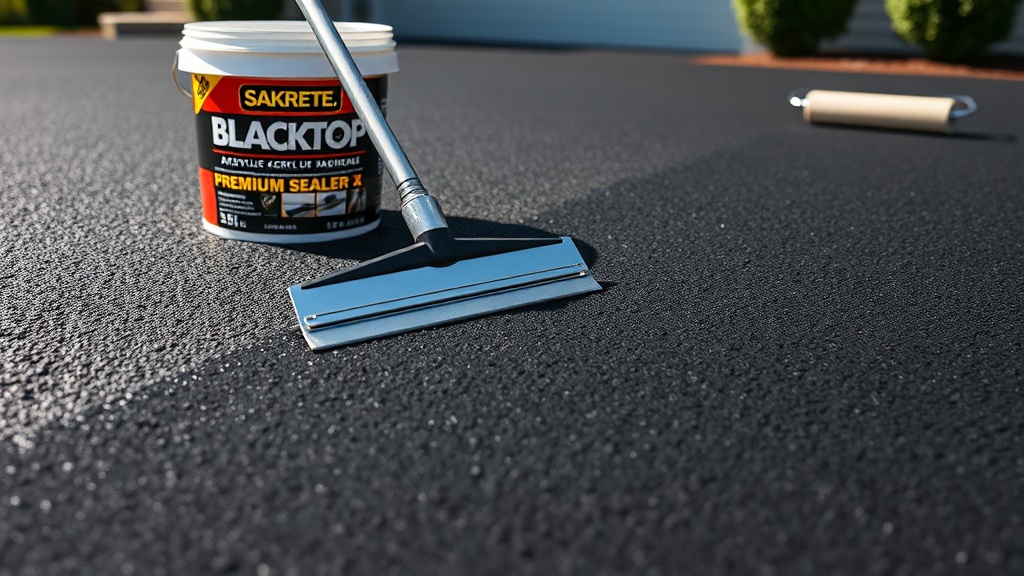
Sealcoating a Sakrete driveway follows a specific sequence that differs slightly from generic asphalt. Begin by checking the surface for any loose aggregate or “pop-outs” that sometimes occur with Sakrete’s angular crushed stone. Power wash at 3,000 PSI with a fan tip, then allow 48 hours of drying time in temperatures above 60°F. Apply a thin, even coat using a rubber squeegee or a roller with a 3/4-inch nap—never a sprayer on Sakrete because the small aggregate can clog nozzles and create uneven coverage.
The second coat should be applied perpendicular to the first after a minimum 12-hour dry time at 70°F. Avoid applying when the Sakrete surface temperature (not air temp) exceeds 85°F, as this causes the sealer to skin over too quickly and blister. A good rule: if you can’t hold your bare hand on the pavement for five seconds, it’s too hot. For proper compaction and surface preparation before sealing, review our How to Properly Compact Sakrete Blacktop for a Smooth Driveway article.
How Long Should You Wait Before Sealing a New Sakrete Driveway?
This is the most common mistake homeowners make. Sakrete Blacktop’s polymer-modified binder requires a full cure—not just a dry surface—before sealcoating. For a new Sakrete installation, wait a minimum of 90 days in moderate climates (average temperatures 60-80°F). In cooler regions (50-65°F daily highs), extend that to 120 days. The binder needs to oxidize enough to accept the sealer; sealing too early traps solvents and causes delamination within a year.
You can test readiness by placing a piece of clear plastic wrap on the surface for 24 hours. If condensation builds up under the wrap, the binder is still off-gassing solvents, and you need to wait another 30 days. For comprehensive new driveway setup, see our Installing a Driveway with Sakrete Blacktop: Step-by-Step Guide.
What Prep Work Is Essential Before Sealing Sakrete?
Beyond basic cleaning, Sakrete Blacktop driveways often develop very fine “map cracking” or “alligator cracking” that needs crack filler applied at least 7 days before sealing. Use a pourable crack filler (not a rope-style) with a low viscosity to penetrate the 1/8-inch to 1/4-inch gaps that are common with Sakrete’s mix. Let the filler cure fully—at least 48 hours in 70°F weather.
Also address any areas where the Sakrete was compacted poorly (often visible as a slightly raised edge or “flying” surface). Lightly sand these down with 80-grit paper on a pole sander to avoid creating a high spot that the sealer will highlight. Finally, treat oil stains with a degreaser containing sodium hydroxide (lye-based) and rinse thoroughly—Sakrete is less porous than generic asphalt, so stains sit on top and can bleed through sealer if not removed.
Here’s a quick severity reference for common Sakrete driveway conditions before sealcoating:
| Condition | Usually Not Urgent | Needs Attention Soon |
|---|---|---|
| Hairline cracks (less than 1/8-inch) | Can seal over directly with a quality acrylic sealer | Fill with pourable crack filler if cracks exceed 1/8-inch width |
| Oil stains (less than 6-inch diameter) | Clean with degreaser, then seal normally | Stains wider than 6 inches require a stain-blocking primer coat |
| Minor raveling (surface aggregate loss in spots) | Premix a patch with Sakrete Blacktop and apply before sealing | Raveling over more than 10% of the surface needs professional assessment |
| Alligator cracking (interconnected cracks in small areas) | Patch individual sections with cold patch, allow 30-day cure | If cracking covers more than 20% of the driveway, consult a paving contractor |
| Moss or algae growth | Scrub with a 50/50 bleach-water solution, rinse, wait 3 days to seal | Growth in shaded areas only—if persistent, consider trimming back foliage |
What Do Owners Say About Sealing Their Sakrete Driveways?
Long-term Sakrete users consistently report two main observations. First, the adhesion of acrylic-blend sealers is noticeably better than on conventional hot-mix asphalt—many say the sealer “grabs” the surface after just one coat because of the polymer-modified binder in the Sakrete mix. One owner on a Pacific Northwest forum noted that after three years, their two-coat application still showed no peeling, even in heavy rain zones.
Second, owners who skip the 90-day cure period often report that the sealer flakes off within six months. A Michigan homeowner shared that sealing at 60 days because of an early winter caused the sealer to lift in patches during the first spring thaw. The consensus: patience pays off. Another common tip from experienced owners is to use a stiff-bristle broom to work the sealer into the first 1/16-inch of the surface, which fills microscopic voids that self-leveling squeegees miss entirely.
Frequently Asked Questions
Q1: Can I use a water-based sealer on Sakrete Blacktop?
A: Yes, water-based acrylic sealers are recommended for Sakrete because they bond well with the polymer-modified binder. Avoid solvent-based sealers that can soften the binder and cause delamination. Look for sealers labeled “for use on polymer-modified asphalt.”
Q2: How often should I seal a Sakrete Blacktop driveway?
A: Every two to three years in moderate climates, or every year in areas with harsh winters and heavy road salt use. Sakrete’s dense surface often holds sealer longer than standard asphalt—some homeowners report good appearance for up to four years with quality acrylic sealers.
Q3: Will sealing cover dark stains from car fluids?
A: Only if the stains are thoroughly pre-treated. Sakrete is less porous, so stains sit on top and can bleed through fresh sealer. Use a degreaser with sodium hydroxide, scrub, rinse, and apply a stain-blocking primer coat (like Rust-Oleum Stops Rust) before the main sealer coat.
Q4: What’s the ideal temperature range for sealing Sakrete?
A: Surface temperature between 50°F and 85°F, with air temperature above 55°F for at least 24 hours after application. Avoid sealing if rain is forecast within 24 hours. The ideal window is a calm day between 60°F and 75°F with low humidity.
Q5: Can I seal over crack filler that’s less than 7 days old?
A: Not recommended. Most pourable crack fillers need 7 days at 70°F to fully cure and stop shrinking. Sealing too early can cause the filler to push up through the sealer or create uneven spots. Check the filler’s cure time on the label—some premium brands allow 48 hours if the weather is dry and warm.
Q6: Do I need to power wash before every sealcoat application?
A: Yes, even if the driveway looks clean. Sakrete Blacktop’s fine aggregate traps dust and tire residue in the surface texture. A thorough power wash at 2,500-3,000 PSI removes these contaminants and opens the pores for better adhesion. Allow at least 24 hours drying time after washing.