A Direct Approach to Patching Cracks in Sakrete Blacktop
When a Sakrete Blacktop driveway develops cracks, the key to a lasting repair is matching the patch material to the crack’s nature and the ambient conditions. Using a standard cold-patch asphalt for a wide, alligator-cracked area often leads to early failure, while overcomplicating a hairline fracture wastes time and product. This article lays out the specific methods and materials that give you a durable, cost-effective fix for your Sakrete Blacktop installation.
1. Which Sakrete Blacktop Crack Repair Product Should You Choose for Different Crack Widths?
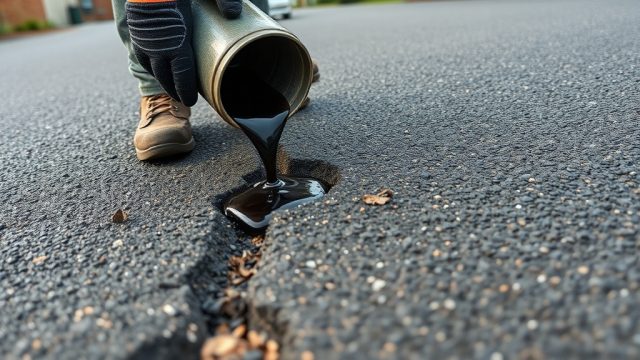
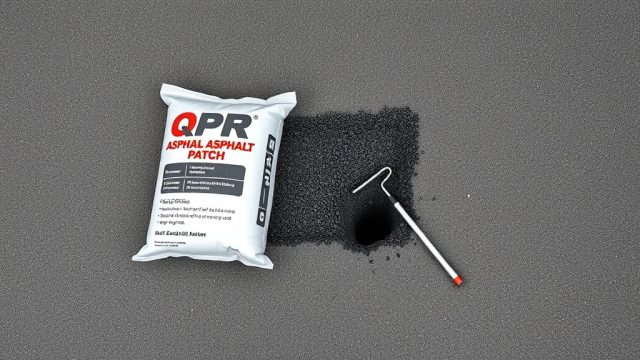
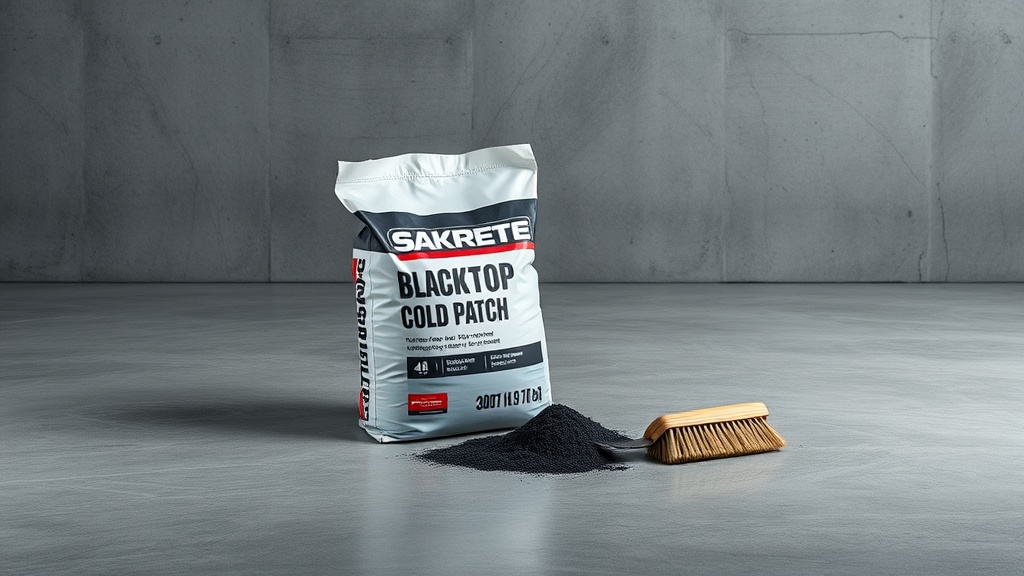
Choosing the right Sakrete product depends almost entirely on crack width. For cracks under ¼ inch (6 mm), you’re best off with a liquid crack filler, such as Sakrete’s own Blacktop Crack Filler (a latex-based, pourable sealant). For cracks between ¼ inch and ½ inch (6–12 mm), use a trowel-grade asphalt patch like Sakrete’s Blacktop Patch, which comes in a squeezable tube or a pail. For any crack wider than ½ inch (12 mm), or for areas with alligator cracking, you need a full, compactable cold-mix like Sakrete Blacktop Cold Patch, often sold in 50-pound bags. Using a liquid filler on a wide crack will result in sinking and cracking within a few months.
The table below gives a quick severity guide to help you decide how soon to act.
| Crack Width | Example Condition | Recommended Action |
|---|---|---|
| Under ¼ inch (6 mm)—Usually not urgent | Single, straight hairline crack with no vegetation | Fill with liquid crack filler; can wait 2–3 months if dry |
| ¼ to ½ inch (6–12 mm)—Needs attention soon | Multiple edge cracks or a single crack with slight raveling | Patch with trowel-grade material within 30 days to prevent water entry |
| Over ½ inch (12 mm)—Urgent | Alligator cracking or crack with vegetation/water damage | Excavate, compact base, fill with cold patch within 1–2 weeks |
For a full breakdown of what’s inside the bag, see our article on Sakrete Blacktop Mix Composition: What’s Inside the Bag?.
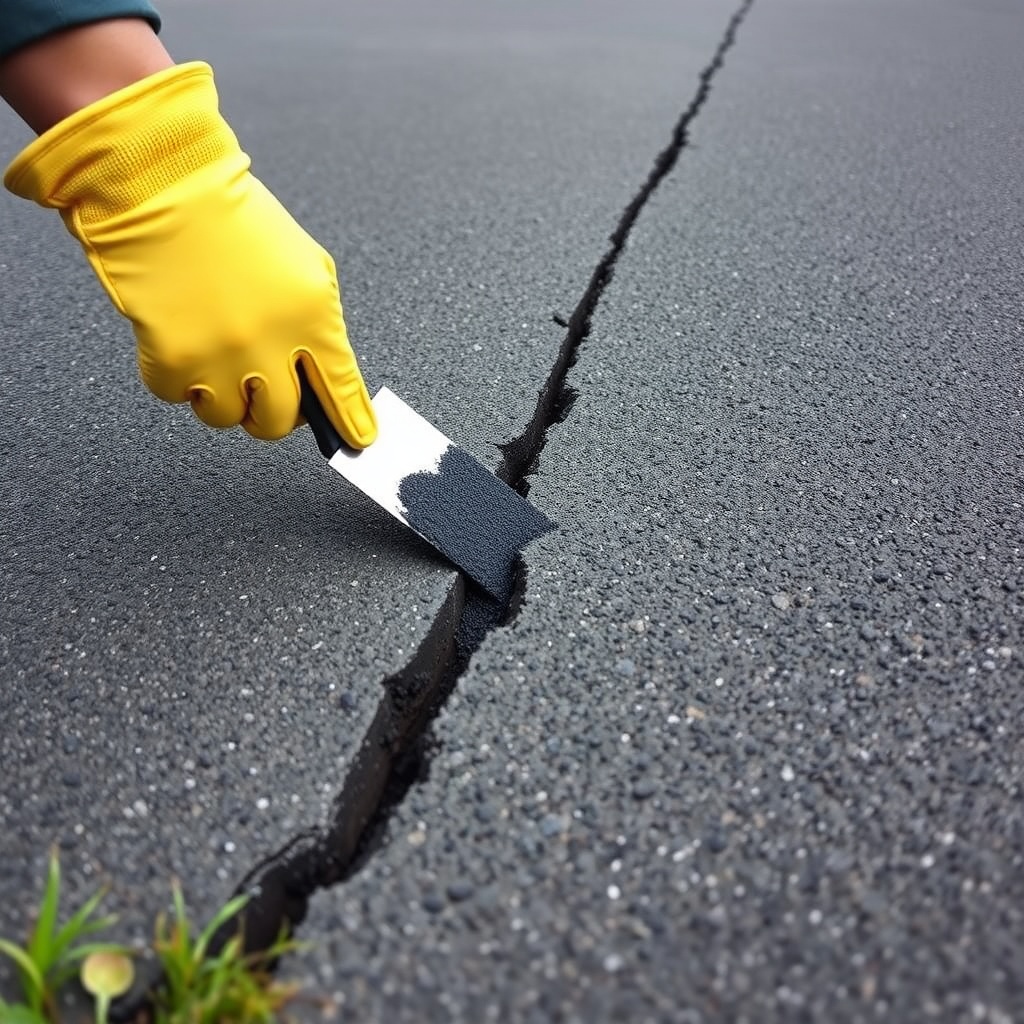
2. How Do You Properly Clean a Crack Before Applying Sakrete Blacktop Patch?
Cleaning is the single most important step for a long-lasting repair. Start by removing all loose debris, vegetation, and old, crumbling asphalt from the crack. Use a stiff-bristle wire brush or a crevice tool on a leaf blower to dislodge dirt. For deeper cracks, use a narrow screwdriver or a putty knife to scrape the walls. Then, blast the crack with compressed air or a high-pressure blower—avoid using a vacuum, as it tends to leave fine dust that prevents adhesion. For oil-stained cracks, scrub the area with a degreaser like Simple Green, rinse, and let dry completely. Moisture in the crack will cause the patch to fail within weeks, so ensure the crack is bone-dry before you apply any product. If the forecast calls for rain within 24 hours, postpone the job.
After cleaning, apply a thin layer of Sakrete Blacktop Primer (a tack coat) along the crack walls and base, allowing it to become tacky (usually 10–15 minutes). This step significantly improves bond strength, especially for cracks in high-traffic zones. Skipping primer is a common mistake that leads to patch lifting.
3. What Is the Correct Technique for Applying Sakrete Blacktop Cold Patch to Deep or Wide Cracks?
For cracks wider than ½ inch, you need a full-depth repair using Sakrete Blacktop Cold Patch. Begin by excavating the crack to a uniform depth of at least 1 inch (25 mm), squaring off the sides with a cold chisel or a masonry blade on an angle grinder. This removes deteriorated edges and gives the patch a mechanical lock. Dump the cold patch into the crack, filling it slightly above the surrounding surface—expect about one 50-lb bag to cover a 2-inch-wide by 1-inch-deep crack that is roughly 8 feet long. Use a tamper (a manual hand tamper or the end of a 4×4 post) to compact the material in ½-inch lifts. Compaction is critical: you want the density to match the surrounding asphalt. After the patch is level, apply a thin layer of Sakrete Blacktop Tack Coat or a cold-applied asphalt emulsion over the patch to seal the surface from water infiltration. Allow the repair to cure for 48 hours before driving on it, and 72 hours in cooler weather (below 55°F or 13°C).
For more on achieving a smooth finish after compaction, read How to Properly Compact Sakrete Blacktop for a Smooth Driveway.
4. When Should You Use Sakrete Liquid Crack Filler vs. Trowel-Grade Patch?
The decision between liquid filler and trowel-grade patch comes down to crack geometry and traffic load. Sakrete Liquid Crack Filler (about £8 to £12 per quart) is designed for narrow, clean hairline cracks. It flows into the crack and self-levels, making it ideal for low-traffic areas like a parking strip or a section of driveway near the garage. However, it has very little structural strength—it will not hold up to repeated tire impacts on a crack wider than ¼ inch. For cracks in driveways that see daily car traffic, use Sakrete Trowel-Grade Blacktop Patch (about £15 to £22 per 5-lb tub). This material contains fine aggregate and a polymer binder that forms a flexible, durable surface. Apply it with a trowel, overfilling the crack slightly, then strike it off with the trowel edge to leave a slight crown (about ⅛ inch above the surface) to allow for settlement. Let it cure for 24 hours before traffic. For best results on a driveway that receives regular use, pair the repair with a sealcoat; see Sealcoating a Sakrete Blacktop Driveway: Products and Methods.
5. How to Handle Alligator Cracking in Sakrete Blacktop?
Alligator cracking—interconnected cracks that form small, irregular blocks—indicates a structural base failure. Simply patching the surface will fail within months. The correct approach is to treat it as a local base failure. Start by cutting out the entire affected area, typically 6 to 12 inches beyond the outermost cracks, using a concrete saw or an asphalt cutter. Remove the old asphalt and at least 2 inches of the underlying base (if it’s loose or contaminated). Replace the base with a compacted ¾-inch crushed stone or recycled concrete aggregate, compacting it in 4-inch lifts with a plate compactor. Then install a new Sakrete Blacktop Cold Patch or a hot-mix asphalt patch, compacting it in ½-inch lifts to achieve a density that matches the surrounding driveway. After compaction, seal the entire patch with a tack coat and allow 48 hours of cure time. This full-depth repair costs more initially (around £150–£300 in materials for a 4×4-foot area) but prevents the crack pattern from returning. For a full guide on driveway installation, see Installing a Driveway with Sakrete Blacktop: Step-by-Step Guide.
6. What Is the Best Way to Cure and Protect a Sakrete Blacktop Crack Repair?
Curing times for Sakrete Blacktop repair products vary by product and weather. Liquid fillers typically skin over in one hour and cure fully in 24 hours. Trowel-grade patches require 24 to 48 hours of dry weather. Cold patches need 48 to 72 hours, especially if temperatures are below 60°F (15°C). During curing, protect the repair from rain with a tarp if necessary. After the patch is fully cured, apply a sealant—such as Sakrete Blacktop Sealer—to the entire driveway. Sealing prevents moisture and UV damage that accelerates cracking. For the best protection, reapply sealant every two to three years. Do not apply sealant over a patch that is less than 72 hours old; the sealant’s solvents can soften the patch before it has fully hardened. If you live in a freeze-thaw climate, sealing is especially critical—water that enters a microscopic crack and freezes can undermine even the strongest patch within one winter.
What Owners Say
Homeowners who have used Sakrete Blacktop crack repair products report mixed but generally positive experiences. One owner in Ohio noted, “I used Sakrete Blacktop Patch on a ½-inch-wide crack on my driveway. It took a full 48 hours to cure, but the repair held through two winters without any re-cracking. The key was cleaning the crack thoroughly with a wire brush and a leaf blower before applying.” Another owner from Florida remarked, “The liquid crack filler worked great on fine spider cracks, but on a ¾-inch crack near the curb, it sank within a month. I switched to the cold patch, and that solved it—compact it well, and it stays put.” A third owner in the UK added, “Sakrete’s trowel-grade patch is very ‘sticky’—work it quickly before it cools down. I’d suggest doing it on a mild day (around 60°F) for the best spread.” Common advice across owners: always clean the crack thoroughly, follow the drying times, and avoid overfilling, which creates a tripping hazard.
Frequently Asked Questions
Can I drive on a Sakrete Blacktop crack repair immediately?
No. Allow at least 24 hours for liquid fillers and trowel-grade patches, and 48 to 72 hours for cold patches, to fully cure before driving over the repair.
Does Sakrete Blacktop crack filler work in cold weather?
It works best when the ambient temperature is above 50°F (10°C). In colder weather, the product thickens and does not flow or cure properly. If you must repair in cold weather, warm the product (still sealed) in a bucket of warm water for 15 minutes before use.
How long does a Sakrete Blacktop crack repair last?
With proper preparation and sealing, a crack repair using Sakrete products can last 3 to 5 years. Cracks that are not sealed or are in high-traffic areas may need reapplication after 1–2 years.
Can I use Sakrete Blacktop Crack Filler to fill potholes?
No. Liquid crack filler is only for hairline cracks up to ¼ inch wide. For potholes (larger than 2 inches in diameter and 1 inch deep), use Sakrete Blacktop Cold Patch.
Should I prime the crack before using Sakrete patch?
Yes, for best adhesion. Use Sakrete Blacktop Primer or a tack coat. Apply it to the cleaned crack walls and base, let it become tacky (10–15 minutes), then apply the patch.
How do I prevent cracks from returning after patching?
Seal the entire driveway within 72 hours of the patch cure. Then, every 2–3 years, apply a fresh sealcoat. Also ensure proper drainage—water pooling near cracks accelerates base failure. For more on installation that minimizes future cracking, read Installing a Driveway with Sakrete Blacktop: Step-by-Step Guide.