Introduction
Few questions generate as much debate in the paving trade as whether a cold patch will actually hold when the sky opens. For contractors and grounds crews working in the UK, where rain can arrive without warning, knowing the limits of a product like the QPR 50-lb Asphalt Patch is not theoretical—it is a practical necessity. This article answers the core question—can you apply it in wet conditions—while also addressing adhesion, curing times, surface preparation, and the real-world experiences of those who have used it under a British drizzle.
Can You Apply QPR 50-lb Asphalt Patch on a Wet Surface?
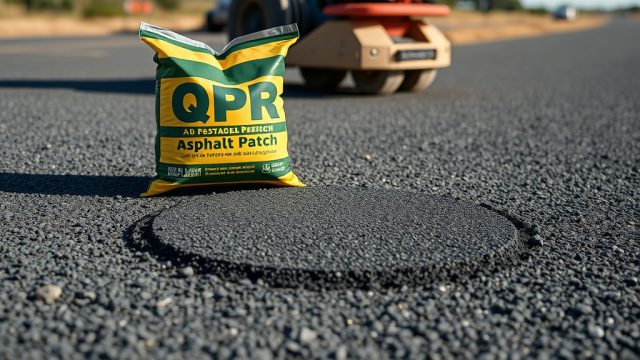
The short answer is yes, but with strict limitations. QPR 50-lb Asphalt Patch is designed as a cold-lay, polymer-modified patching compound that can tolerate light moisture. According to the manufacturer’s technical data sheet (TDS), the product can be applied to damp surfaces, but standing water, heavy rain, or puddles will prevent proper adhesion. The polymer binder requires intimate contact with aggregate and the existing pavement to form a durable bond. If a film of water sits between the patch and the hole, the patch will not cure into a monolithic layer—it will remain loose.
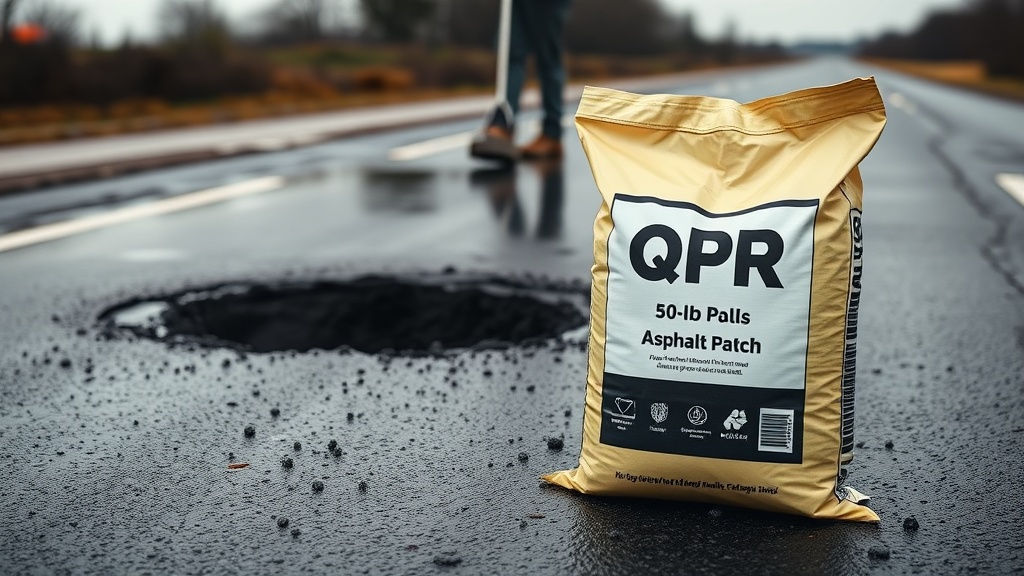
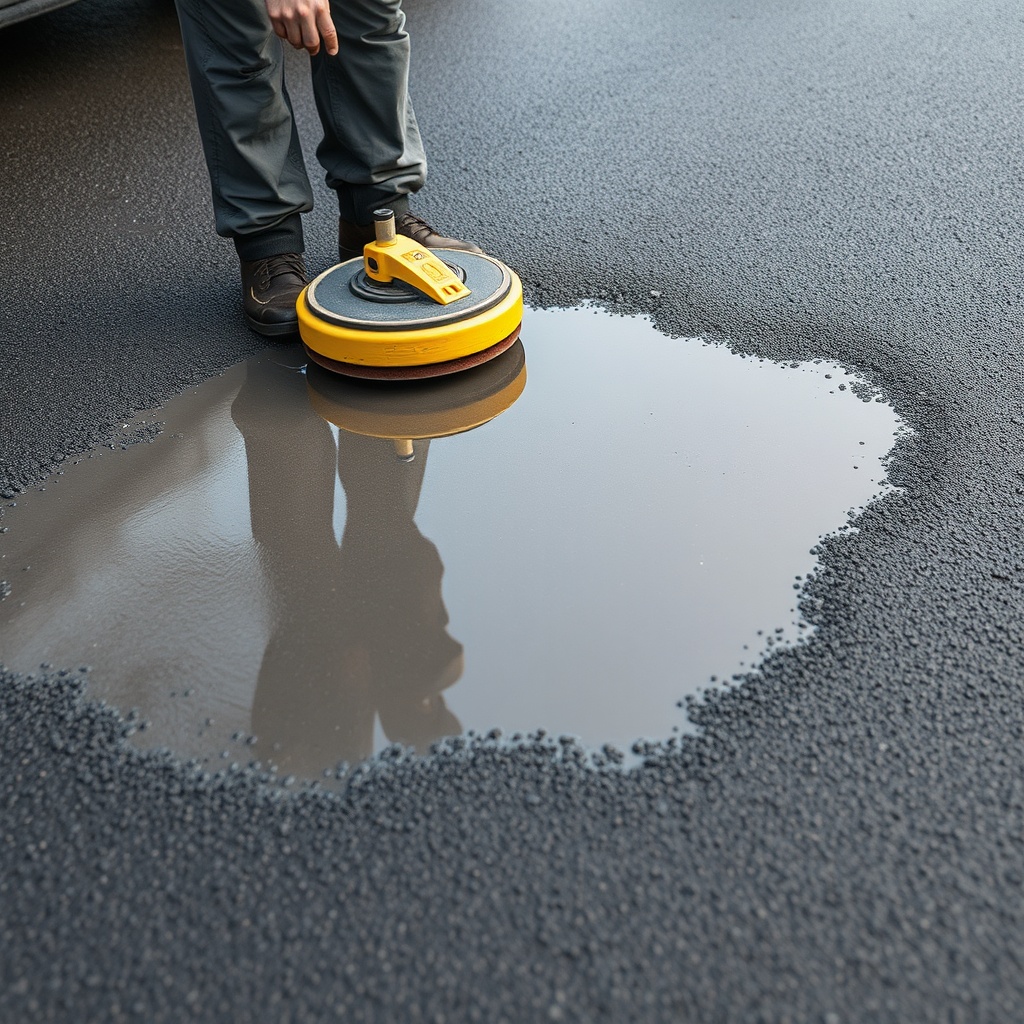
For a typical pothole repair in the UK, the rule is: damp is acceptable; submerged is not. If the hole contains visible water, it must be removed—by blowing it out with compressed air, squeegeeing, or using a hot-air lance—before placing the QPR 50-lb Asphalt Patch. Light mist or a surface that has been rained on and then partially dried is within the product’s operating window.
| Condition | Allowed? | Action Required |
|---|---|---|
| Dry surface | Yes | None—ideal application condition |
| Damp (no standing water) | Yes | Proceed; moisture aids compaction in some cases |
| Light mist or dew | Yes | Sweep area dry; avoid pooling |
| Standing water (puddles) | No | Remove all water using absorbents, vacuum, or compressed air |
| Heavy rain (active rainfall) | No | Postpone repair; cover patch area |
| Frozen surface | No | Thaw and dry surface before application |
How Does Rain Affect the Curing Time of QPR 50-lb Asphalt Patch?
QPR 50-lb Asphalt Patch cures through a combination of compaction and solvent evaporation, not through a chemical reaction like concrete. In dry conditions, the product achieves initial load-bearing strength in approximately 24 hours, with full cure reaching about 90% of ultimate strength within 7 days. Rain introduces two problems: first, water can displace the binder from the aggregate surface if the patch is not sufficiently compacted, and second, excess moisture slows the evaporation of the light solvent used in the formulation.
If rain falls within the first two hours after placement and before the patch has been compacted thoroughly, the water can penetrate the mix and cause delamination. After compaction, a light shower does minimal damage, provided the patch has at least 15–20 minutes of compaction time without heavy rain. A heavy downpour within the first four hours can double the time to reach traffic-ready strength. Contractors in the UK typically protect the patch with a polyethylene sheet or a heavy traffic cone if intermittent rain is forecast within 8 hours of finishing.
What Surface Preparation Is Required for Wet-Weather Application?
Surface preparation is the determining factor between a patch that lasts one season and one that lasts years, especially when moisture is present. For QPR 50-lb Asphalt Patch the sequence is:
- Remove all loose debris and vegetation using a stiff broom or compressed air.
- Square the edges of the pothole—QPR recommends saw-cutting or chiselling to create vertical walls, which improves interlock.
- Remove standing water completely. Use a wet/dry vacuum or a hot-air blower. Do not use absorbent granules like cat litter, as they create a weak layer.
- Apply a tack coat—QPR’s own emulsion or a thin layer of liquid asphalt—but only if the surface is dry. In damp conditions, skip the tack coat; it will not bond if moisture is present.
- Ensure the base is sound. Compact any loose existing material with a hand tamper or plate compactor before placing the patch.
If the substrate is saturated from the soil below (common in UK clay ground with poor drainage), the patch may fail regardless of surface moisture control. In such cases, consider a Why Does My QPR Patch Keep Falling Out? Troubleshooting Tips article for deeper drainage solutions.
What is the Recommended Compaction Technique for Wet Patches?
Compaction is even more critical when moisture is present. QPR 50-lb Asphalt Patch is designed to be self-compacting to an extent, but in wet conditions, the following procedure should be observed:
Place the patch material approximately 1 inch (25 mm) above the surrounding pavement surface to allow for compaction settlement. Use a vibratory plate compactor (preferred) or a hand tamper for smaller patches. For a damp surface, compaction time should increase by about 25% compared to dry conditions. Aim for at least 6–8 passes per area with a plate compactor, or 30–40 firm strokes with a 25 kg hand tamper.
One common mistake is to over-compact a wet patch, which can cause the binder to separate from the aggregate—a phenomenon known as “bleeding.” If you see a shiny film of binder on the surface during compaction, stop immediately. This indicates the moisture has forced the binder to the top, weakening the patch structure. The ideal finish is a dense, matte surface with no visible binder sheen.
For detailed compaction guidance, see the Laying QPR Asphalt Patch: Best Compaction and Application Techniques.
Can QPR 50-lb Asphalt Patch Be Applied in Freezing or Near-Freezing Conditions?
Temperature is a separate but related challenge. QPR 50-lb Asphalt Patch performs well in conditions as low as 2°C (36°F), but the product’s workability decreases rapidly below this threshold. At temperatures near 0°C (32°F), the binder thickens, making it stiff and difficult to spread. Additionally, moisture trapped in the pothole can freeze, forming ice crystals that prevent the patch from bonding.
If application below 2°C is unavoidable, the following steps help: store the QPR bags in a heated area overnight (minimum 10°C/50°F); pre-warm the pothole with a hot-air lance for 5 minutes; and compact immediately after placing. Even with these measures, expect reduced long-term performance—the patch may accept traffic sooner, but the bond strength will be lower. This is one of the primary reasons many UK highways agencies prefer hot mix for winter repairs, but for emergency patching, the QPR 50-lb Asphalt Patch remains a viable option. Refer to the QPR 50-lb Asphalt Patch vs. Hot Mix Asphalt: Which Is Right for You? article for a full comparison.
What Do Owners Say About QPR 50-lb Asphalt Patch in Wet Climates?
Feedback from UK plant managers, local council operatives, and driveway contractors provides a balanced picture. On the positive side, users consistently report that the product is “fit and forget” when applied in dry conditions, with patches lasting 12–18 months on low-traffic roads with occasional rain. A facility manager in Manchester noted: “We patched a car park in October after three dry days—still intact nine months later, despite that horrible wet winter.”
However, those who applied QPR 50-lb Asphalt Patch during or immediately after heavy rain reported failures. A contractors from Bristol stated: “We tried it in a drizzle on a council road. Two weeks later, half the patch was in the gutter. Not the product’s fault—the pothole was too wet. Our mistake.” The consensus among experienced users is that patience pays: waiting 24 hours for a dry window yields better results than forcing a wet-weather patch.
Another observation from a Scottish grounds crew was that QPR 50-lb Asphalt Patch performed “noticeably better” than cheaper cold patches in damp conditions, likely due to the polymer modifier that improves water resistance. Yet even they emphasised: “It’s not a miracle—if you can see water, you can’t patch.”
Frequently Asked Questions
1. How long after rain can I apply QPR 50-lb Asphalt Patch?
Wait until the surface has no standing water and feels dry to the touch. On a warm day (15°C/59°F), this may be 2–3 hours after light rain. On a cool, overcast day, allow 6–12 hours. Use a moisture meter if you have one; the surface should read below 10% moisture content.
2. Does QPR 50-lb Asphalt Patch work under water?
No. QPR 50-lb Asphalt Patch is not an underwater repair product. Standby water of any depth prevents adhesion. For underwater repairs, consider a hydraulic cement or a specially formulated cold patch for submerged applications.
3. Can I use a hair dryer or hot air gun to dry a pothole before patching?
Yes, for small areas. A hot-air gun or industrial blower can effectively remove surface moisture from a pothole base. However, for larger repairs, a hot-air lance or propane-fired heater is more practical. Avoid open flames near the QPR bag, as the material contains a solvent vapour.
4. Will QPR 50-lb Asphalt Patch crack in freezing conditions after application?
If properly compacted on a dry, sound base, QPR 50-lb Asphalt Patch is freeze-thaw resistant. However, if water seeps underneath due to poor compaction, freeze-thaw cycles can cause the patch to lift. Ensure the patch is sloped slightly to shed water away from the edges.
5. How much does a QPR 50-lb bag cost in the UK?
As of early 2025, a single 50-lb (22.7 kg) bag of QPR 50-lb Asphalt Patch costs approximately £18–£25 from builders’ merchants and online suppliers. Bulk discounts reduce the price to around £12–£15 per bag for pallet orders (56 bags per pallet).
6. Is QPR 50-lb Asphalt Patch suitable for motorway emergency repairs in wet weather?
Highways England typically mandates hot mix for motorway surfaces due to structural load and speed requirements. However, QPR 50-lb Asphalt Patch can be used for temporary emergency potching on hard shoulders or lay-bys in wet conditions, provided the pothole is dried and primed. For permanent repair, a hot mix overlay should follow. See the Using QPR 50-lb Patch for Pothole Repair: A Complete Guide for step-by-step emergency procedure.