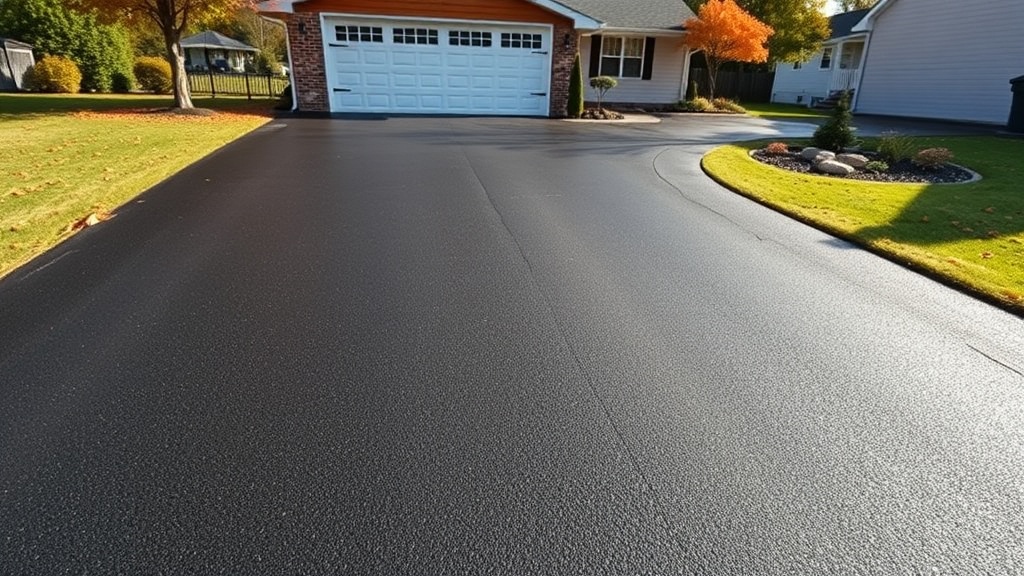
Why Does AsphaltPavePro Sealcoat Outperform Budget Options in Protection?
AsphaltPavePro Sealcoat is not a simple coal-tar emulsion; it is a refined, polymer-modified asphalt-based sealer that delivers a thick, flexible barrier against UV degradation, water intrusion, and chemical spills. While bargain sealers often contain low-quality fillers that crack within six months, AsphaltPavePro utilises a high-solids formulation—typically 35–40% solids by volume—that creates a durable film capable of lasting three to five years in moderate climates. For UK and US homeowners investing £150–£300 or $200–$400 for a standard driveway, understanding application nuances separates a professional-grade finish from a patchy mess.
What Surface Preparation Guarantees Proper Adhesion for AsphaltPavePro?
Surface preparation is the single most important step. Even the best AsphaltPavePro Sealcoat will peel if applied over dirt, oil, or moisture. Follow this systematic checklist:
- Cleaning: Use a stiff-bristle broom or leaf blower to remove loose debris. For embedded grime, a pressure washer set to 1,800–2,200 PSI with a 15-degree tip works best. Avoid concentrated jets that gouge asphalt.
- Oil-Stain Treatment: Degreaser or a citrus-based cleaner scrubbed with a stiff brush dissolves petroleum residues. Rinse thoroughly and let dry 24 hours.
- Crack Filling: Use a quality cold-applied asphalt crack filler from the range of repair options detailed in our comparison guide. Allow filler to cure fully—typically 24–48 hours—before sealcoating.
- Patch Repairs: For potholes or large depressions, apply a fibre-reinforced patch. Level with a trowel and compact well.
- Moisture Check: Test by taping a clear plastic sheet to the driveway for 12 hours. Condensation inside means too much moisture; wait for a dry spell.
Which Application Tools Yield the Best Film Thickness and Coverage?
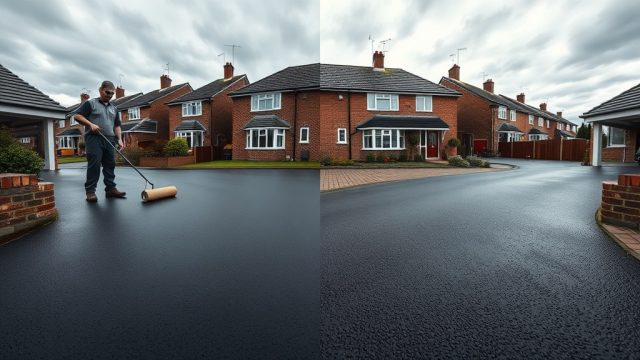
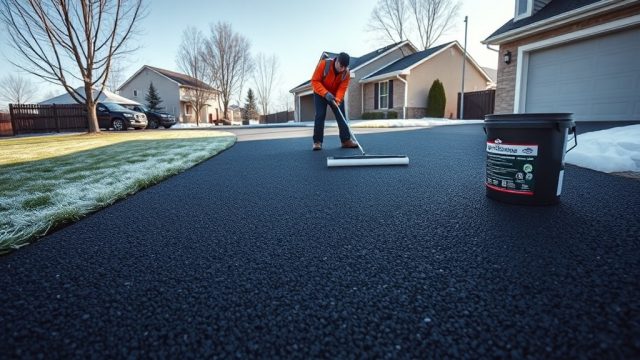
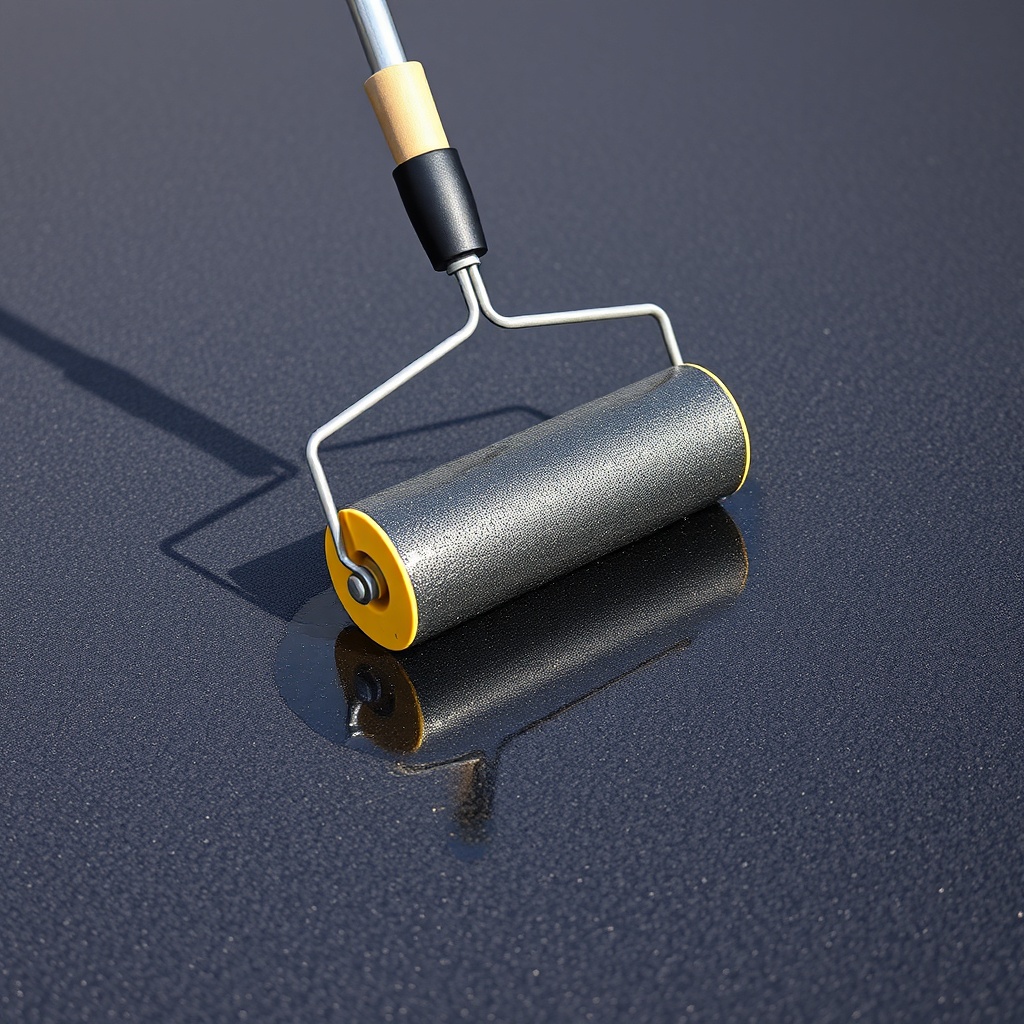
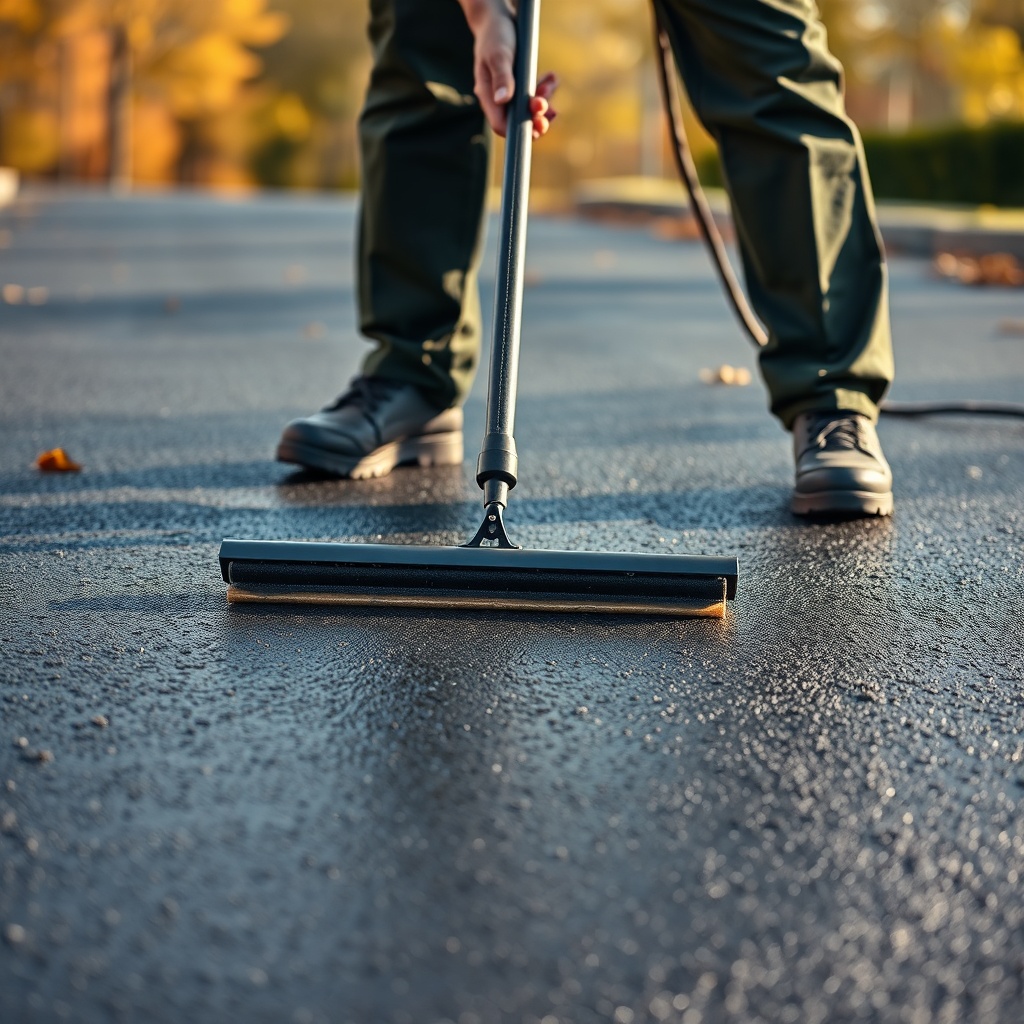
AsphaltPavePro Sealcoat recommends a two-coat system. The tool choice directly affects film thickness (DFT). For a domestic driveway of 400–500 sq ft (37–46 m²), a 3/8-inch nap roller on an extension pole gives consistent coverage, while a squeegee followed by a back-roll ensures even spread. Spray-on methods can achieve faster applications but risk uneven thickness and overspray on grass or brick. A table below summarises the performance trade-offs:
| Tool | Film Thickness per Coat | Coverage (per 5-litre pail) | Ideal For |
|---|---|---|---|
| 3/8-in nap roller | 1–2 mm | 40–50 m² (430–540 sq ft) | Fine-textured asphalt, smooth finish |
| Squeegee & back-roll | 2–3 mm | 30–40 m² (320–430 sq ft) | Coarse or porous asphalt |
| Airless sprayer (0.019-in tip) | 1–1.5 mm | 60–80 m² (650–860 sq ft) | Large areas, speed priority |
For most mid-sized driveways, the squeegee and back-roll method provides the optimal balance of thickness and uniformity. Two coats at a combined DFT of 3–4 mm are recommended for maximum protection against freeze-thaw cycles.
How Do Weather Conditions Affect Curing and Longevity?
AsphaltPavePro Sealcoat requires specific environmental windows. Ideal conditions include ambient temperatures between 10°C and 35°C (50°F–95°F), relative humidity below 70%, and no rain forecast for 24 hours post-application. Direct sunlight accelerates surface curing but may trap moisture if applied over a cool base. Avoid applying when overnight lows drop below 5°C, as the emulsion may not coalesce properly, leading to tacky surfaces that attract tyre marks. A quick tip: check the asphalt surface temperature with a simple infrared thermometer—if it exceeds 54°C (130°F), postpone application until late afternoon or early morning.
What Is the Optimal Recoat Schedule for Two-Coat Protection?
The manufacturer recommends waiting 4–8 hours between coats at 21°C (70°F). In cooler or humid weather, extend the interval to 12 hours. A simple finger-pressure test confirms readiness: if the first coat feels dry to the touch and doesn’t lift with light pressure, apply the second coat. Overlaying too early may cause the second coat to solvent-wash the first, reducing adhesion. After the final coat, vehicle traffic should be restricted for 24–48 hours; foot traffic is safe after 12 hours. Full chemical resistance develops over 7 days.
How Does AsphaltPavePro Protect Against UV and Salt Damage?
Sealcoat acts as a sacrificial barrier. AsphaltPavePro’s UV inhibitors reduce oxidation that turns black asphalt grey. In northern UK and US regions, road salts and de-icers accelerate surface degradation. The sealer’s flexible membrane prevents salt from penetrating into the asphalt binder, which otherwise becomes brittle and cracks. For maximum salt protection, apply a third coat in high-traffic areas such as driveways near garages or entrances. This adds roughly £0.15–£0.30 per sq ft to material costs but extends the sealcoat’s life by two years.
What Owners Say About AsphaltPavePro Sealcoat
Homeowners in both the UK and US consistently praise AsphaltPavePro for its odour control—the low-VOC formula emits noticeably less smell than traditional sealers. Many report a uniform, dark finish that resists tyre marking within a week. On average, users see a 3–4 year performance before needing a new coat when following the two-coat method. A few note that the product is slightly thicker than budget alternatives, requiring more effort during mixing, but agree the extra work yields a premium result. One owner in Birmingham stated, “After five winters, my driveway looks almost new. No peeling, no fading—just a quick hose-down to clean.”
Frequently Asked Questions
Can AsphaltPavePro be applied over existing sealer?
Yes, provided the old sealer is sound—no flaking, peeling, or alligator cracking. Power-wash the surface to remove loose material and ensure good adhesion. Avoid layering on top of severely deteriorated sealer; instead, remove it mechanically.
How long does a 20-litre pail of AsphaltPavePro cover?
A 20-litre pail covers approximately 140–180 m² (1,500–1,940 sq ft) for a single coat, depending on surface porosity. For a standard two-coat job on a 100 m² driveway, you would need two 20-litre pails.
What is the recommended dilution ratio for AsphaltPavePro?
AsphaltPavePro is ready-to-use and generally does not require dilution. If thinning is necessary due to cold temperatures, add no more than 10% water by volume. Excessive thinning reduces solids content and compromises durability.
Does AsphaltPavePro prevent oil stains from reappearing?
While the sealer forms a barrier that resists new oil stains, existing oil residues must be removed thoroughly before application. Without proper degreasing, oil can bleed through even a high-quality sealer. Pre-treat with a heavy-duty degreaser.
Can AsphaltPavePro be used on concrete surfaces?
No. AsphaltPavePro is designed specifically for asphalt surfaces. Concrete requires a different type of sealer—typically a clear acrylic or silane/siloxane formula—to bond properly and resist dusting.
Is AsphaltPavePro safe for pets and plants after curing?
Yes. Once fully cured (7 days), the sealer forms an inert, non-toxic layer. However, keep pets and children off the surface until the final coat is tack-free—usually 12–24 hours. Prevent run-off onto lawns or gardens during application; cover sensitive plants with plastic sheeting.