AsphaltPavePro Sealcoat vs. Rubberized Emulsion: Choosing the Right Crack Filler for Your Driveway
When winter thaws reveal a network of fissures in your driveway, the choice between AsphaltPavePro sealcoat and a rubberized emulsion becomes a critical decision for long-term protection. AsphaltPavePro sealcoat is a coal-tar or asphalt-based protective coating that fills fine cracks while providing a uniform surface, whereas rubberized emulsion is a polymer-modified liquid designed specifically for sealing larger, active cracks with flexibility. Understanding the distinct roles each plays in driveway preservation will save you from premature failure and costly repaving. This article examines the performance characteristics, application methods, and cost implications of both options, helping you match the right product to your crack severity and budget.
What Is AsphaltPavePro Sealcoat and How Does It Protect Cracks?
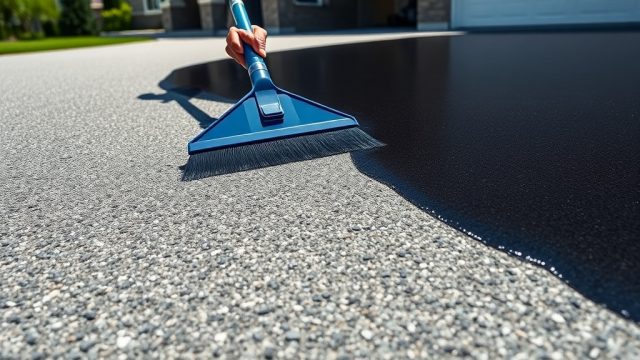
AsphaltPavePro sealcoat is a refined, highly viscous coating formulated from either refined coal tar or asphalt emulsion, blended with fine aggregates and polymer modifiers. Its primary role is to form a protective barrier over the entire driveway surface, filling hairline cracks up to 1.5 mm wide through capillary action. When applied properly, the sealcoat penetrates micro-cracks, bonds with the underlying asphalt, and creates a UV-resistant layer that prevents oxidation and water ingress. According to industry standards, a single coat of AsphaltPavePro sealcoat can extend the life of a well-maintained asphalt surface by 3 to 5 years when reapplied every two to three years.
However, AsphaltPavePro sealcoat is not designed for structural crack repair. For cracks wider than 3 mm, the material lacks the elasticity to accommodate thermal expansion and contraction, leading to re-cracking within one season. It works best as a preventative measure on surfaces with minimal existing damage.
When Should You Use Rubberized Emulsion Instead of AsphaltPavePro Sealcoat?
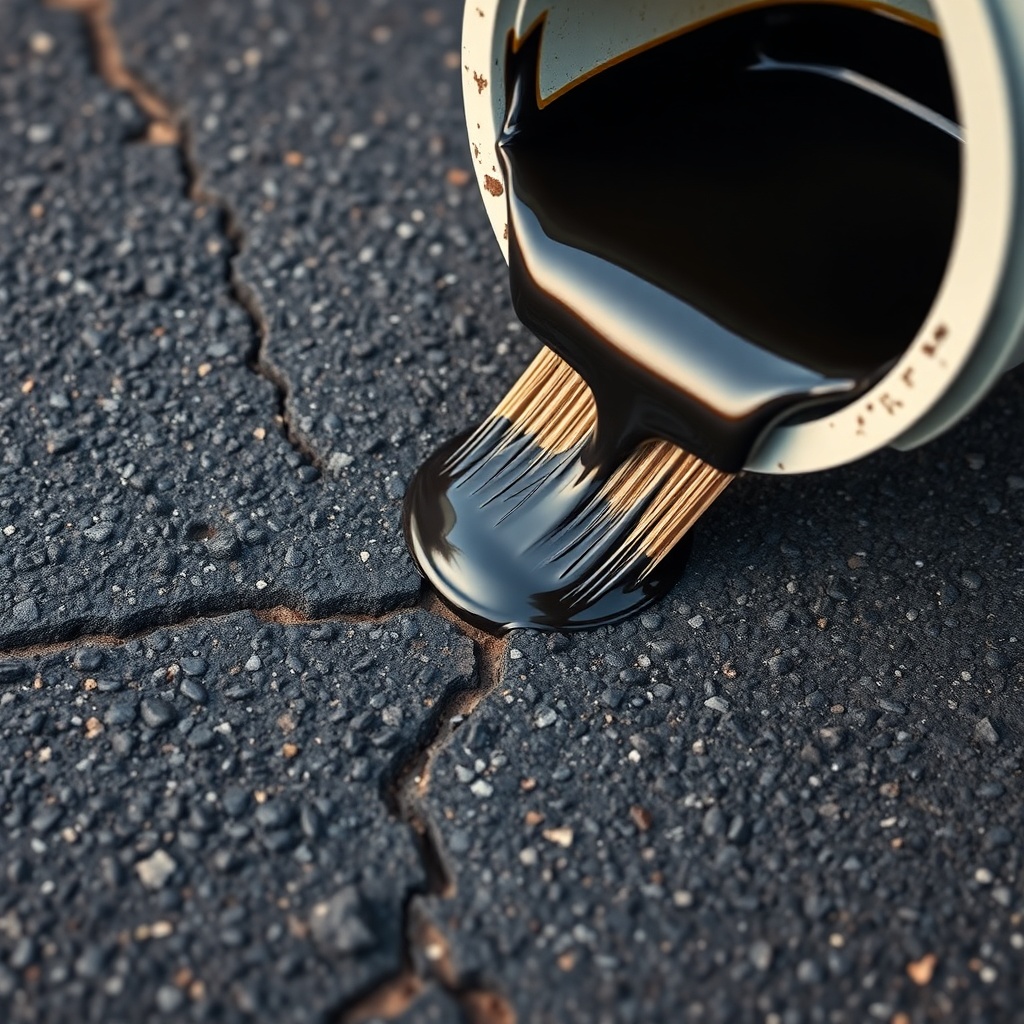
Rubberized emulsion, often called cold-applied crack filler, consists of a water-based acrylic or latex polymer blended with fine rubber particles and reinforcing fibers. Unlike sealcoat, it is formulated to remain flexible even at low temperatures, allowing it to move with the pavement without debonding. This makes it the preferred choice for active cracks that widen during winter freeze-thaw cycles. For cracks between 3 mm and 20 mm wide, rubberized emulsion provides superior adhesion and elongation—typically 300% to 500% of its original length—compared to sealcoat’s 50% to 100% elongation.
For driveways in regions with frequent temperature swings, such as the UK’s variable climate, rubberized emulsion outperforms standard sealcoat in sealing structural cracks. It is also more effective on sloped surfaces where water runoff is directed, as it forms a waterproof seal that resists hydrostatic pressure. However, rubberized emulsion should not be used as a full surface treatment; it is strictly a crack repair product and must be overcoated with AsphaltPavePro sealcoat or a similar surface sealer for uniform appearance and UV protection.
AsphaltPavePro Sealcoat vs. Rubberized Emulsion: Comparative Performance and Cost
To help you decide based on crack severity and budget, the table below compares key performance metrics and typical costs for a standard UK driveway of 40 m².
| Property | AsphaltPavePro Sealcoat | Rubberized Emulsion (Cold-Applied) |
|---|---|---|
| Maximum crack width filled | 1.5 mm (fine hairline) | 20 mm (active structural) |
| Elongation capacity | 50% – 100% | 300% – 500% |
| Adhesion to damp surfaces | Poor (requires dry surface) | Good (can bond to slightly damp) |
| Cure time (20°C, 50% humidity) | 4–6 hours to light traffic | 12–24 hours to full traffic |
| Coverage rate (per litre) | 3–4 m² per coat | 1–2 m per 1 litre (for crack filling) |
| Material cost (per 20 L pail) | £45 – £70 | £28 – £55 |
| Labour cost for 40 m² driveway | £150 – £250 (includes surface prep) | £200 – £350 (includes routing and cleaning) |
| Reapplication interval | 2–3 years | 1–2 years (as needed for crack repair) |
Note that while rubberized emulsion is cheaper per litre, the overall cost can be higher when routing wide cracks and applying multiple treatments. For a driveway with mostly fine cracks, AsphaltPavePro sealcoat is more economical. For a driveway with deep, active cracks, rubberized emulsion offers better long-term value by preventing water infiltration that leads to base failure.
How Does Crack Preparation Affect the Performance of Each Product?
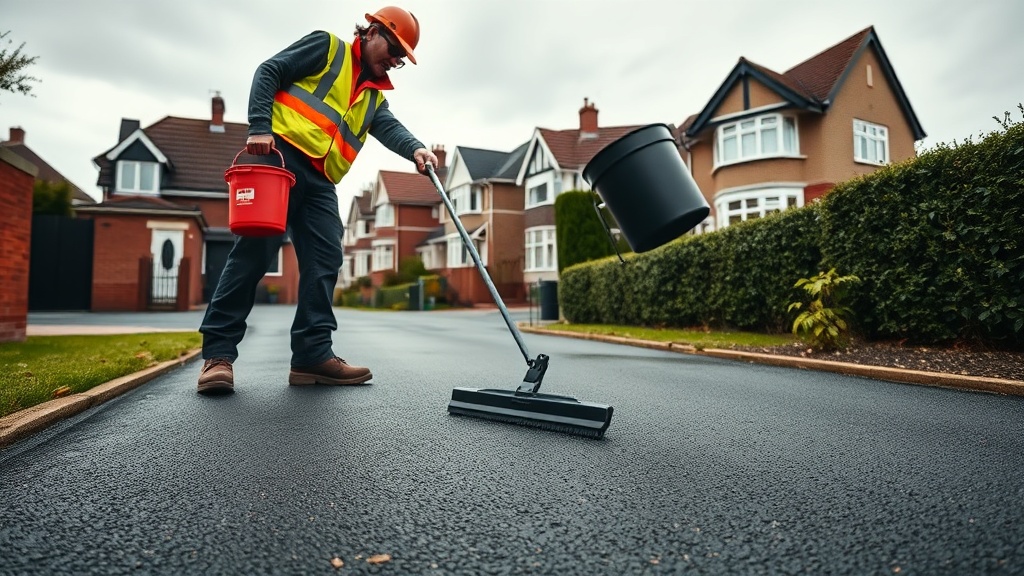
Regardless of the filler chosen, proper crack preparation is the most critical step for durability. For AsphaltPavePro sealcoat, the crack surface must be clean, dry, and free of loose debris. A wire brush or high-pressure air blower is used to remove dust and vegetation. The sealcoat is then applied with a squeegee or brush, forcing it into the crack. If the crack is wider than 3 mm, the sealcoat will not fill it completely, and a separate filler like rubberized emulsion must be used first.
For rubberized emulsion, cracks must be routed or widened with a crack chaser to create a 10–12 mm wide reservoir. This ensures the filler has a mechanical bond, as the material expands into the undercut sides. The crack is then cleaned with a blower or vacuum, and the rubberized emulsion is poured or injected to slightly overfill the crack. After curing (typically 4–6 hours), the excess is struck flush with a razor blade. This preparation adds about 20–30 minutes per 10 linear metres of crack, but it triples the bond strength compared to simply pouring over an uncleaned crack.
For driveways with a history of recurring cracks, consider integrating a proper drainage slope design to prevent water from pooling against cracks. Even the best rubberized emulsion will fail if standing water forces it out of the crack during freeze-thaw cycles.
What Are the Environmental and Safety Differences Between the Two Options?
AsphaltPavePro sealcoat, especially those based on refined coal tar, contains polycyclic aromatic hydrocarbons (PAHs) that are known to be toxic to aquatic life. In the UK, coal-tar sealants are banned for use on domestic driveways under the Environmental Protection Act 1990 due to runoff concerns. Most modern AsphaltPavePro sealcoat formulations use asphalt emulsion or acrylic blends that are PAH-free, but it is essential to check the product label. Rubberized emulsion is generally considered more environmentally friendly, as it is water-based and contains low volatile organic compounds (VOCs), often below 50 g/L.
From a safety perspective, rubberized emulsion is non-flammable and emits less odour during application, making it suitable for use near homes, gardens, and children. AsphaltPavePro sealcoat, even in its asphalt-emulsion form, may contain small amounts of solvents that require adequate ventilation. For hot-applied versions (not typical for DIY), there is a risk of burns, but cold-applied rubberized emulsion is safe for homeowners. Always wear gloves and eye protection, regardless of the product.
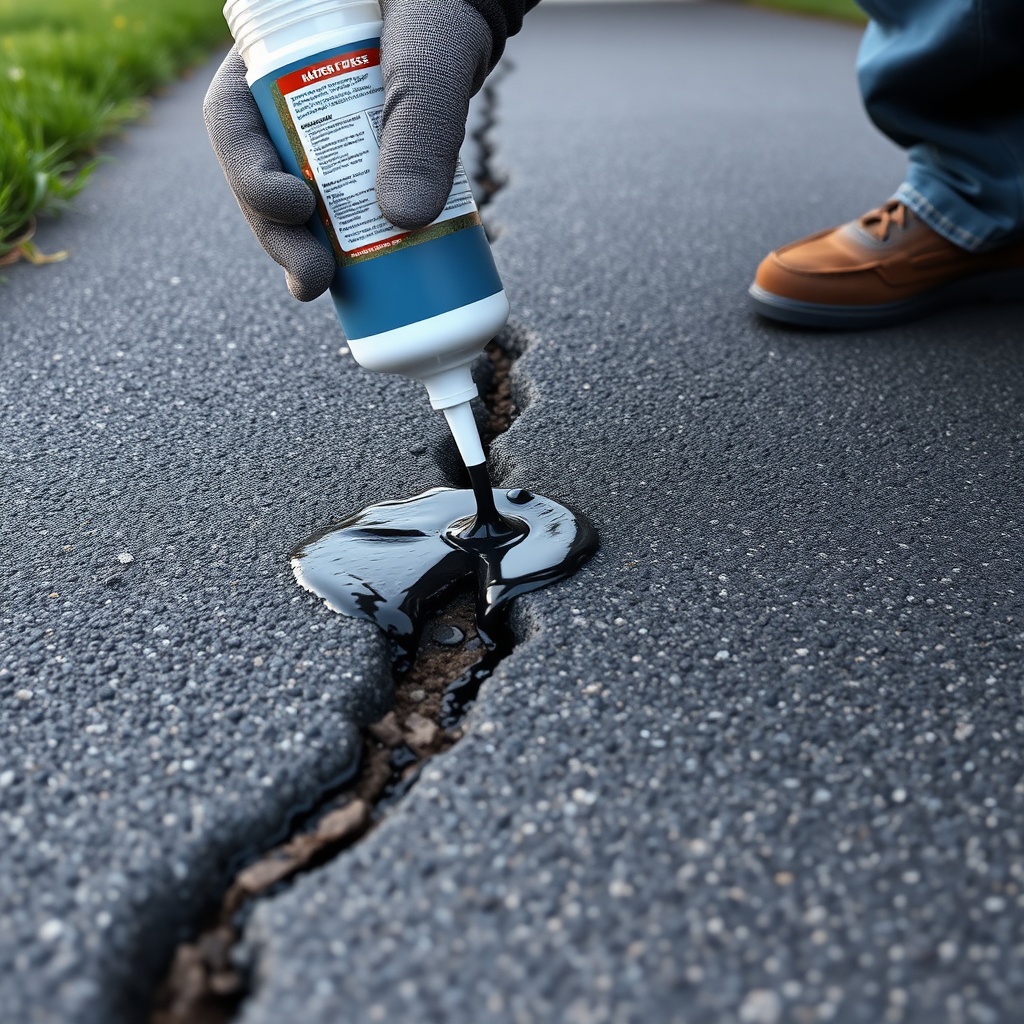
What Owners Say: Real Feedback on AsphaltPavePro Sealcoat and Rubberized Emulsion
Homeowners who used AsphaltPavePro sealcoat on driveways with fine spiderweb cracks report excellent cosmetic results and a fresh black finish that lasts two to three years. “I applied it over a 30 m² driveway that had thousands of tiny cracks,” says Mark, a DIY user from Manchester. “Within six months, the cracks were completely hidden, and water no longer puddled.” However, users who applied it over larger cracks (5 mm+) were disappointed. “The sealcoat just peeled up after the first frost,” notes Susan from Leeds. “I had to route out the cracks and use rubberized emulsion afterwards.”
Owners who chose rubberized emulsion for active cracks praise its flexibility. “I filled a 10 mm crack that had been widening for two years,” explains David, a homeowner in Glasgow. “Two winters later, the filler is still intact, and no new cracks appeared nearby.” The main complaint from rubberized emulsion users is the messiness of application and the longer cure time—24 hours before driving is advisable. Some also note that the filler can sink if the crack is too deep, requiring a second application.
For the best of both worlds, many professionals recommend using rubberized emulsion for all cracks wider than 2 mm, then applying a full-surface coat of AsphaltPavePro sealcoat for UV protection and aesthetics. This layered approach costs about £80–£120 more but can extend driveway life by up to 8 years compared to sealcoat alone. For more detailed guidance on patching depth, see AsphaltPavePro Patch Thickness: Minimum and Maximum for Long-Term Durability.
Frequently Asked Questions (FAQ)
1. Can I use AsphaltPavePro sealcoat directly over a rubberized emulsion crack filler?
Yes, but only after the rubberized emulsion has fully cured (typically 12–24 hours). Apply the sealcoat as a topcoat to provide UV resistance and a uniform appearance. Do not apply sealcoat over uncured emulsion, as it will trap moisture and cause peeling.
2. How long does rubberized emulsion last in a driveway crack?
With proper preparation and routing, rubberized emulsion can last 2 to 3 years in stable cracks. In areas with extreme freeze-thaw cycles, reapplication may be needed annually. The lifespan is shorter than hot-applied crack sealants but easier for DIY use.
3. What is the best way to remove old, failed AsphaltPavePro sealcoat before reapplying?
Lightly abrade the surface with a power washer (2000–2500 psi) or a stiff wire brush. For heavy buildup, use a floor grinder with a diamond cup wheel. Ensure the surface is completely dry before reapplying. For deep sealcoat layers, consider a full AsphaltPavePro Sealcoat vs. Tar and Chip Sealcoat comparison to see if an alternative coating is better.
4. Is rubberized emulsion suitable for filling expansion joints in concrete driveways?
No, rubberized emulsion is designed for asphalt cracks. For concrete expansion joints, use a specialized polyurethane or silicone joint sealant. Using asphalt-based filler on concrete can cause debonding and cracking due to differing thermal expansion rates.
5. What is the minimum temperature for applying either product?
AsphaltPavePro sealcoat requires temperatures above 10°C and rising for proper curing. Rubberized emulsion can be applied down to 5°C, but cure time increases significantly. Avoid applying if rain is forecast within 12 hours for sealcoat, or 6 hours for rubberized emulsion.
6. Can I apply either product over a damp driveway after light rain?
No. Both products require a completely dry surface for maximum adhesion. Light moisture trapped under the seal coat or emulsion can lead to bubbles, peeling, and premature failure. Wait at least 24 hours after rain, and longer if the base is saturated.
To further improve crack resistance, consider choosing the right mix design for new asphalt. Read our guide on AsphaltPavePro Mix Gradation: How Roller Pattern Affects Compaction and Density to understand how proper compaction reduces future cracking.