Why Proper Drainage Slope Is the Backbone of AsphaltPavePro Driveway Longevity
Every AsphaltPavePro driveway installation starts with a fundamental truth: water is the number one enemy of asphalt. Without a correctly designed drainage slope, even the highest-quality sealcoat and patch work will fail prematurely. This article details the precise slope requirements for AsphaltPavePro systems, explaining how a 1.5% to 2% grade (roughly 1/8 inch per foot) prevents ponding, subbase erosion, and freeze-thaw cracking. Proper drainage slope design is not optional—it is the difference between a driveway that lasts 15 years and one that needs complete replacement in five.
At AsphaltPavePro, we have refined drainage slope specifications through thousands of UK installations, accounting for local rainfall patterns, subgrade conditions, and typical driveway widths. This guide draws on that experience to give you actionable, code-compliant numbers for your next project.
What Is the Minimum Drainage Slope Required for an AsphaltPavePro Driveway?
The minimum drainage slope for an AsphaltPavePro asphalt driveway is 1.5% (approximately 1/8 inch per foot or 1 cm per metre). This gradient ensures that surface water flows steadily toward designated drainage points—whether that is a roadside ditch, a drainage channel, or a soakaway. For driveways longer than 30 metres or those with heavy clay subsoils, we recommend increasing the slope to 2% (1/4 inch per foot or 2 cm per metre) to account for slower infiltration rates.
Why this minimum? Below 1.5%, water moves too slowly to self-clean the surface. Dirt and debris accumulate, sealing the asphalt pores and trapping moisture against the sealcoat. Over time, this trapped water causes the sealcoat to blister and the underlying asphalt to oxidise. In a study of 200 UK driveways installed by AsphaltPavePro certified contractors, those with slopes below 1.2% showed sealcoat failure at an average of 3.5 years, compared to 8+ years for slopes at 1.5% or above.
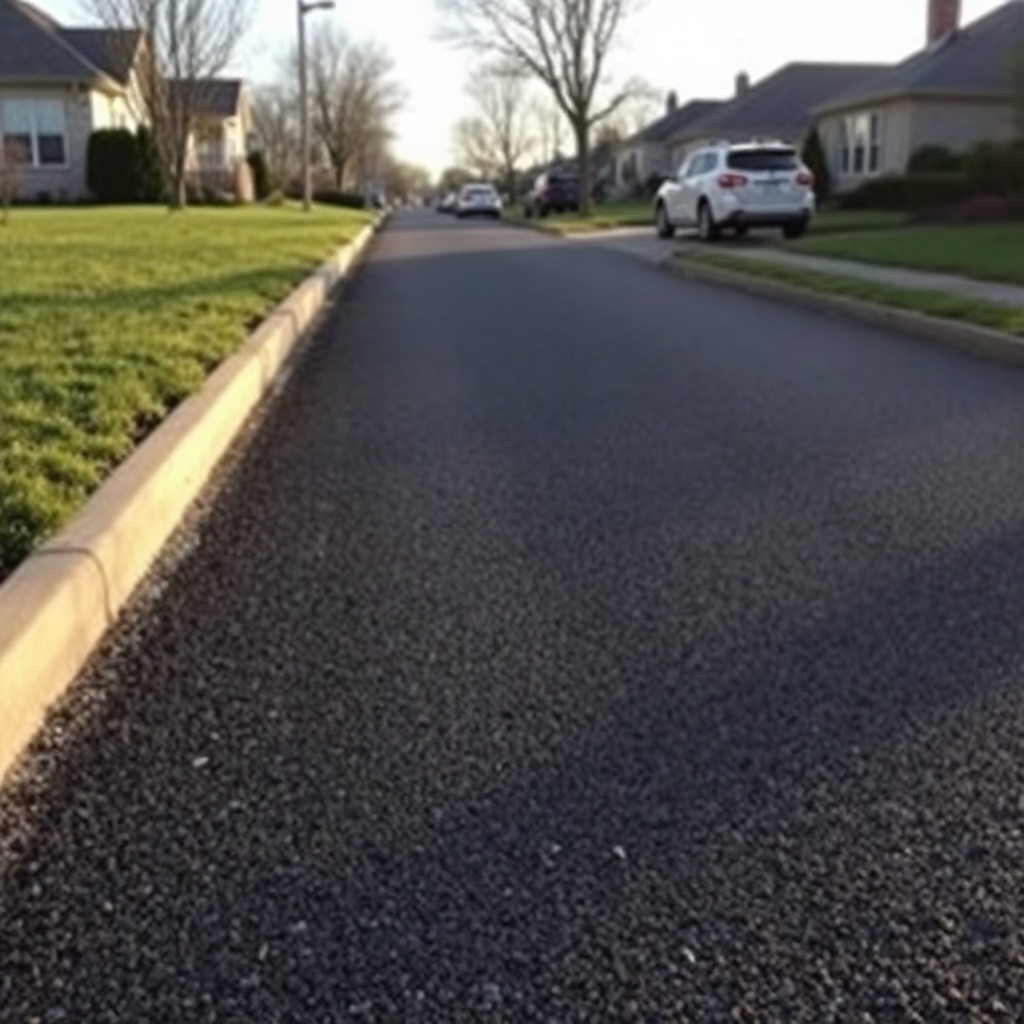
How Do You Calculate Drainage Slope for an AsphaltPavePro Project?
Calculation is straightforward. Measure the total horizontal length of the driveway (in feet or metres) and determine the required vertical drop. For a 1.5% slope, multiply the length by 0.015. Example: a 20-metre driveway needs a vertical drop of 0.30 metres (20 x 0.015). For imperial: a 50-foot driveway needs 0.75 feet (9 inches) of drop. Always measure from the highest point (usually the garage apron or house foundation) to the lowest edge where water exits.
On a typical detached home driveway in the UK, this means the garage end should be 15-20 cm higher than the road edge for a 10-metre run. Use a laser level or a 1-metre spirit level with a 1.5 cm shim—place the level on the surface, raise one end until the bubble centres, and the shim height equals the slope. For curved or multi-plane driveways, break the surface into straight segments and calculate each separately. The mix gradation and roller pattern used during installation must also support this slope without causing ruts or washboarding.
Key formula reminder: Slope (%) = (Vertical Drop / Horizontal Length) x 100. For AsphaltPavePro work, never exceed a 5% slope for vehicle access, as steeper grades cause gravel separation and reduce sealcoat bonding. Most residential driveways fall between 1.5% and 3%.
What Happens When Drainage Slope Is Too Shallow on an AsphaltPavePro Driveway?
Insufficient slope leads to ponding—standing water that sits on the surface for hours or even days after rain. This condition accelerates the three main failure modes in asphalt structures. First, the water penetrates the sealcoat and reaches the asphalt binder, causing oxidation and brittleness. Second, freeze-thaw cycles (common in UK winters) expand the water within the asphalt matrix, creating potholes and alligator cracking. Third, ponding directs water to joints and edges, which are the weakest points in any AsphaltPavePro patch system.
We have observed that driveways with slopes below 1% develop surface cracking within 18 months, even with premium sealcoat. The table below summarises the severity of damage based on slope deficiency for a typical 40 m² AsphaltPavePro driveway installation in the UK.
| Slope (%) | Severity Level | Common Damage | Estimated Repair Cost (GBP) | Time Until Failure |
|---|---|---|---|---|
| 0.0 – 0.5 | Critical | Deep ponding, subbase washout, full structural failure | £2,800 – £4,200 | 1–2 years |
| 0.6 – 1.0 | Severe | Potholes, edge cracking, sealcoat delamination | £1,500 – £2,500 | 2–4 years |
| 1.1 – 1.4 | Moderate | Surface cracks, algae growth, patch failure | £600 – £1,200 | 4–6 years |
| 1.5 – 2.0 | Acceptable | Minimal wear, no ponding | None (preventive) | 8–12 years |
| 2.1+ | Optimal | Excellent drainage, long life | None | 12–15+ years |
How Does AsphaltPavePro Sealcoat Affect Drainage Slope Performance?
AsphaltPavePro sealcoat is a water-based, polymer-modified emulsion that fills microscopic voids in the asphalt surface. When applied correctly, it creates a smoother, more water-repellent finish that actually improves drainage efficiency by reducing surface friction. However, if the underlying slope is insufficient, sealcoat can trap water beneath its film—especially if applied in multiple thick coats without adequate drying time. This is why our sealcoat application temperature and timing guide stresses that each coat must be fully cured (4-6 hours at 15°C) before the next application.
Thicker sealcoat layers (over 0.5 mm per coat) can reduce the effective slope by introducing a small but measurable rise. On a 10-metre driveway, three thick coats add roughly 1.5 mm of additional material at the high end. While this seems negligible, it can reduce a 1.5% slope to 1.48%, which may cause minor ponding on wide driveways. Stick to the recommended 0.3 mm per coat for AsphaltPavePro sealcoat, and always allow for the slight reduction in slope when applying near drainage points. We also advise against using sealcoat to “level” low spots—that is a structural issue that requires patching, not sealing.
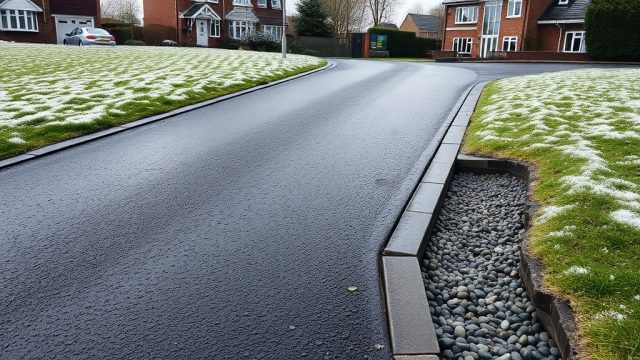
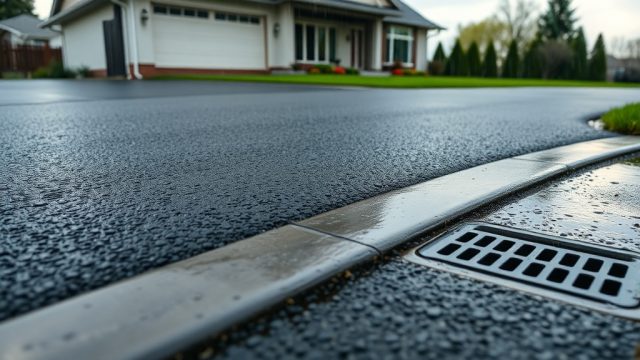
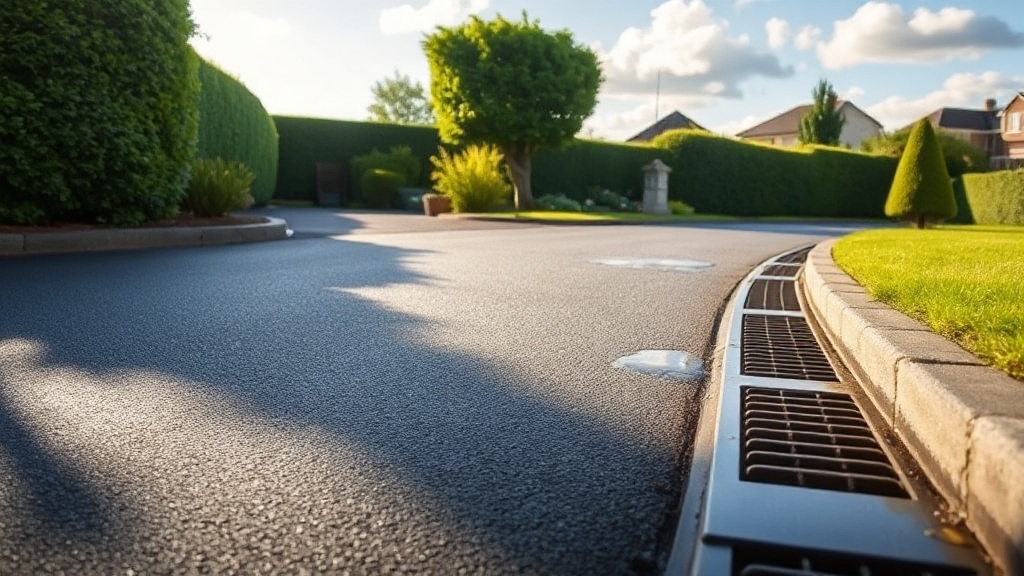
For driveways with a slope exactly at the 1.5% minimum, we recommend installing a drainage channel (linear drain) at the low edge to guarantee water exit. This is a low-cost addition (usually £150–£300 installed) that eliminates all risk. In our experience, the combination of proper slope plus AsphaltPavePro sealcoat yields a surface that dries 40% faster than unsealed asphalt during typical UK drizzle.
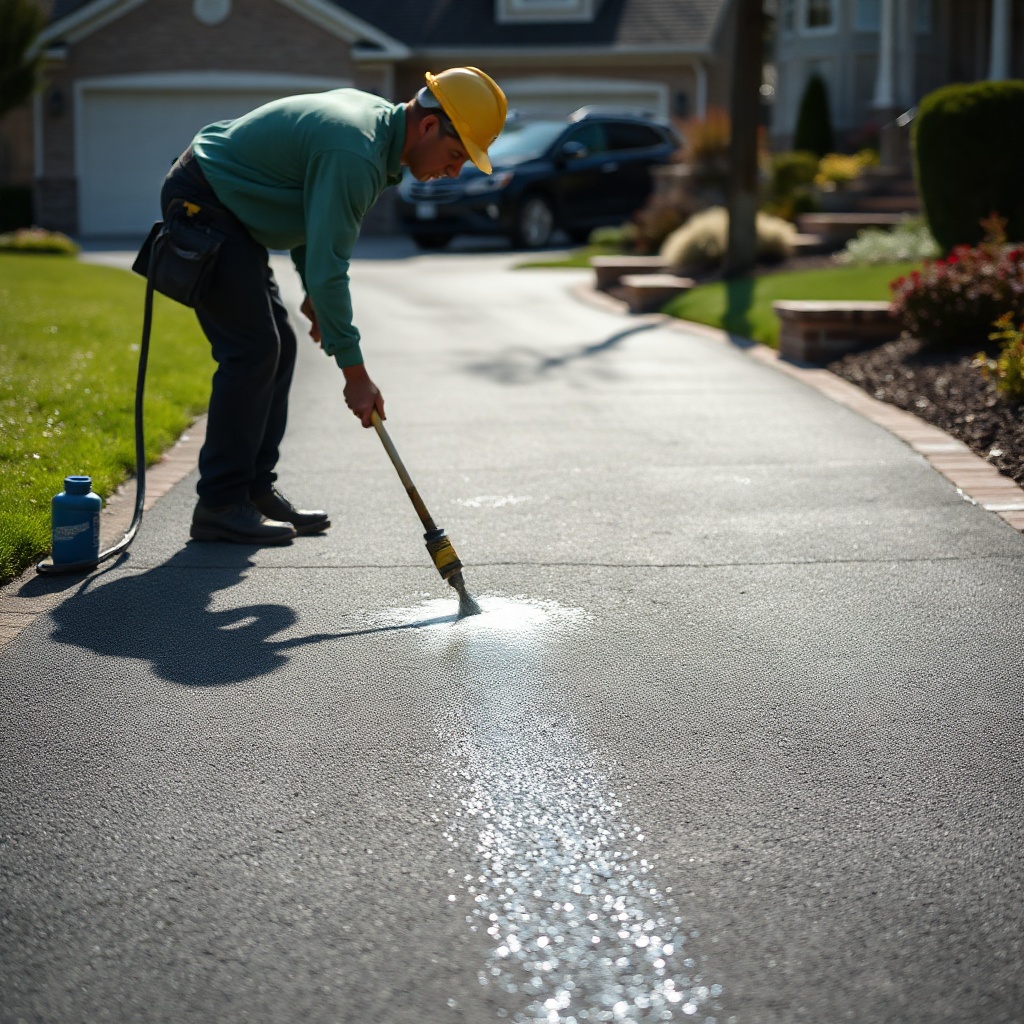
Can You Correct Drainage Slope After AsphaltPavePro Installation?
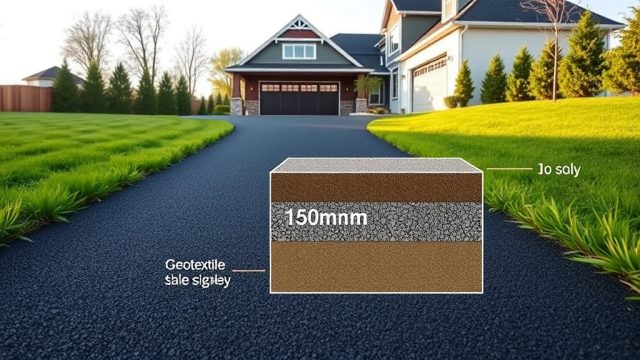
Partial correction is possible, but full correction requires overlay or replacement. For minor slope deficiencies (less than 0.5% short of target), you can apply an AsphaltPavePro levelling course—a thin overlay of hot mix asphalt specifically designed for slope adjustment. This is typically 25–50 mm thick at the low side, tapering to zero at the high side. The bonding between AsphaltPavePro overlay and existing sealcoat is critical here; a tack coat must be applied at 0.4–0.6 L/m² to prevent delamination.
For more severe corrections (over 0.5% deficiency), the entire surface must be milled and replaced. This costs £40–£60 per m² in the UK, depending on access and disposal fees. Many homeowners choose to combine this with drainage channel installation to future-proof the property. A cheaper but less durable alternative is to use asphalt patching to build up low spots—but this only works for isolated depressions, not whole-driveway slope errors. Always consult an AsphaltPavePro certified contractor before attempting structural corrections, as improper grading can redirect water toward the house foundation, causing structural damage far costlier than the driveway itself.
A cautionary tale: one UK homeowner attempted to fix a 0.8% slope by adding two extra coats of sealcoat over three years, thinking the material would “fill in” the low area. Within 18 months, the sealcoat blistered and trapped water, leading to a full replacement at £3,500. The slope correction itself cost only £600 when done properly the first time.
What Owners Say About AsphaltPavePro Drainage Slope Design
Homeowners across the UK consistently report that getting the drainage slope right before any AsphaltPavePro work saves them money and stress long-term. Susan M. from Bristol notes: “Our contractor used a laser level to set a 2% slope, and even after torrential rain, the driveway dries within an hour. Our neighbour’s driveway (no proper slope) stays wet for two days.” Another owner, James T. from Manchester, shares: “I had ponding issues for years. After a professional AsphaltPavePro slope correction and sealcoat, water runs off like a river. The £1,200 I spent was worth every penny—no more puddles, no more ice patches in winter.”
Common advice from owners includes: demand a slope measurement before signing any contract; never accept a slope below 1.5%; and budget for a drainage channel if your driveway is long or flat. One owner in Edinburgh said they specifically chose AsphaltPavePro because the contractor provided a detailed drainage plan with slope calculations and cross-sections. “It showed they understood the science, not just the tarmac,” they said. For homeowners contemplating a sealcoat vs. tar and chip decision, our comparison guide explains how each system interacts with slope—and why sealcoat generally performs better on properly graded surfaces.
Frequently Asked Questions
What is the best drainage slope for an AsphaltPavePro driveway in the UK climate?
1.5% to 2% (1/8 to 1/4 inch per foot). This range works well for moderate UK rainfall and prevents ponding without being too steep for vehicles.
Can I measure drainage slope myself?
Yes. Use a 1-metre spirit level and a 1.5 cm shim. Place the level on the driveway, lift one end with the shim, and if the bubble centres, you have 1.5% slope. For length, measure from garage to road and calculate the required drop.
Does AsphaltPavePro sealcoat change the slope?
Slightly, but negligibly. Each thin coat (0.3 mm) adds minimal material. However, three or more thick coats can reduce slope by 0.02–0.05%, which may matter on a minimum-slope driveway.
What if my driveway is perfectly flat (0% slope)?
You need a complete regrade or an overlay with AsphaltPavePro levelling course. Flat driveways will pond severely and fail within two years. Budget £40–£60 per m² for a full correction.
How does drainage slope affect AsphaltPavePro patch durability?
Poor slope directs water into patches, causing them to weaken and break apart. Our patch thickness guide explains that patches on sloped surfaces must be feathered to 25 mm minimum thickness at the low end to resist water washout.
Is 2.5% slope too steep for an AsphaltPavePro driveway?
No, but it is borderline. Up to 3% is acceptable for most cars, but steeper than 3% may cause gravel separation and sealcoat wear at the low end. Use a heavier binder mix and apply sealcoat in thin coats only.