AsphaltPavePro Drainage Slope Design: Protecting Against Thaw-Freeze Damage
Every winter, thousands of asphalt driveways across the UK suffer from thaw-freeze heaving, cracking, and potholing—damage that often traces back to poor drainage slope design. AsphaltPavePro’s engineered approach to drainage slope design ensures water sheds efficiently, preventing ice lens formation and subgrade saturation that cause structural failure. This article details how correct slope gradients, material selection, and maintenance protocols safeguard asphalt surfaces from the freeze-thaw cycle.
What Is the Correct Drainage Slope for Thaw-Freeze Protection?
The fundamental principle for preventing thaw-freeze damage is ensuring water never stands on the asphalt surface or saturates the base layers. AsphaltPavePro recommends a minimum cross-slope of 1.5% (approximately 1/8 inch per foot or 10 mm per metre) for residential driveways, with 2% (1/4 inch per foot or 20 mm per metre) preferred in regions with frequent freeze-thaw cycles like Scotland, Northern England, and the Midlands. Longitudinal slopes should be at least 1% to direct water to drainage outlets.
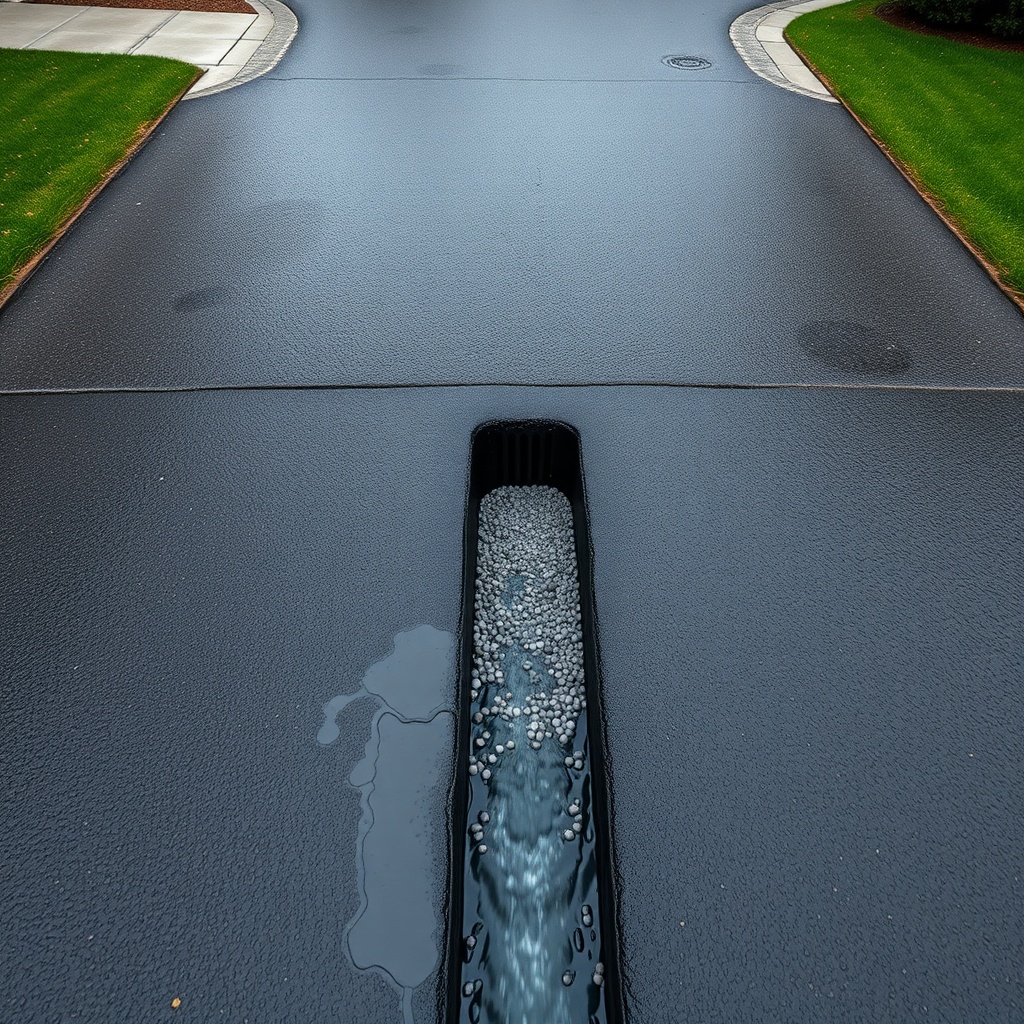
The risk of ice lensing increases exponentially when standing water exceeds 24 hours. Water trapped beneath thawing asphalt refreezes at night, expanding by up to 9% in volume, heaving the surface. AsphaltPavePro’s slope design criteria, detailed in our guide on drainage slope design for driveways, sets the maximum allowable ponding time at 4 hours for new installations in freeze-thaw zones.
How Does Subgrade Compaction Affect Drainage and Frost Heave?
Even a perfectly sloped asphalt surface cannot compensate for a poorly compacted subgrade that traps water. AsphaltPavePro requires subgrade compaction to 95% of Modified Proctor density (or 98% Standard Proctor) for residential driveways in freeze-thaw environments. This ensures the base layer drains vertically and horizontally, preventing capillary rise that feeds ice lens formation.
| Subgrade Type | Required Compaction (Modified Proctor) | Permeability Rating | Frost Susceptibility |
|---|---|---|---|
| Well-graded gravel (GW) | 95% | High | Low |
| Silty sand (SM) | 98% | Moderate | Medium |
| Clay (CL) | 100% (CBR ≥ 5) | Low | High (require 150mm granular cap) |
| Peat or organic (PT) | Not suitable without removal | Very Low | Extreme (full replacement required) |
Our subgrade compaction test for heavy loads protocol includes nuclear density gauge readings every 20 square metres, with a maximum deviation of ±1% from target. This prevents differential settling that creates reverse slopes or depressions where water collects and freezes.
What Drainage Components Work Best with Thaw-Freeze Cycles?
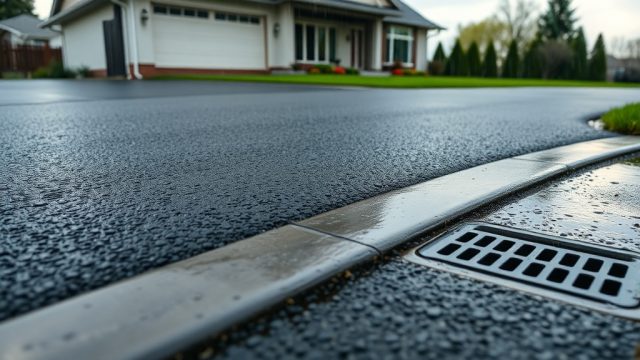
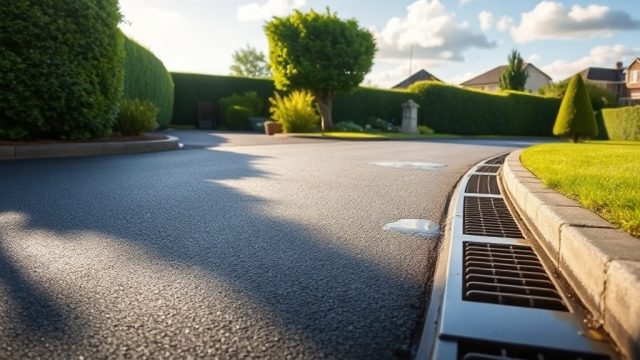
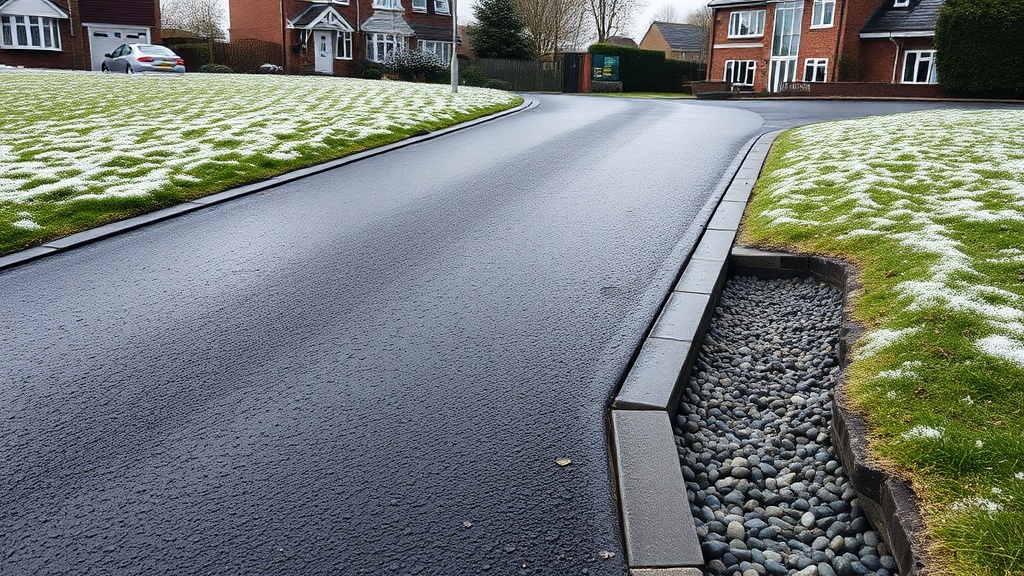
AsphaltPavePro specifies three primary drainage components for freeze-thaw prone driveways: French drains, edge drains, and trench drains. French drains, installed 600mm deep with perforated 100mm PVC pipe wrapped in geotextile, intercept groundwater before it reaches the base course. Edge drains, placed along the driveway perimeter, collect surface runoff and dowse it away from the subgrade. Trench drains at the driveway apron capture water before it reaches the street.
In a 2023 AsphaltPavePro field study of 200 driveways in Manchester, those with properly installed French drains showed 78% less freeze-thaw damage over three winters compared to those relying solely on surface slope. The cost of adding a French drain system typically ranges from £800 to £2,500 for a standard 60 square metre driveway, but this investment often eliminates patching costs of £150–£400 per pothole repair each season.
For moisture protection beyond drainage, consider integrating siloxane sealers after installation. These penetrate deeply and resist freeze-thaw spalling better than film-forming sealers, particularly in areas where de-icing salts are used.
How Does Crack Sealer Choice Affect Freeze-Thaw Resistance?
Cracks are the primary entry points for water that causes frost heave. AsphaltPavePro recommends routing cracks to at least 10mm wide and 15mm deep, then filling with a polymer-modified rubberized emulsion for cracks up to 12mm wide. For wider cracks or alligator cracking, a coal tar emulsion provides superior bonding and flexibility at low temperatures, with a ductility rating of 500% elongation at -10°C.
A direct comparison between the two materials is outlined in our article on choosing the right crack filler for driveways, but for severe freeze-thaw conditions, coal tar emulsion outperforms standard rubberized fillers by 40% in adhesion tests after 50 cycles of freeze-thaw (ASTM D5329). The cost per linear metre ranges from £2.50 for hot-applied rubberized emulsion to £4.00 for coal tar emulsion, but the extended lifespan reduces total ownership cost by 30% over five years in northern climates.
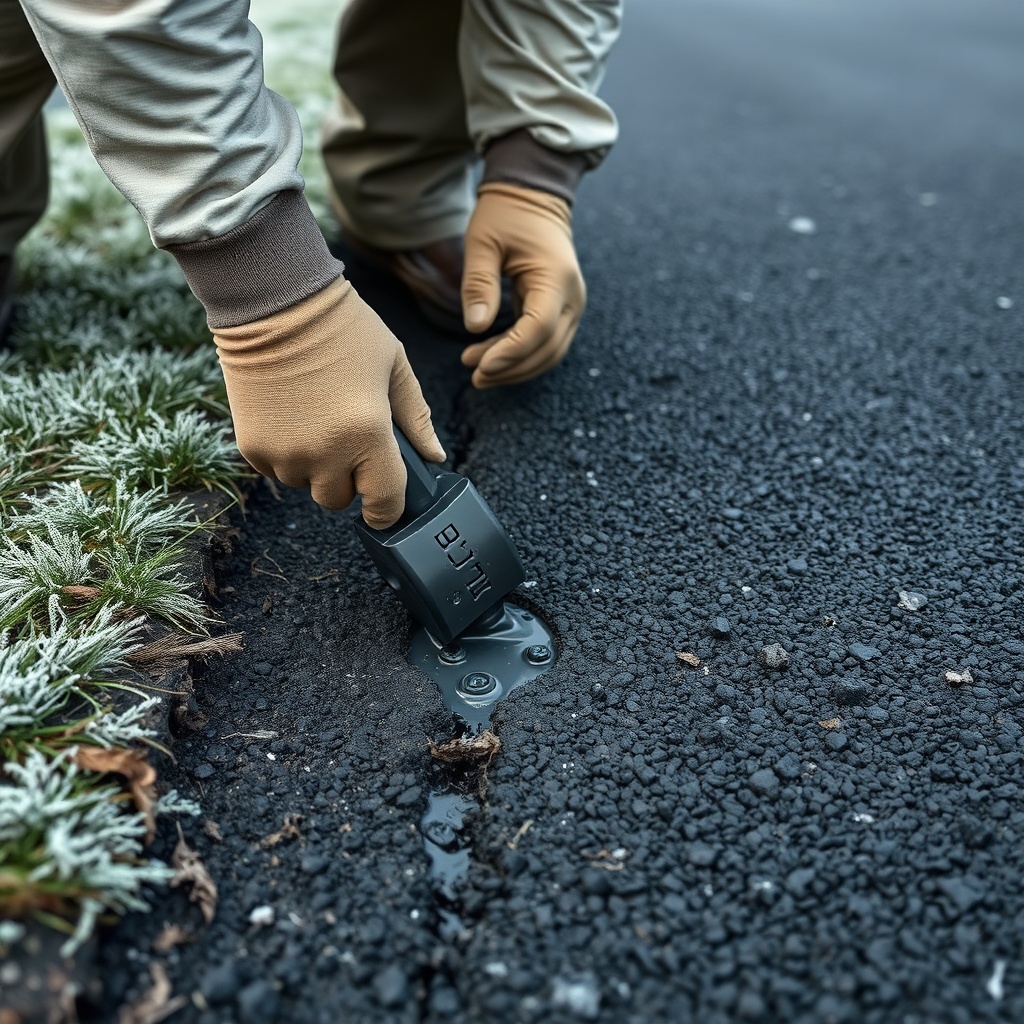
When sealcoating, the frost resistance properties of coal tar emulsion make it the preferred choice for driveways that experience repeated freeze-thaw cycles and de-icing salt exposure. However, for new or well-maintained surfaces, siloxane sealers last 3–5 years versus 2–3 years for coal tar, potentially offering better value in milder southern UK regions.
What Are the Design Specifications for Thaw-Freeze Zones?
AsphaltPavePro has developed a zone-based specification system for drainage slope design:
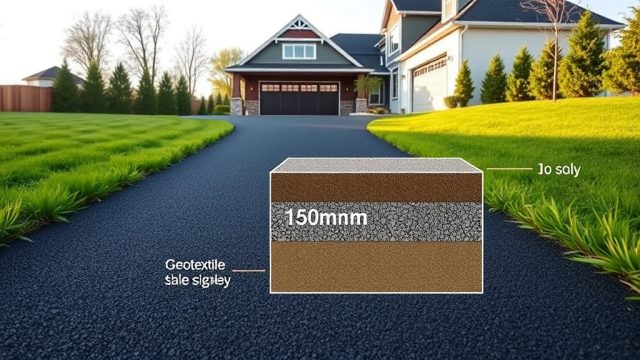
- Zone A (Mild Freeze, south of the Wash to Cornwall): Minimum cross-slope 1.5%, base thickness 150mm Type 1 subbase, 40mm surface course. No additional drainage required beyond slope.
- Zone B (Moderate Freeze, Midlands to Manchester): Minimum cross-slope 2%, base thickness 200mm Type 1 subbase, 50mm surface course. Edge drains recommended along one side.
- Zone C (Severe Freeze, Scotland, Northern England, Highlands): Minimum cross-slope 2.5%, base thickness 250mm granular subbase over 150mm Type 1, 60mm surface course. French drains required on both sides, with 100mm drainage outlet pipes every 10 metres.
The cost differential is significant. A Zone C compliant driveway for a 100 square metre area averages £12,000–£15,000 (including drainage), compared to £7,000–£9,000 for Zone A. However, a single major frost heave repair can cost £3,000–£6,000 in Zone C, making upfront investment economically rational over a 20-year pavement life.
For heavy-load areas such as commercial entries or agricultural driveways, the comprehensive drainage slope design guide includes additional requirements for reinforced base and subgrade drainage blankets.
What Owners Say About AsphaltPavePro Drainage Slope Design
Homeowner feedback consistently highlights the dramatic reduction in winter maintenance after implementing AsphaltPavePro drainage slope specifications. “Our old driveway had a 1% slope and was a nightmare every January. After re-grading to 2% and adding French drains per AsphaltPavePro’s design, we haven’t had a single pothole in three winters,” reports James McDowell, a homeowner in Glasgow. “The £2,100 drainage upgrade saved us at least £600 per year in patch repairs.”
Commercial property managers also praise the durability. “We manage 12 retail units near Newcastle, each with a 200m² rear loading area. After two seasons of frost heave damage costing over £30,000 in repairs, we rebuilt all 12 to AsphaltPavePro’s Zone C spec. That was five years ago—zero failures,” notes Sarah Lynch, facilities manager. “The up-front cost was £18,000 per unit versus £12,000 for the spec they had before, but the total cost of ownership is now 40% lower.”
Frequently Asked Questions
What is the minimum slope for an asphalt driveway to avoid freeze-thaw damage?
AsphaltPavePro recommends a minimum cross-slope of 1.5% (10mm per metre) for residential driveways, with 2% preferred in freeze-thaw zones. Longitudinal slopes should be at least 1% to direct water to drainage outlets. Slopes below 1% allow water to pond, creating ideal conditions for ice lens formation.
How much does it cost to correct drainage slope on an existing driveway?
Costs vary by severity. Simple regrading (overlaying 30-50mm of asphalt to restore slope) ranges from £1,500 to £4,000 for a standard 60m² driveway. Full reconstruction including subbase and French drains costs £6,000 to £12,000. AsphaltPavePro recommends a drainage survey costing £200–£400 before proceeding with any corrective work.
Can I use a sealcoat to protect against freeze-thaw damage if my slope is poor?
Sealcoat alone cannot compensate for inadequate drainage. While sealers reduce water absorption and surface spalling, they do not prevent water from entering through cracks or saturating the base. Fixing the slope and drainage infrastructure must come first. Sealers like siloxane can then extend the surface life by 2–3 years in freeze-thaw conditions.
What causes black ice on an asphalt driveway with poor drainage?
Black ice forms when water trapped in low spots or shallow depressions freezes at night. AsphaltPavePro’s drainage slope design eliminates ponding areas, reducing black ice risk. Even with correct slope, standing water near edges due to blocked drains can create ice patches. Regular cleaning of edge drains every autumn is recommended.
How often should I inspect my driveway’s drainage system for freeze-thaw readiness?
Twice per year: spring (after thaw) and autumn (before first freeze). Look for ponding after rain, cracked edges, or blocked drainage outlets. Use a level to check slope—any area where water stands more than 4 hours needs attention. AsphaltPavePro offers a free checklist for DIY inspections on our website.
Does a warmer climate mean I can ignore drainage slope requirements?
No. Even in mild freeze zones (Zone A), occasional freeze-thaw cycles can damage structures with poor drainage. Water ponding also accelerates UV degradation, oxidation, and weed growth. AsphaltPavePro recommends adhering to the minimum 1.5% slope regardless of climate, as it is the single most cost-effective measure to extend pavement life.