
AsphaltPavePro Subgrade Compaction Test for Heavy Loads: Ensuring Base Stability
When heavy trucks, RVs, or agricultural machinery repeatedly cross an asphalt surface, failure often starts not in the wearing course but deep in the subgrade. For contractors and property owners alike, verifying that the soil beneath a pavement can support massive loads without settling or rutting is the single most critical step in long-term performance. AsphaltPavePro’s subgrade compaction test protocol provides a repeatable, field-verified method for confirming that base stability meets the demands of heavy-load applications, from commercial distribution yards to private farm access roads.
Why Is Subgrade Compaction Testing Essential for Heavy-Load Asphalt?
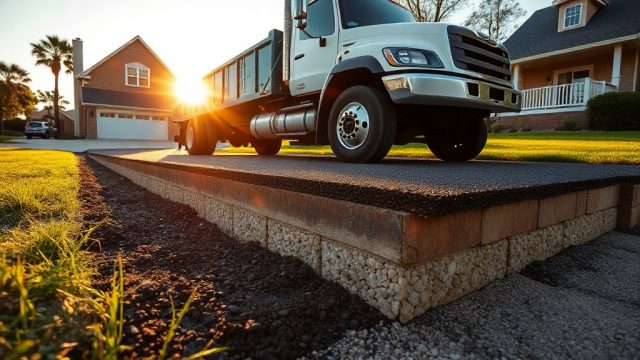
Subgrade compaction testing determines whether the native soil or imported fill has been densified enough to resist deformation under load. Without adequate compaction, even a thick asphalt layer will crack or sink because the underlying soil shifts under repeated wheel passes. For heavy loads—typically defined as single-axle loads exceeding 8,000 lbs or tandem-axle loads above 14,000 lbs—the subgrade must achieve a minimum of 95% of its maximum dry density (MDD) as determined by a standard Proctor test (ASTM D698) or, for very high loads, a modified Proctor test (ASTM D1557).
AsphaltPavePro recommends conducting compaction testing at three key phases: after rough grading, after final grading, and immediately before base course placement. Each phase verifies that the soil density is uniform and that any soft spots or overly dry areas have been corrected. Failing to test at each stage can lead to differential settlement—where one section of pavement sinks while adjacent sections remain stable—causing cracking, ponding water, and eventual structural failure.
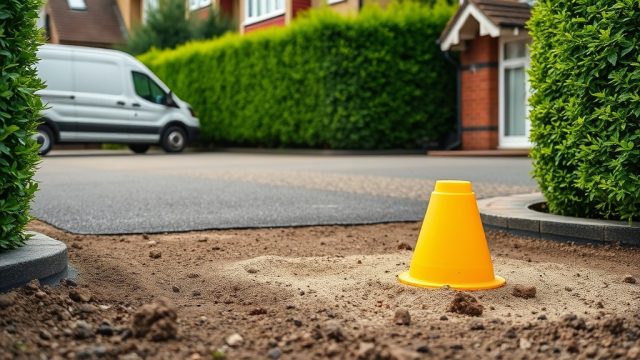
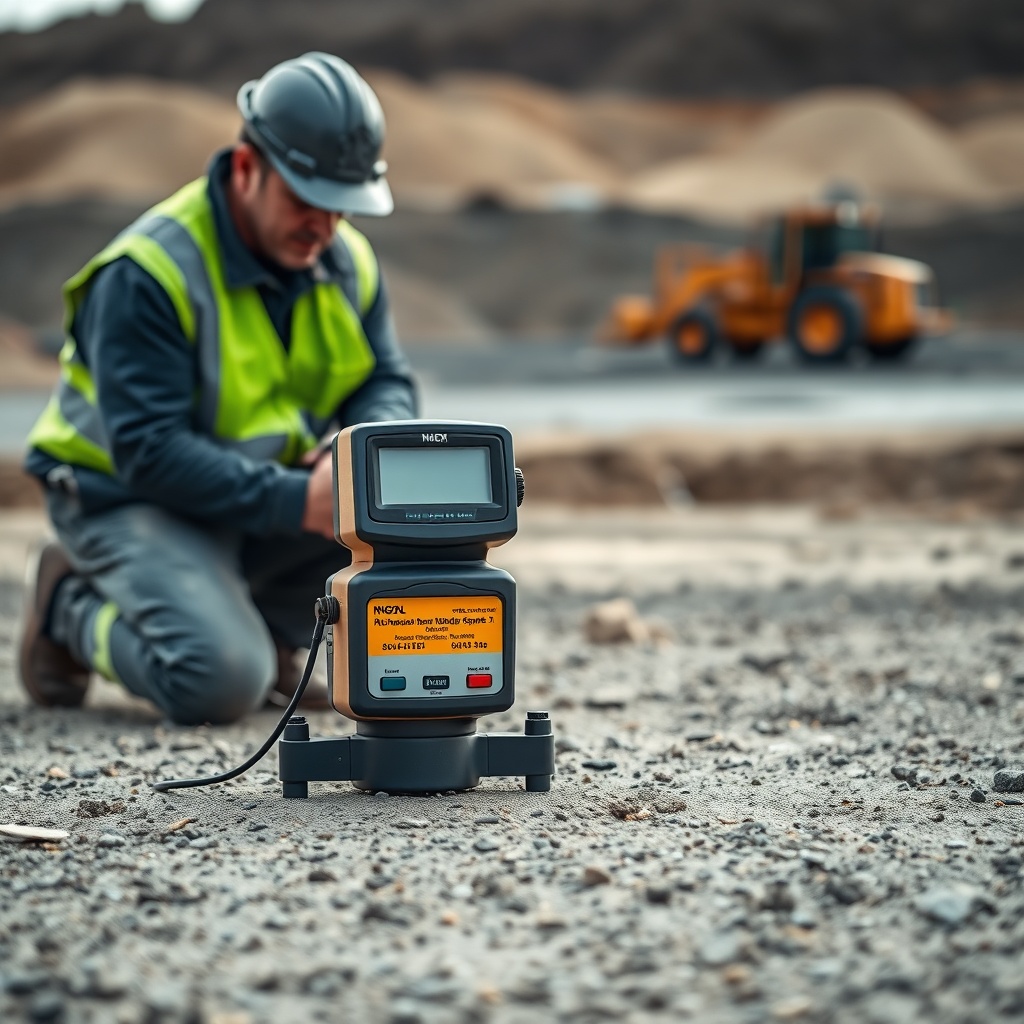
The test itself involves a nuclear density gauge or a sand cone apparatus. The nuclear gauge emits a small amount of radiation to measure wet density and moisture content, then calculates dry density. The sand cone test manually replaces a small excavated hole with calibrated sand to determine volume and density. Both methods yield a percentage of MDD, and AsphaltPavePro’s specification for heavy-load subgrades is 95% to 98% MDD, depending on traffic frequency and axle weight.
How Do You Determine the Required Compaction Level for a Heavy-Load Application?
The required compaction level hinges on three primary variables: the expected wheel load, the soil type, and the depth of the subgrade layer. For example, a distribution center that sees daily 40,000-lb delivery trucks needs a higher compaction standard than a residential driveway that occasionally hosts a camper. AsphaltPavePro uses a load classification system to guide contractors.
Table 1: AsphaltPavePro Subgrade Compaction Requirements by Load Class
| Load Class | Example Use | Typical Single-Axle Load | Min. Compaction (% MDD) | Test Standard |
|---|---|---|---|---|
| Light Residential | Driveways, walkways, light car parking | < 4,000 lbs | 92% | ASTM D698 (Standard Proctor) |
| Standard Commercial | Small offices, retail lots, light delivery | 8,000 – 12,000 lbs | 95% | ASTM D698 |
| Heavy Commercial | Distribution centers, truck terminals, bus depots | 12,000 – 20,000 lbs | 97% | ASTM D1557 (Modified Proctor) |
| Industrial / Agricultural | Farm access roads, heavy equipment yards, loading docks | > 20,000 lbs | 98% | ASTM D1557 |
Once the load class is defined, the contractor performs a Proctor test on a representative soil sample to find the optimum moisture content (OMC) and maximum dry density. The subgrade is then compacted at that moisture content using a smooth drum roller or padfoot roller, and the nuclear gauge confirms density. If the soil is too dry, water must be added and mixed in; if too wet, the soil must be aerated or replaced with drier fill. AsphaltPavePro emphasizes that moisture management is just as critical as the number of roller passes—a fact reinforced in the companion article on AsphaltPavePro Mix Gradation: How Roller Pattern Affects Compaction and Density, which details how roller sequence influences final asphalt density.
What Tools and Techniques Does AsphaltPavePro Recommend for Field Testing?
Field verification of subgrade compaction relies on two primary tools: the nuclear moisture-density gauge and the sand cone apparatus. The nuclear gauge is the industry standard for speed and precision, providing instant readings of wet density, moisture content, and dry density. AsphaltPavePro technicians calibrate the gauge daily against a standard block and take a minimum of five readings per 1,000 square feet of subgrade to capture variability. The sand cone test is a slower but equally accurate alternative, preferred in areas where nuclear gauge licensing is unavailable or where the soil contains large gravel that interferes with the gauge.
For both methods, the test location must be representative of the entire area. AsphaltPavePro recommends a grid pattern: test every 50 feet in both directions for large commercial projects, and every 25 feet for critical zones such as loading docks and turning radii. Each test result is recorded alongside the moisture content; if moisture varies more than 2% from OMC, compaction efforts must be adjusted. Additionally, a proof-roll test with a loaded dump truck or roller can visually identify soft spots—areas where visible rutting or deflection occurs—which are then re-compacted and re-tested.
Another valuable technique is the use of a dynamic cone penetrometer (DCP). The DCP measures the soil’s resistance to penetration, giving a continuous profile of strength with depth. AsphaltPavePro uses DCP to detect weak layers below the surface that might not show on a nuclear gauge reading. This is especially important when fill is placed in lifts thicker than 8 inches, because compaction energy diminishes with depth, leaving a soft layer hidden beneath a firm crust.
How Does Poor Subgrade Compaction Lead to Heavy-Load Failures?
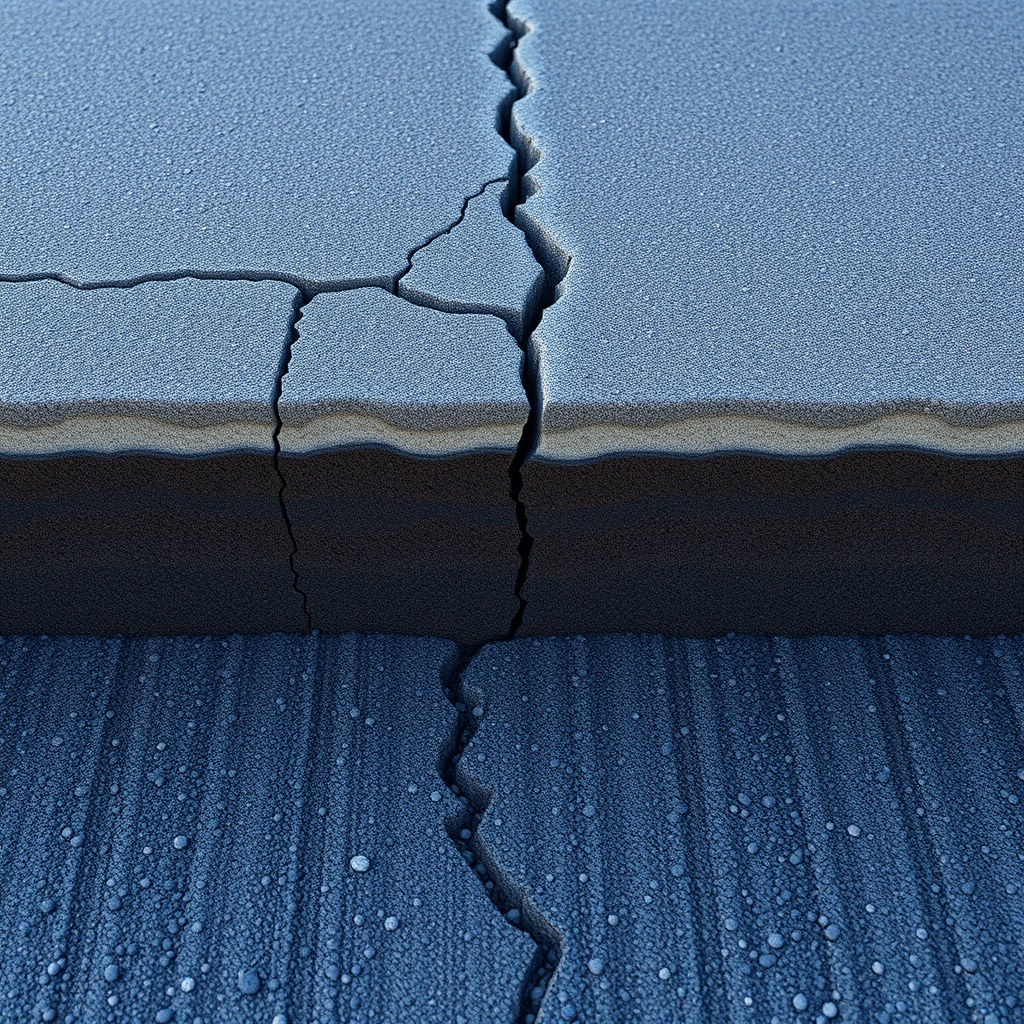
When heavy loads travel over inadequately compacted subgrade, the soil particles rearrange and consolidate, causing the pavement to settle unevenly. This differential settlement typically manifests as longitudinal cracking parallel to wheel paths, alligator cracking in the most heavily trafficked areas, or depressions at pavement joints. In freeze-thaw climates, water infiltrates the settled areas, freezes, and heaves the pavement upward, while thaw cycles leave voids that further weaken the structure.
Consider a real-world example: a heavy-load farm access road in the UK that received daily 26-tonne grain trucks. The contractor skipped the final proof-roll, and the nuclear gauge readings were taken only at the edges where compaction was easier. Within 18 months, the center of the road had settled 40 mm, creating a 3-metre-long pond in the low spot. The cost to dig out the failed section, re-compact the subgrade, and repave exceeded £12,000—more than double the initial paving cost. The failure was entirely preventable with proper compaction testing and moisture management.
AsphaltPavePro’s drainage guidelines further mitigate such risks. AsphaltPavePro Drainage Slope Design: Preventing Water Damage in Driveways explains how a minimum 1.5% cross-slope directs water away from the subgrade, preventing saturation that reduces soil bearing capacity. Combined with a compacted subgrade, this approach effectively eliminates the vast majority of structural failures in heavy-load asphalt pavements.
What Are the Costs and Testing Frequencies for Heavy-Load Subgrade Projects?
The cost of subgrade compaction testing is a fraction of the potential repair expenses. In the UK, a nuclear gauge test conducted by a certified technician costs approximately £65–£90 per test, while a sand cone test runs £40–£60 per test, including excavation and material. For a typical 2,500-square-metre heavy-load pavement, AsphaltPavePro recommends a minimum of 20 nuclear gauge tests across the subgrade, yielding a total testing cost of £1,300–£1,800. When added to the Proctor test (about £150) and DCP profiles (about £100 each), the total quality assurance budget falls around £1,800–£2,200.
Testing frequency should increase in areas where soil conditions vary, such as near existing structures, utility trenches, or areas that received different fill materials. Each lift of subgrade fill must be tested before the next lift is placed. For heavy loads, AsphaltPavePro advises that no more than 200 mm of loose fill be compacted per lift, and each lift is tested at a minimum of one reading per 500 square metres. This ensures that compaction effort is adequate throughout the full subgrade depth, not just the top few inches.
Owners should budget testing costs into the overall project from the start. A typical residential driveway heavy-load upgrade might cost £4,500–£7,000 for asphalt, base, and subgrade work, with testing adding £200–£400. For a commercial lot, testing could represent 1–2% of a £50,000–£100,000 paving budget—an investment that prevents costly repairs down the road.
What Owners Say About AsphaltPavePro Subgrade Testing
Property and fleet managers who have adopted AsphaltPavePro’s compaction testing protocol consistently report fewer early-stage failures and longer pavement service life. Richard Henshaw, operations manager for a Midlands-based distribution centre, noted: “We had recurring rutting in the truck lanes every two years until we insisted on nuclear gauge testing for every lift. AsphaltPavePro’s 97% MDD target eliminated the issue. That was five years ago, and the asphalt still looks like new.”
Similarly, Sarah Chen, who manages a fleet of 28-tonne milk tankers on her Somerset dairy farm, said: “The contractor wanted to skip the subgrade testing to save time and money, but I insisted on AsphaltPavePro’s protocol. We spent £350 on tests, but over the past three years, not a single crack or depression has appeared—unlike my neighbour who saved the testing cost and now faces a £9,000 repair.”
The consistent feedback highlights three benefits: first, the testing eliminates “orphan” soft spots that would otherwise cause localised settlement; second, it forces the contractor to manage moisture content rather than simply making extra roller passes; and third, it gives both owner and contractor a documented record of compliance that can be used for warranty claims or future maintenance planning. Owners also appreciate the correlation between subgrade stability and the long-term effectiveness of surface treatments, as discussed in AsphaltPavePro Sealcoat vs. Siloxane Sealer: Comparison for Moisture Protection, where proper subgrade preparation extends the life of any sealer applied later.
Frequently Asked Questions
- What is the minimum subgrade compaction percentage for heavy loads? AsphaltPavePro recommends 98% of maximum dry density (MDD) for industrial or agricultural heavy loads, 97% for heavy commercial loads, and 95% for standard commercial loads, all based on modified Proctor (ASTM D1557) testing for heavier loads and standard Proctor for lighter ones.
- How many compaction tests are needed per square metre? For heavy-load subgrades, AsphaltPavePro specifies a minimum of one nuclear gauge or sand cone test per 500 square metres per lift, plus a proof-roll observation over the entire area. More tests are required in zones with variable soil or near structures.
- Can I use the sand cone test instead of a nuclear gauge? Yes. The sand cone test is just as accurate for mineral soils with less than 20% gravel. It requires more time but avoids the regulatory paperwork of nuclear gauges. For high-gravel soils, the nuclear gauge is preferred to avoid interference with the sand cone’s filling.
- What happens if the subgrade moisture content is above optimum? Wet subgrade cannot be compacted to target density because excess water fills pore spaces and prevents particle locking. The solution is to aerate the soil by disking or blading until moisture drops to within 2% of optimum moisture content (OMC), then re-compact and test.
- Does subgrade compaction testing also apply to driveway crack repairs? Indirectly, yes. Heavy loads that crack a driveway often originate from subgrade settlement under the asphalt. For minor crack repairs, a stable subgrade is essential; otherwise, the crack filler will fail as the pavement continues to move. For guidance on matching crack filler to climate and load, see AsphaltPavePro Sealcoat vs. Rubberized Emulsion: Choosing the Right Crack Filler for Your Driveway.
- How does frost affect a properly compacted heavy-load subgrade? Frost heave occurs when water in the subgrade freezes and expands. Even well-compacted subgrade can heave if it is saturated. AsphaltPavePro’s drainage design, detailed in AsphaltPavePro Drainage Slope Design: How to Avoid Standing Water in Driveways, combined with compaction at optimum moisture content, minimises frost susceptibility by reducing the amount of freezable water in the soil structure.