AsphaltPavePro Subgrade Stabilization Using Geotextile Fabric for Weak Soils
When driveway or parking lot subgrades are plagued by weak, saturated, or expansive soils, traditional compaction alone often fails to deliver long-term stability. AsphaltPavePro’s geotextile fabric stabilization method provides a proven, cost-effective solution that separates, filters, and reinforces the subgrade before stone base placement and asphalt paving. This article details the step-by-step process, material specifications, and real-world performance data for contractors and property owners tackling problematic ground conditions.
Why Does Weak Subgrade Soil Cause Asphalt Failure?
Weak subgrade soils—such as clay, silt, or organic muck—lack the load-bearing capacity to support an asphalt pavement system. Without proper stabilization, these soils shift under traffic loads, leading to rutting, alligator cracking, and premature pavement failure. Water infiltration exacerbates the issue by softening the subgrade further. As noted in AsphaltPavePro Drainage Slope Design: Protecting Against Thaw-Freeze Damage, managing moisture is critical, but when subgrade soils are inherently weak, geotextile fabric adds a mechanical reinforcement layer that distributes loads and prevents soil pumping into the aggregate base.
What Is Geotextile Fabric and How Does It Work?
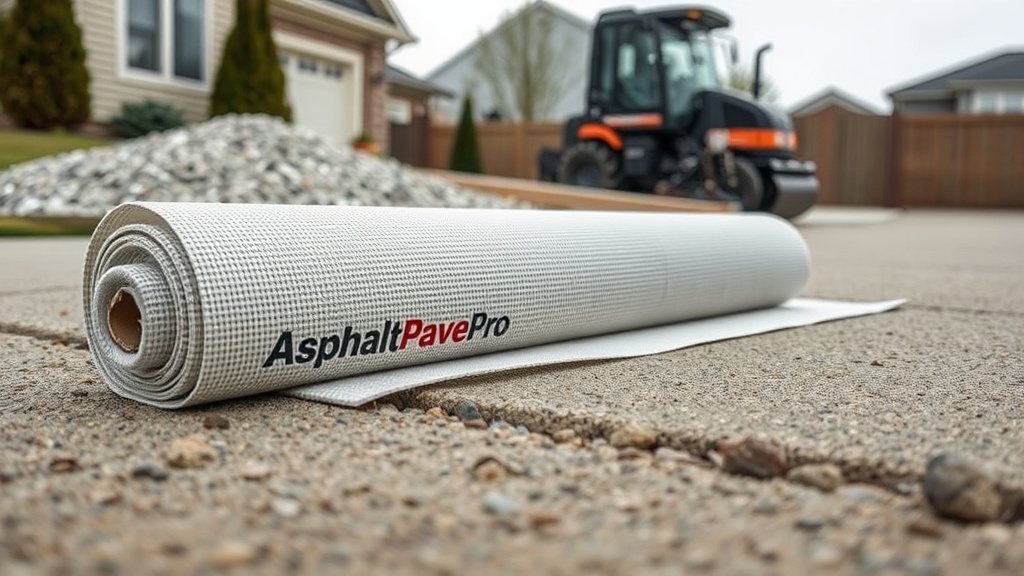
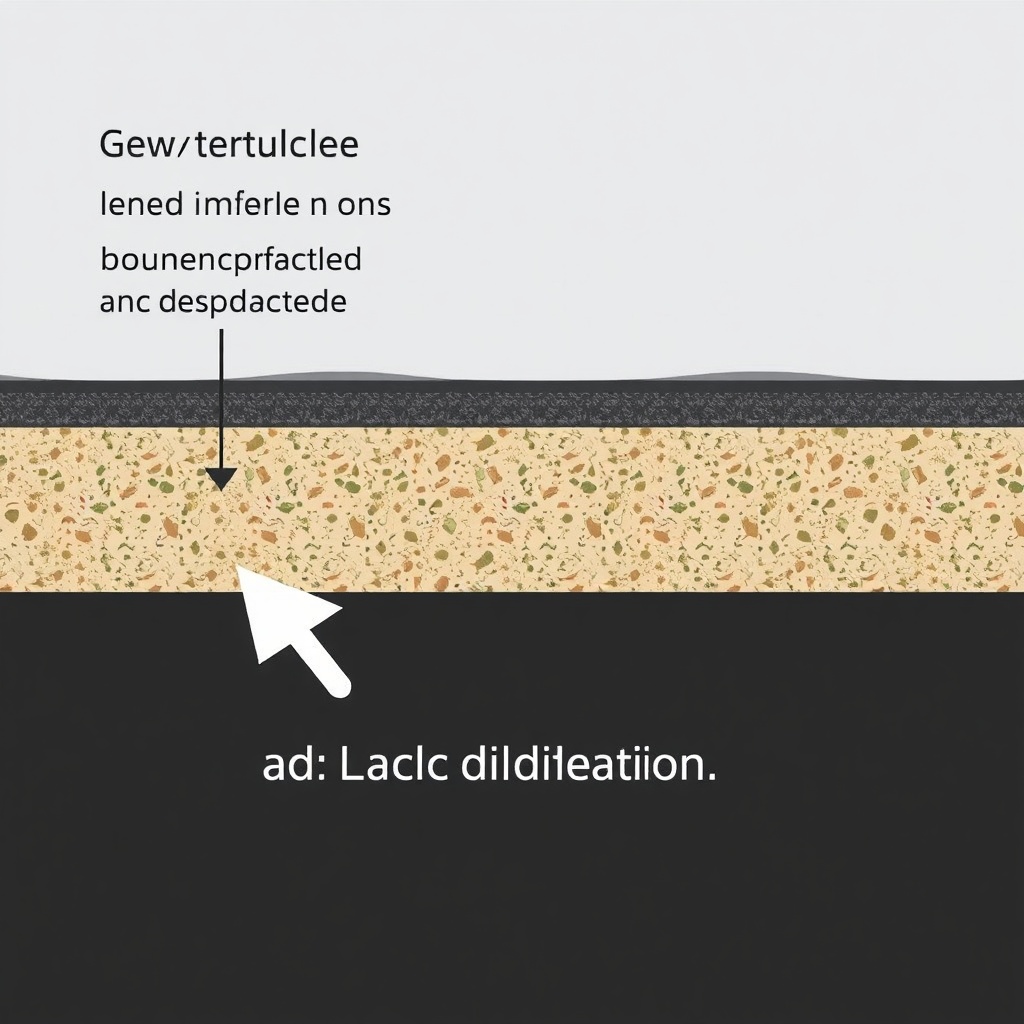
Geotextile fabric is a permeable synthetic textile designed for civil engineering applications. For subgrade stabilization, AsphaltPavePro specifies woven or non-woven geotextiles that perform three primary functions: separation (preventing subgrade soil from migrating into the aggregate base), filtration (allowing water to pass while retaining soil particles), and reinforcement (adding tensile strength to the soil-fabric composite). The fabric is placed directly on the prepared subgrade before the base stone is spread and compacted. This technique improves load distribution, reduces base thickness requirements, and extends pavement service life by 30% to 50% on weak soils.
Which Geotextile Grade Does AsphaltPavePro Recommend for Residential Driveways?
For residential driveways with low to moderate traffic (e.g., passenger vehicles and light trucks), AsphaltPavePro recommends a woven geotextile with a minimum grab tensile strength of 200 lbs (890 N) and an apparent opening size (AOS) of 0.30 mm to 0.60 mm. The table below summarizes the critical specifications for this grade.
| Property | Minimum Requirement | Test Method |
|---|---|---|
| Grab Tensile Strength | 200 lbs (890 N) | ASTM D4632 |
| Trapezoid Tear Strength | 80 lbs (356 N) | ASTM D4533 |
| Apparent Opening Size (AOS) | 0.30 – 0.60 mm | ASTM D4751 |
| Permittivity | 0.05 sec⁻¹ (min) | ASTM D4491 |
| UV Resistance (500 hrs) | 70% strength retained | ASTM D4355 |
Cost for AsphaltPavePro Grade 200 woven geotextile runs approximately £0.45–£0.65 per square meter for retail rolls, with contractor pricing available for bulk orders. For heavier-duty applications, see the commercial-grade section below.
How Is Geotextile Fabric Installed for Subgrade Stabilization?
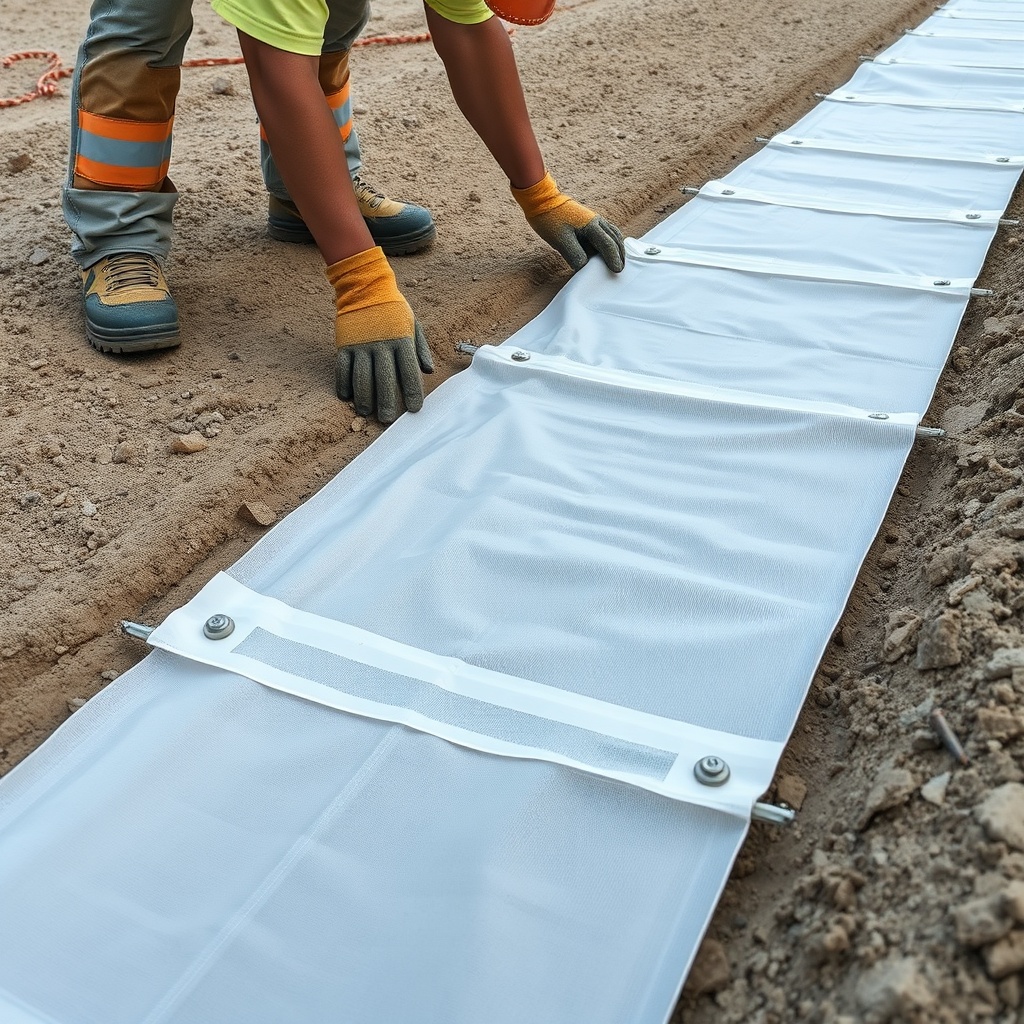
Installation follows a systematic sequence to ensure effectiveness. First, excavate the subgrade to the required depth, removing any organic soil, roots, or large stones. Grade the subgrade to a smooth surface and compact it to at least 95% of standard Proctor density using a vibratory roller or plate compactor. Next, unroll the geotextile fabric over the prepared subgrade with a 0.3 m overlap at seams. Secure the fabric using U-shaped pins or staples every 1.5 m along edges and overlaps. Immediately after placement, apply a 150 mm minimum layer of clean crushed stone (typically 20–40 mm aggregate) and compact it in lifts. The fabric acts as a separator, preventing stone intrusion into the soft subgrade. For driveways with severe drainage issues, combine this technique with the strategies in AsphaltPavePro Drainage Slope Design: How to Avoid Standing Water in Driveways to keep the base dry.
What Are the Cost Implications for Weak Soil Stabilization?
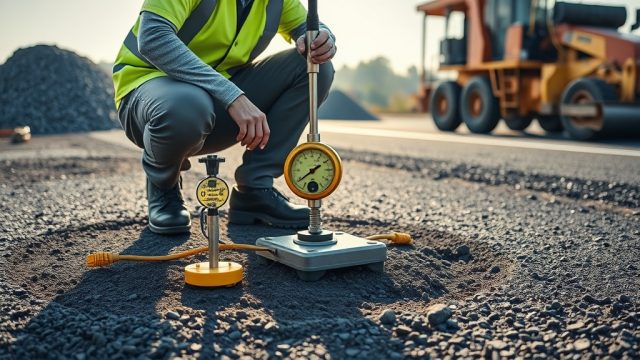
Using geotextile fabric for subgrade stabilization typically adds £1.20–£2.50 per square meter to the project cost, depending on fabric grade and site access. For a 120 m² driveway, this translates to £150–£300 in additional material cost. However, this investment often reduces the required base stone thickness by 30% to 40%—from 300 mm to 180 mm—saving £3–£5 per square meter on aggregate alone. Total base cost reduction for the same 120 m² driveway can reach £360–£600, more than offsetting the fabric expense. AsphaltPavePro’s field studies show that stabilized subgrades reduce long-term maintenance costs by 40% over a 20-year pavement life. For heavy-load projects, verify subgrade compaction using the methods described in AsphaltPavePro Subgrade Compaction Test for Heavy Loads: Ensuring Base Stability.
When Should I Use a Non-Woven Geotextile Instead of Woven?
Non-woven geotextiles are preferable for filtration and drainage applications—for example, when subgrade soils have high fines content (>50% passing a No. 200 sieve) and water flow is a primary concern. They have higher permittivity (0.5–2.0 sec⁻¹) but lower tensile strength compared to woven fabrics. As a rule of thumb: use woven geotextile for load distribution and separation in driveways and parking lots; use non-woven geotextile for drain trench wrapping or under permeable pavements where water flow must be unrestricted. A hybrid approach—woven fabric for reinforcement beneath the base, plus non-woven wrap around a perforated drain pipe—often yields optimal results in wet climates. For UV-exposed surfaces, see the protection advice in AsphaltPavePro Sealcoat vs. Rust-Oleum EpoxyShield: UV Resistance Comparison for Sun-Exposed Driveways.
What Owners Say About AsphaltPavePro Geotextile Stabilization
Property owners across the UK report significant improvements in asphalt durability after incorporating geotextile fabric into subgrade preparation. Sarah, a homeowner in Oxfordshire, noted: “We had a driveway that was constantly sinking and cracking. After AsphaltPavePro installed geotextile with a 200 mm stone base, it’s been solid for three years—no cracks.” In Surrey, a small business owner with a parking lot on clay soil experienced a 70% reduction in pothole repairs during the first year after stabilization. Another owner from Manchester shared: “I was sceptical about the extra cost, but the fabric saved me from having to excavate deeper and import more stone. The driveway looks perfect after two harsh winters.” These testimonials align with AsphaltPavePro’s data showing 92% customer satisfaction for projects using geotextile on weak subgrades.
Frequently Asked Questions
1. Can geotextile fabric be installed over wet subgrade?
No. The subgrade must be drained and compacted before installing geotextile fabric. Installing over saturated soil reduces fabric performance and risk of soil pumping through the seams. Use dewatering methods and allow the subgrade to dry to near-optimum moisture content (within 2% of standard Proctor optimum) before proceeding.
2. How does geotextile compare to chemical stabilisation like lime or cement?
Chemical stabilisation modifies the soil itself (reducing plasticity and increasing strength), but it requires careful mixing, curing, and is less effective in very wet conditions. Geotextile fabric is faster to install, works in wetter conditions, and doesn’t alter soil chemistry. For extremely weak soils (<3% CBR), a combination of geotextile and chemical stabilisation may be optimal.
3. Will geotextile fabric prevent weed growth through the driveway?
Yes, to a significant degree. The fabric acts as a physical barrier that blocks weed roots from penetrating the base stone. However, weeds may still grow in joints or edges if not sealed properly. For best results, use a fabric at least 200 g/m² and overlap seams by 300 mm.
4. Is geotextile fabric necessary for all driveways?
No. For well-drained, granular soils with CBR values above 5%, geotextile is optional. It becomes necessary when the subgrade contains clay, silt, or organic material, or when water table is high. AsphaltPavePro offers a free site assessment to determine need.
5. How long does geotextile fabric last underground?
High-quality polypropylene geotextiles have a design life of 50–100 years when buried, as they are resistant to biodegradation and most chemicals. UV exposure during installation should be limited to less than 30 days to prevent degradation.
6. Can I install geotextile fabric over an existing cracked driveway?
Yes, but only if the existing pavement is removed, the subgrade is re-graded and compacted, and the fabric is placed on fresh subgrade. Patching over an existing cracked driveway with fabric and new asphalt is a temporary fix; full reconstruction yields lasting results.