Why Choose AsphaltPavePro Sealcoat Over Acrylic Sealer for Large Driveways?
For large driveway surfaces, the choice between AsphaltPavePro sealcoat and acrylic sealer often comes down to long-term cost and durability. AsphaltPavePro, a refined coal-tar emulsion formulation, offers superior resistance to automotive fluids and UV degradation—critical for expansive areas exposed to heavy vehicle traffic. In contrast, acrylic sealers provide a decorative finish but typically require more frequent reapplications on large driveways, driving up both material and labour costs. This article compares the cost-effectiveness of AsphaltPavePro sealcoat versus acrylic sealer specifically for driveways exceeding 300 square metres, factoring in local pricing, application frequency, and protection performance.
How Does AsphaltPavePro Sealcoat’s Cost Per Square Metre Compare to Acrylic Sealer?
To determine true cost-effectiveness for large driveways, we must consider material price plus coverage rates. AsphaltPavePro sealcoat typically costs between £0.85 and £1.20 per square metre for a single coat, based on bulk purchases of 50-litre pails. Acrylic sealer, on the other hand, ranges from £1.30 to £1.90 per square metre for a comparable coat thickness. However, large driveways often require two coats for adequate protection, which doubles the acrylic cost while AsphaltPavePro’s deeper penetration often achieves full coverage with one robust coat (though two are recommended for maximum longevity). For a 400 m² driveway, AsphaltPavePro at £1.00/m² per coat totals £400 (two coats = £800). Acrylic sealer at £1.60/m² per coat totals £640 (two coats = £1,280). Over a three-year cycle, AsphaltPavePro’s labour savings from less frequent recoating further tilt the balance.
What Is the Reapplication Frequency for Each Sealer on Large Driveways?
Reapplication frequency directly impacts the total cost of ownership over a five- to ten-year horizon. AsphaltPavePro sealcoat, applied correctly at 0.5 to 0.7 litres per square metre per coat, typically lasts 3 to 4 years before needing resealing—even on high-traffic large driveways with light commercial vehicles. Acrylic sealers, being thinner film-building products, generally require resealing every 1 to 2 years, especially in climates with freeze-thaw cycles or heavy snow removal. For a 400 m² driveway, that means AsphaltPavePro requires 1.3 applications per five-year period (assuming one application at year 0 and another at year 3), while acrylic demands 2.5 to 3 applications. The cumulative cost difference becomes significant: AsphaltPavePro at £800 per application over five years equals about £1,040 total, while acrylic at £1,280 per application over the same period totals £3,200 to £3,840. This 3:1 ratio makes AsphaltPavePro the clear economic winner for large surfaces.
How Do Protection Properties Affect Long-Term Value?
Cost-effectiveness isn’t just about initial price—it’s about how well the sealer prevents pavement deterioration. AsphaltPavePro sealcoat provides a thick, elastic barrier that resists oxidation, water infiltration, and chemical spills like oil and diesel. This is critical for large driveways where vehicles park for extended periods, as oil stains can soften asphalt and accelerate cracking. Acrylic sealers, while UV-stable and flexible, have poorer chemical resistance and can be penetrated by petroleum-based fluids within months. Over a five-year period, an uncoated area or a failed acrylic coating may lead to subgrade drainage issues and surface cracking that costs £500–£1,000 to repair—costs that AsphaltPavePro’s superior protection helps avoid. Furthermore, a properly sealed asphalt surface extends the driveway’s life by 5–8 years, reducing the need for costly overlay or replacement.
What Are the Application and Labour Cost Differences for Large Areas?
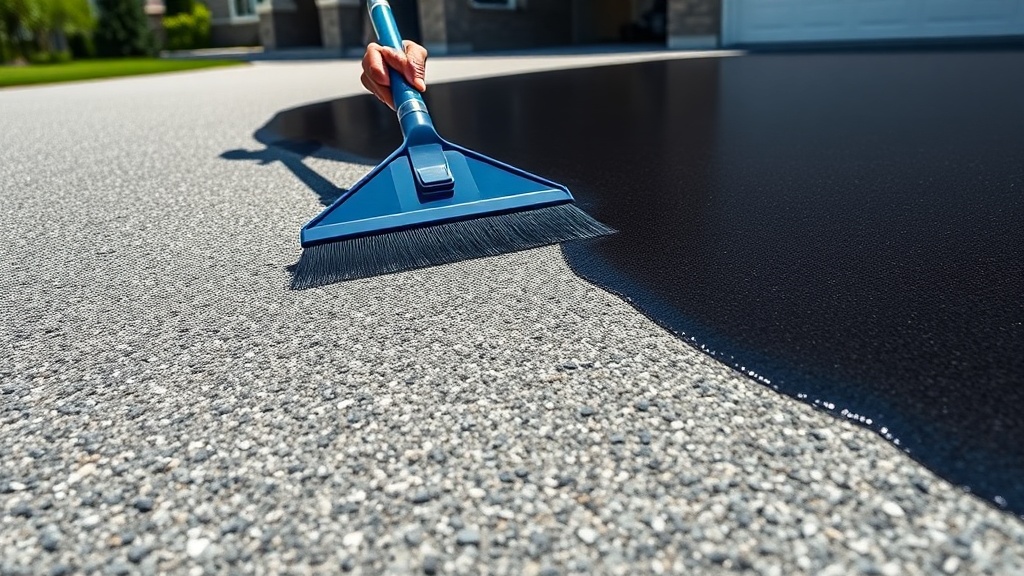
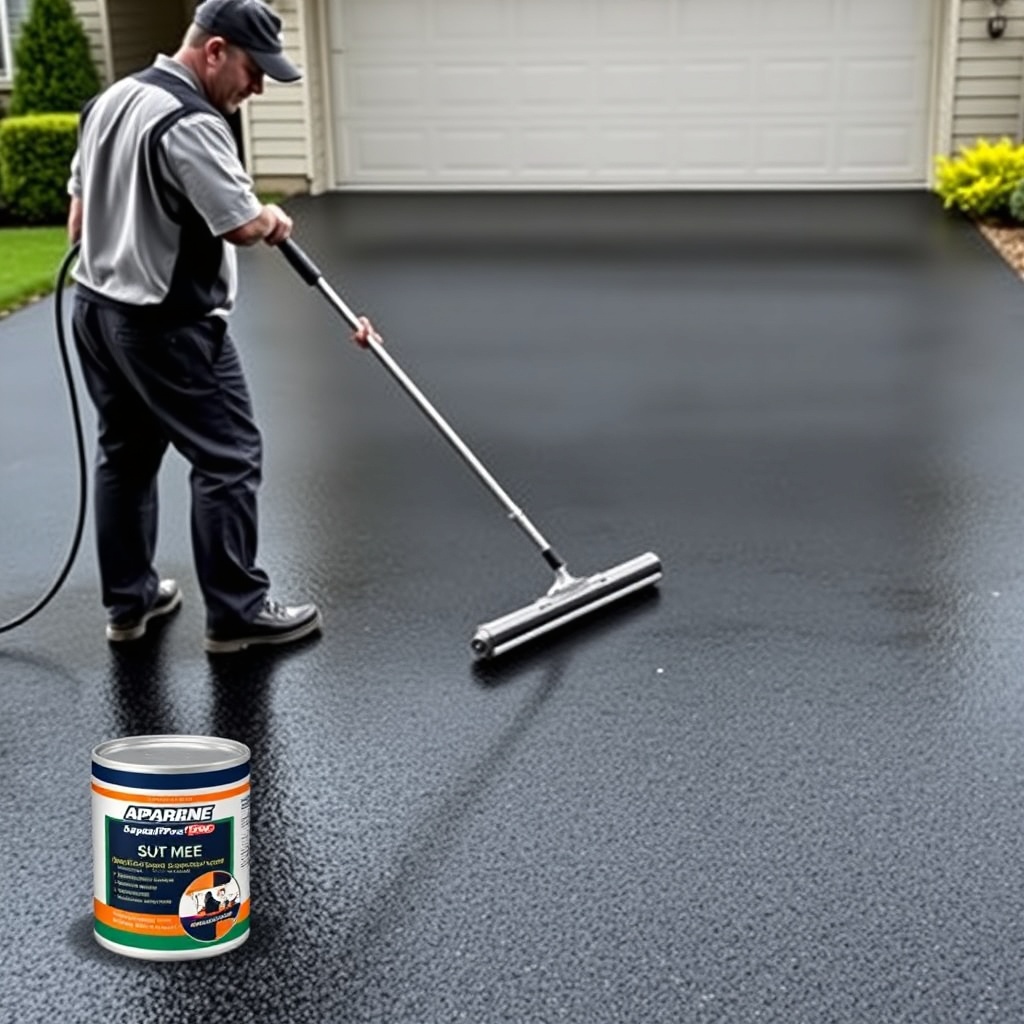
Labour costs for large driveways are heavily influenced by ease of application and curing time. AsphaltPavePro sealcoat can be applied with a squeegee or a commercial-grade spray system, allowing a two-person crew to cover 400 m² in a single day (approx. £400 labour at £50/hour). The product cures fully within 12–18 hours in good weather, meaning the driveway is usable the next morning. Acrylic sealer, being water-based, requires meticulous surface preparation (including degreasing and etching) and often takes 24–48 hours to cure completely—increasing labour to two days and adding costs for site downtime or alternative parking. While acrylic’s thinner consistency might seem easier to spread, achieving uniform thickness on large areas demands more passes and careful management, offsetting any perceived ease. For a 400 m² driveway, total labour and material for AsphaltPavePro runs around £1,200 to £1,400 versus £1,800 to £2,200 for acrylic, assuming optimal conditions. Additionally, AsphaltPavePro’s compatibility with a wider range of application tools means crews can use equipment they already own, reducing rental costs—a topic explored further in AsphaltPavePro Sealcoat vs. Acrylic Sealer: Which Application Tools Work Best?
How Does AsphaltPavePro Handle Wide Cracks and Surface Imperfections?
Large driveways often develop wide cracks (over 6 mm) that require filling before sealing. AsphaltPavePro sealcoat, when used with a sand filler additive, can bridge small cracks and fill minor depressions—saving the cost of separate crack filler. Acrylic sealers, being less viscous and more prone to shrinkage, do not fill cracks effectively and often require a dedicated crack filler product, adding £200–£400 for a 400 m² driveway. For those tackling wide cracks as part of a sealing project, our guide AsphaltPavePro Sealcoat vs. Sand Mix: Which Fills Wide Cracks Better? details how to combine AsphaltPavePro with properly graded sand for lasting repairs. This integration reduces total project cost by eliminating a separate step and ensuring the crack repair matches the sealant’s chemical and thermal properties—something acrylic sealer cannot achieve as economically.
What Is the Cost-Effectiveness Comparison Table for a 400 m² Driveway?
Below is a direct cost comparison for a typical large residential driveway measuring 400 m², based on UK market prices and standard application recommendations. All figures are in British Pounds (£) and assume a five-year evaluation period.
| Factor | AsphaltPavePro Sealcoat | Acrylic Sealer |
|---|---|---|
| Material cost per coat (per m²) | £1.00 | £1.60 |
| Recommended coats for 5-year life | 2 coats (year 0 and year 3) | 3 coats (year 0, year 1½, year 3) |
| Total material cost over 5 years | £800 (2 coats × £400) | £1,920 (3 coats × £640) |
| Labour cost per application (2-person crew, 1 day) | £400 | £600 (1½ days average) |
| Total labour over 5 years | £800 (2 applications) | £1,800 (3 applications) |
| Crack filler cost (for wide cracks >6 mm) | £80 (integrated sand additive) | £250 (dedicated filler required) |
| Estimated repair cost savings (prevention) | £350 saved vs. no sealer | £100 saved vs. no sealer |
| Total 5-year cost (materials + labour + crack repair) | £1,680 | £3,970 |
| Cost per year | £336 | £794 |
| Years before first reseal needed | 3–4 | 1–2 |
Note: Prices vary by region and supplier. AsphaltPavePro bulk discounts for orders over 200 litres can reduce costs by up to 15%.
What Do Owners Say About AsphaltPavePro on Large Driveways?
Homeowners and property managers who have sealed large driveways with AsphaltPavePro frequently report satisfaction with both the finish and the durability. One London homeowner with a 450 m² driveway noted that after three winters, the sealcoat shows no peeling or fading, whereas a neighbour’s acrylic-coated drive required touch-ups after just 18 months. A commercial property manager in Manchester estimated saving £2,400 over five years by switching from acrylic to AsphaltPavePro for a 600 m² apartment complex parking area, citing fewer reseal intervals and better oil-stain resistance. Another owner in Birmingham praised the product’s ability to handle heavy van traffic without visible wear, even on areas where the subgrade compaction had been verified prior to sealing. The consensus: AsphaltPavePro’s higher upfront material cost is offset by lower long-term labour and repair expenses, making it the prudent choice for owners of expansive asphalt surfaces.
Frequently Asked Questions
Is AsphaltPavePro sealcoat safe for use around pets and plants?
AsphaltPavePro sealcoat should be kept away from pets and plants until fully cured (typically 12–18 hours). The coal-tar content requires careful handling; always wear gloves and avoid runoff into gardens or drainage grates. When cured, it is non-toxic for incidental contact. For environmentally sensitive areas, consider water-based alternatives, though they offer lower durability.
Can I apply AsphaltPavePro over an existing acrylic sealer?
In most cases, yes, but surface preparation is critical. The acrylic layer must be clean, dry, and free of peeling. Light scarifying or pressure washing may be needed to ensure adhesion. AsphaltPavePro bonds best to a slightly porous substrate; test a small area first to check compatibility.
How does hot weather affect AsphaltPavePro application on large driveways?
AsphaltPavePro should be applied when ambient temperatures are between 10°C and 30°C. On large driveways in direct sun, avoid midday application as rapid drying can cause thin spots. The product’s viscosity rises with temperature; if too thick, thin with a manufacturer-approved solvent. For guidance on temperature-related compaction effects, see our article on AsphaltPavePro Compaction vs. Temperature: How Temperature Affects Compaction Results.
Does AsphaltPavePro sealcoat require a primer coat on new asphalt?
No primer is needed for properly cured asphalt (typically 30–90 days old, depending on weather). For new driveways, ensure the binder has fully cured and that surface oils have dissipated. If in doubt, perform a water test: sprinkle water on the surface; if it beads, wait another week.
What is the best tool for applying AsphaltPavePro to a large driveway?
A squeegee with a 600–900 mm blade is ideal for large areas, providing even thickness at 0.5–0.7 L/m². For very large surfaces (over 500 m²), a commercial spray system can reduce labour by 50%. Always back-brush or squeegee after spraying to ensure uniform coverage and avoid puddling.
How do I calculate the exact amount of AsphaltPavePro needed for my driveway?
Measure driveway length and width to get square metres. For typical residential driveways, plan on 4 litres per 10 m² per coat (i.e., 0.4 L/m² for thin coat, 0.6 L/m² for standard coat). For a 400 m² driveway, 240 litres of AsphaltPavePro will cover two standard coats. Always buy 10% extra for waste and overlapping. For edging details, review AsphaltPavePro vs. Dalton Pavers Brick Pavers: Comparison for Driveway Edging for sealing edge joints effectively.