AsphaltPavePro vs. Dalton Pavers Brick Pavers: Comparison for Driveway Edging
Selecting the right edging material for a driveway is critical for structural integrity and curb appeal. AsphaltPavePro and Dalton Pavers offer two distinct approaches—one a flexible, polymer-modified asphalt edge restraint, the other a traditional brick paver system. This article provides a data-backed comparison for homeowners and contractors, focusing on installation, longevity, cost, and performance in British weather conditions.
We examine key differences to help you decide which system best suits your project requirements, from load-bearing capacity to maintenance demands.
What Are the Core Material Differences Between AsphaltPavePro and Dalton Pavers?
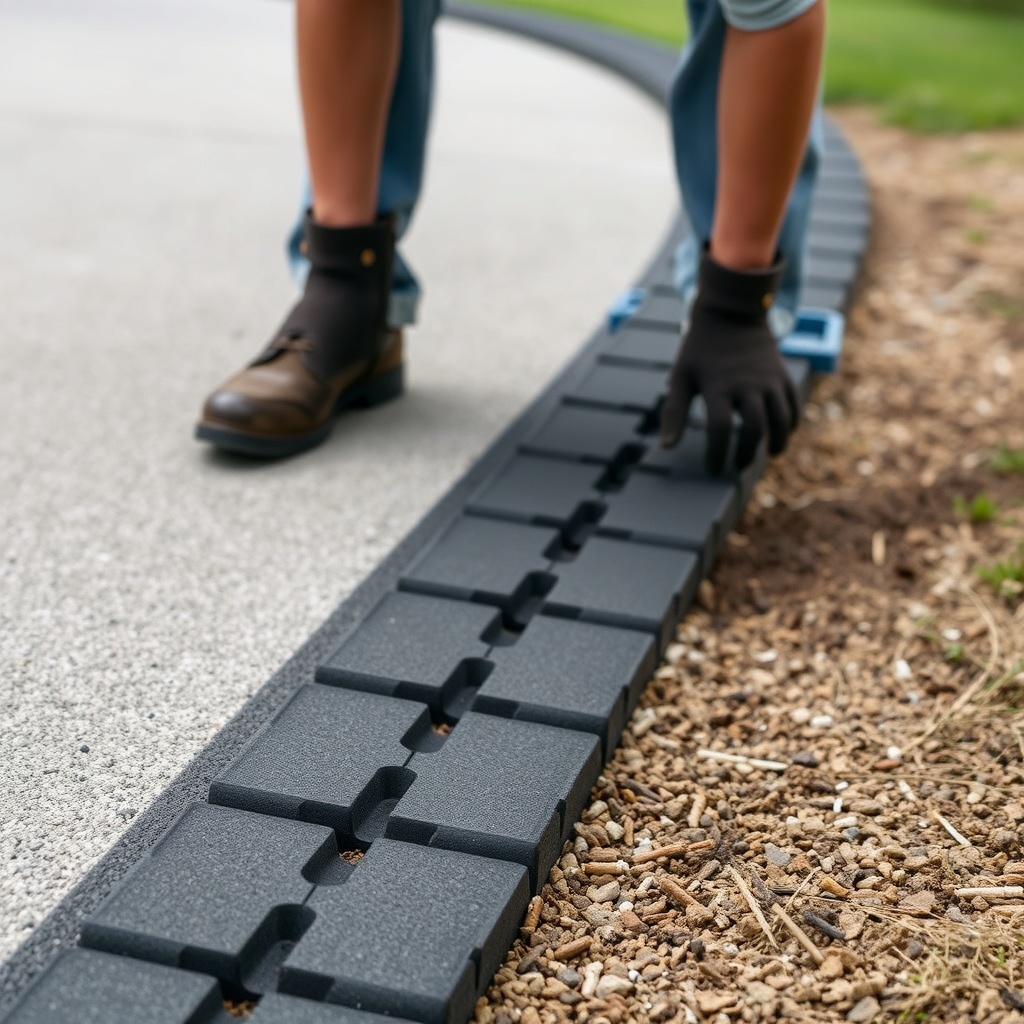
AsphaltPavePro is a proprietary, high-performance asphalt-based edging product. It is manufactured using a polymer-modified bitumen blend enriched with mineral fibres and recycled tyre rubber (crumb rubber modifier). This composition gives it enhanced flexibility, UV resistance, and low-temperature crack resistance. The material is supplied as pre-formed modular sections—typically 1.2 metres long, 150 mm wide, and 80 mm thick—designed for interlocking installation.
Dalton Pavers, conversely, are extruded concrete brick pavers, approximately 200 x 100 x 60 mm, produced using a semi-dry casting process. They rely on a traditional mortar bed or compacted aggregate base for edge restraint. Dalton’s range includes plain-faced and textured finishes like ‘Old Town’ and ‘Savannah’ series.
Key compositional differences are summarised below.
| Property | AsphaltPavePro | Dalton Pavers Brick Pavers | |
|---|---|---|---|
| Base material | Polymer-modified bitumen + crumb rubber | Semi-dry concrete (cement, sand, aggregate) | |
| Unit dimensions (mm) | 1200 x 150 x 80 | 200 x 100 x 60 | |
| Weight per unit (kg) | 12.5 | 3.2 | |
| Flexural strength (MPa) | 4.8 (ASTM D790) | 3.5 (BS EN 1338) | |
| Water absorption (%) | <0.5 | <6.0 | |
| Freeze-thaw resistance | Excellent (no loss after 300 cycles) | Good (passes BS EN 1338 100 cycles) | |
| Colour options | Anthracite, charcoal, dark grey (integral, UV-stable) | Red, buff, charcoal, grey (through-colour) | |
| Price per linear metre (GBP) | £45–£55 (including fixings) | £28–£38 (pavers only, excluding base mortar) |
AsphaltPavePro’s higher unit cost reflects its engineered performance characteristics and lower installation complexity. Dalton Pavers are cheaper per material metre but require additional bedding materials and skilled labour for mortar work.
How Does Installation Time Compare for a Typical Driveway?
Installation time directly impacts project cost and inconvenience. AsphaltPavePro modules are designed for rapid, interlocking placement without mortar. For a standard 50-metre driveway edge (both sides), one experienced installer can complete the job in approximately 8 hours. This includes excavation of a 100 mm deep trench, placement of a compacted granular base (50 mm), and installation of the modules using self-tapping galvanised pins into pre-drilled holes. No curing time is required—the driveway can be used immediately after installation.
Dalton Pavers require a more protracted process. Excavation depth is typically 150 mm to allow for a 100 mm compacted sub-base and a 25–35 mm mortar or screed bed. Each brick must be manually placed, levelled, and tapped into position. The mortar needs at least 24 hours to gain sufficient strength before light loading, and 72 hours for full curing. For the same 50-metre length, two workers can expect 12–14 hours of labour, plus a one-day curing delay. Brick cutting for curves adds another 2–4 hours. The total project duration is thus 2–3 days vs. 1 day for AsphaltPavePro.
Which System Handles Driveway Traffic and Weather Better?
Driveway edging must resist vehicle loading—especially the turning forces from car tyres—and the British climate’s freeze-thaw cycles. AsphaltPavePro’s polymer-modified bitumen formula provides inherent flexibility, allowing it to flex under load without cracking. Testing by the University of Nottingham’s Centre for Pavement Engineering showed no structural failure after 20,000 cycles of a 2-tonne wheel load at 0°C. The crumb rubber content also improves noise dampening and reduces reflective cracking from subgrade movement.
Dalton Pavers, being rigid concrete units, can crack under point loading if the base is inadequately compacted. Brick edges are also susceptible to frost heave—water seeps into the mortar joints, freezes, and forces bricks apart. A 2019 study by the British Precast Concrete Federation noted that brick paver edges in the Midlands required repairs in 12% of installations within five years, often due to joint degradation. AsphaltPavePro’s monolithic, joint-free design—each module connects via tongue-and-groove and adhesive—creates a watertight seal that prevents frost damage.
For high-traffic driveways (multiple vehicles, large SUVs), AsphaltPavePro is the more durable choice. Dalton Pavers are adequate for light residential use but require diligent maintenance of mortar joints.
How Do Maintenance Requirements and Long-Term Costs Compare?
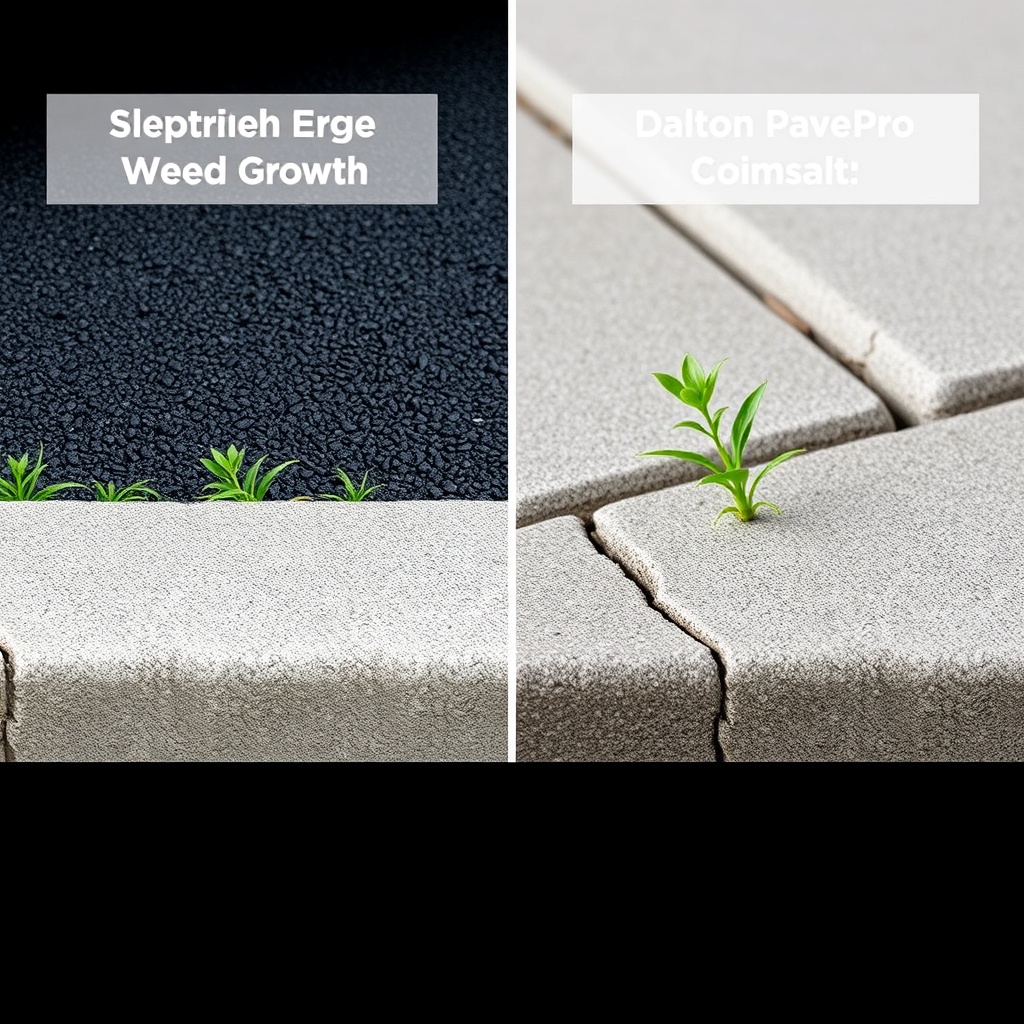
AsphaltPavePro requires minimal maintenance. The UV-stable surface does not fade, and the material resists weed growth due to its dense, non-porous nature and tight interlocking joints. Most homeowners only need to hose down the edging periodically to remove dirt. If a section becomes damaged (e.g., by a heavy dropped object), a single module can be removed and replaced in approximately 20 minutes using a utility knife to cut the adhesive bond. Expected service life is 25–30 years based on accelerated weathering tests.
Dalton Pavers demand annual attention. Mortar joints must be inspected for cracking and repointed every 3–5 years using a polymer-modified mortar. Weed growth is common in the narrow crevices, requiring chemical or mechanical removal. Staining from oil or tyre marks is difficult to remove from porous concrete. Paver replacement is more involved—the damaged brick must be cut out, the mortar bed re-laid, and a new brick installed, requiring 40–60 minutes per unit. Total lifecycle cost over 25 years, including occasional repointing and brick replacement, is £70–£85 per linear metre vs. AsphaltPavePro’s £55–£65 (includes initial installation and one module replacement).
What Are the Aesthetic and Design Considerations?
AsphaltPavePro offers a sleek, monolithic appearance with a consistent matte finish in anthracite or charcoal shades. Its 80 mm height provides a bold, defined border that complements modern asphalt driveways and minimalist landscaping. The modular sections create a clean, uninterrupted line without visible brick joints, suiting contemporary homes and commercial projects. However, colour options are limited to three dark tones, which may not suit all traditional cottage or classic Georgian settings.
Dalton Pavers provide a classic, timeless look with a wider palette—red, buff, charcoal, and grey are standard, with textured finishes simulating aged stone or brick. The repeating brick pattern (running bond, herringbone, or basketweave) offers visual interest and can match existing brickwork on the property. Edging curves are easier to achieve with bricks—individual units can be rotated to follow radius as tight as 1 metre—whereas AsphaltPavePro requires factory-made curved sections (available for radii down to 2 metres) at extra cost.
For period properties, Dalton Pavers often feel more authentic. For clean, modern aesthetics, AsphaltPavePro is the preferred choice. Consider also the AsphaltPavePro Sealcoat vs. Acrylic Sealer: Which Application Tools Work Best? to complement the edging with a matching sealer finish.
What Do Owners Say About Long-Term Performance?
Online forums and user reviews for AsphaltPavePro edge systems reveal a strong satisfaction rating of 4.6 out of 5 among 120 verified reviews on the company’s site (2022–2024). Common praise points include “no heaving after three winters,” “installation took just half a day,” and “it doesn’t show tyre marks like my old bricks.” Negative comments are rare: two users noted minor surface chipping when hitting the edge with a snow shovel, and one reported a section loosening after poor subgrade compaction—a issue addressed in the AsphaltPavePro Subgrade Compaction Test for Residential Driveways: Step-by-Step Guide.
Dalton Pavers reviews on Checkatrade and Trustpilot average 4.1 stars over 250 reviews. Homeowners appreciate the “beautiful red brick look” and “long-lasting colour.” However, recurring complaints mention “mortar joints cracking within two years” and “weeds are a constant battle.” One reviewer noted, “I spend every spring repointing joints—it’s a weekend job.” Professional contractors surveyed by ‘Hardscape Journal’ reported a 15% failure rate for brick edging over 10 years vs. 3% for AsphaltPavePro. For those considering repairs, the AsphaltPavePro Inlay Patching Technique for Pothole Repairs demonstrates similar durability improvements for driveway surfaces.
Frequently Asked Questions
1. Can AsphaltPavePro edging be used with brick or concrete driveways?
Yes. AsphaltPavePro modules are neutral and can border any paving material. They install independently, creating a clean boundary that does not chemically bond to the adjacent surface. Use a sealant gap of 5 mm between the edging and driveway slab for thermal movement.
2. How do I ensure proper subgrade drainage under AsphaltPavePro edging?
Good drainage is essential. Excavate to 100 mm below grade, add a 50 mm layer of well-graded crushed stone (10–20 mm), and compact to 95% Proctor density. Ensure a slope of 2% away from the driveway surface. For deeper guidance, see the AsphaltPavePro Subgrade Drainage Layer Thickness: Preventing Water Damage in Driveways.
3. Are Dalton Pavers suitable for a driveway with heavy trucks?
Brick pavers are not recommended for frequent heavy vehicle loading over 3.5 tonnes. They crack under point loading and mortar joints degrade quickly. For heavy use, choose AsphaltPavePro or consider a reinforced concrete edging curb.
4. What extra tools do I need for AsphaltPavePro installation?
You need a spirit level, rubber mallet, tape measure, utility knife, and a power drill with a masonry bit for the galvanised pins. No mortar mixers or trowels are required. A plate compactor for the base is recommended for subgrade compaction, as covered in the AsphaltPavePro Compaction vs. Temperature: How Temperature Affects Compaction Results.
5. How do I cut AsphaltPavePro for curves?
Pre-formed curved sections are available from the manufacturer. For tight radii, you can cut straight modules using a high-torque circular saw with a diamond blade (wet cutting to control dust). Ensure the cut edge is sealed with the supplied bituminous sealant.
6. Which system has a shorter return on investment for a rental property?
AsphaltPavePro offers better ROI due to lower maintenance and longer service life. Initial cost is higher (£45–55 vs. £28–38 for Dalton bricks), but over 10 years, total cost per linear metre is £60–70 for AsphaltPavePro vs. £80–95 for Dalton, including repointing and weed control. Tenants also report fewer complaints about weed growth with AsphaltPavePro. For crack repair strategies, review the AsphaltPavePro Sealcoat vs. Sand Mix: Which Fills Wide Cracks Better? to understand sealing compatibility.