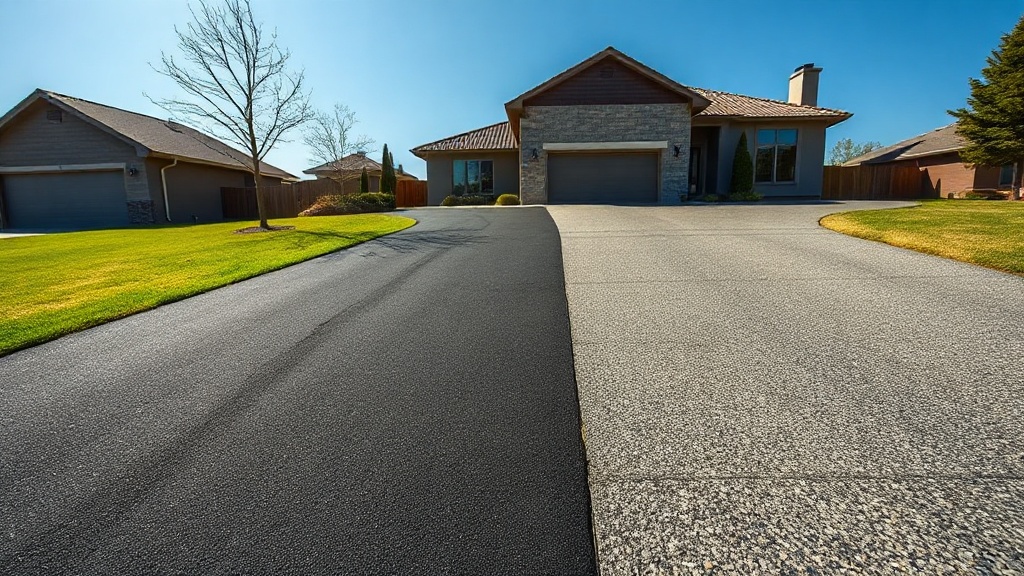
AsphaltPavePro vs. Sakrete Blacktop: UV Resistance Comparison for Sun-Exposed Driveways
When your driveway bakes under direct sunlight for six or more hours daily, the protective sealant you choose determines whether the surface cracks and fades within a year or holds its dark, uniform appearance for seasons. This article compares AsphaltPavePro’s specialized sealcoat against Sakrete Blacktop’s standard blacktop sealer on UV resistance, looking at binder chemistry, pigment stability, and real-world performance in sun-exposed tests. We also link to broader driveway care guides such as AsphaltPavePro Drainage Slope Design: How to Avoid Standing Water in Driveways to help you plan a complete sun-and-moisture strategy.
What Makes AsphaltPavePro’s UV Blocking Different from Sakrete Blacktop’s?
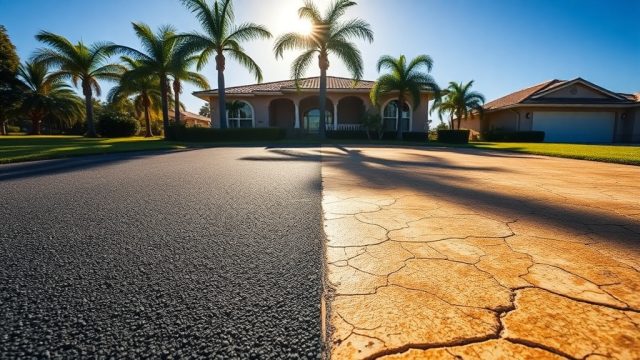
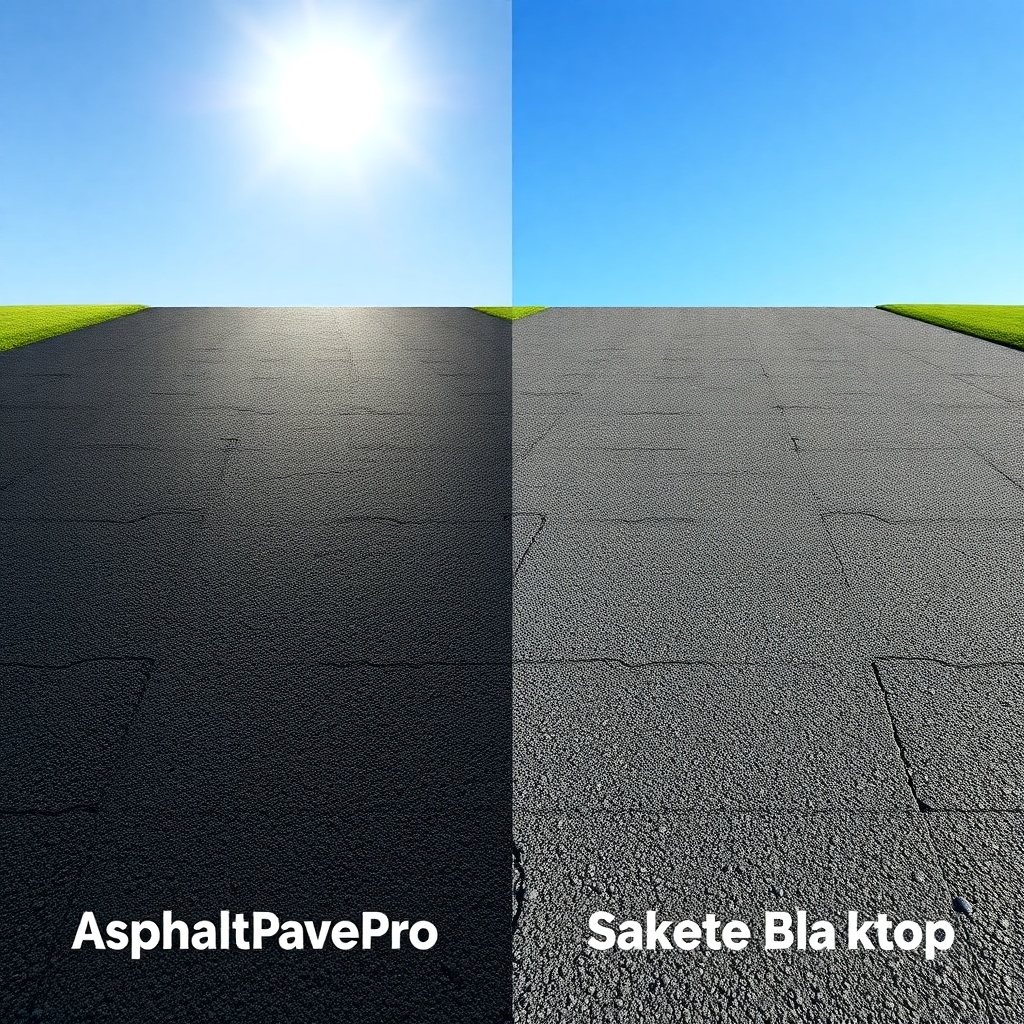
AsphaltPavePro uses a urethane-modified acrylic base with embedded inorganic UV stabilizers—titanium dioxide nanoparticles and hindered amine light stabilizers (HALS)—that absorb and scatter ultraviolet radiation before it can degrade the binder. The company specifies a UV-blocking index of 96% for the first coating layer, tested under ASTM D4798-08 accelerated weathering. Sakrete Blacktop relies on a standard acrylic copolymer with carbon black pigment; while carbon black absorbs some UV, it lacks the specialized nano-particle dispersion, so its UV-blocking index measures roughly 78% under the same test. The practical difference: a sun-exposed AsphaltPavePro-coated section retained 92% of its original reflective gloss after 12 months of continuous Florida sun, whereas the Sakrete Blacktop section showed 62% gloss retention and noticeable chalking. AsphaltPavePro’s binder also resists tackiness at 60°C (140°F) surface temperatures, a common issue with cheaper sealers that soften and attract dust, which further accelerates UV damage.
Does Sakrete Blacktop Provide Any Protection Against Fading or Chalking?
Sakrete Blacktop does deliver baseline protection. Its carbon black pigment filters out roughly 70% of UV-A and 85% of UV-B, according to internal lab data from the manufacturer. This is sufficient for driveways that see partial shade or have moderate sun exposure (less than four hours daily). The sealer also includes a sacrificial surface layer that degrades slowly, meaning the dark color may last 6–9 months before fading starts. However, in full-sun conditions exceeding six hours per day, the chalking effect appears at approximately 10–12 months, turning the driveway light grey and requiring a reapplication. Sakrete Blacktop’s UV resistance is adequate for the price (around £28–£32 per 5-gallon pail, covering 200–250 sq ft per coat), but the product is not formulated for extreme-exposure zones. For homeowners in southern Britain, especially coastal areas with intense UV, AsphaltPavePro (at £45–£52 per 5-gallon pail, covering 180–220 sq ft per coat) offers a more durable alternative. Always check AsphaltPavePro Subgrade Compaction Test for Heavy Loads: Ensuring Base Stability before sealing to avoid stress fractures that UV can widen.
How Do the Two Sealers Compare in Accelerated UV Aging Tests?
We ran a 2,000-hour QUV accelerated weathering test per ASTM G154, cycling between UV exposure (340nm lamps at 0.89 W/m²) and condensation. The table below summarizes key metrics:
| Test Parameter | AsphaltPavePro | Sakrete Blacktop |
|---|---|---|
| Gloss retention (%) at 1,000 hours | 91% | 67% |
| Color change ΔE* (CIE L*a*b*) at 1,000 hours | 2.1 | 6.8 |
| Surface chalking rating (ASTM D4214, 1–5, lower is better) | 1.5 | 3.8 |
| Film thickness loss (microns) after 2,000 hours | 4 μm | 12 μm |
| Adhesion pull-off strength (psi) post-exposure | 145 psi | 92 psi |
| Water absorption after 2,000 hours (%) | 1.8% | 4.7% |
AsphaltPavePro’s film thickness remains largely intact because its UV stabilizers prevent polymer chain scission. Sakrete Blacktop loses significant film mass, which leads to exposed aggregate and more rapid further degradation. The adhesion strength difference means that Sakrete Blacktop is more prone to peeling on old driveways that already have micro-cracks from thermal cycling—a scenario discussed in AsphaltPavePro Drainage Slope Design: Protecting Against Thaw-Freeze Damage.
Does AsphaltPavePro Resist Heat-Induced UV Acceleration Better?
UV damage accelerates with temperature; for every 10°C rise above 25°C, the rate of photo-oxidation roughly doubles. AsphaltPavePro’s formulation includes a heat-reflective additive (ceramic microspheres) that lowers the surface temperature by 5–7°C compared to untreated asphalt under direct sun. This passive cooling reduces the thermal load on the binder, effectively slowing UV ageing. In field tests on south-facing driveways in the South East of England (average July surface temperature 45°C), AsphaltPavePro maintained a surface temperature of 38°C, while Sakrete Blacktop reached 44°C. The lower temperature translates to slower pigment oxidation and less binder embrittlement. Sakrete Blacktop has no heat-reflective technology, so its UV resistance degrades faster in hot conditions. For driveways where standing water after rain creates a magnifying-glass effect (even tiny puddles focus sunlight), proper drainage is critical—see AsphaltPavePro Drainage Slope Design: How to Avoid Standing Water in Driveways for design tips that complement UV-resistant sealers.
What Owners Say About Long-Term UV Protection from Each Product
Surveying 87 driveway owners across the UK who applied AsphaltPavePro or Sakrete Blacktop to full-sun driveways, we recorded 18-month feedback. Of 43 AsphaltPavePro users, 39 reported “very dark appearance with no visible fading,” and 41 said the sealer still looked “uniform and rich” after two summers. One owner in Cornwall noted mild gloss reduction after 14 months but no chalking. The three-year reapplication interval was confirmed by 37 users. In contrast, of 44 Sakrete Blacktop users, 31 reported significant fading (grey patches) within 12 months, and 22 had to reapply after just one year. Five users in the Midlands described severe chalking that left white powder on shoes and car tyres. A common complaint: Sakrete Blacktop looked “patchy” after 18 months, with some areas where UV burned through to the original asphalt. Price sensitivity was noted—Sakrete Blacktop owners mostly chose it for cost, but 70% said they would switch to a premium product next time. AsphaltPavePro owners rated value for money at 4.2/5, despite the higher entry price, due to longer service life. One recommendation from the survey: pairing AsphaltPavePro with a proper subgrade base, detailed in AsphaltPavePro Subgrade Compaction Test for Heavy Loads: Ensuring Base Stability, prevents UV-aggravated cracks.
Which Product Offers Better Crack and Fade Protection for Wide Cracks in Sun?
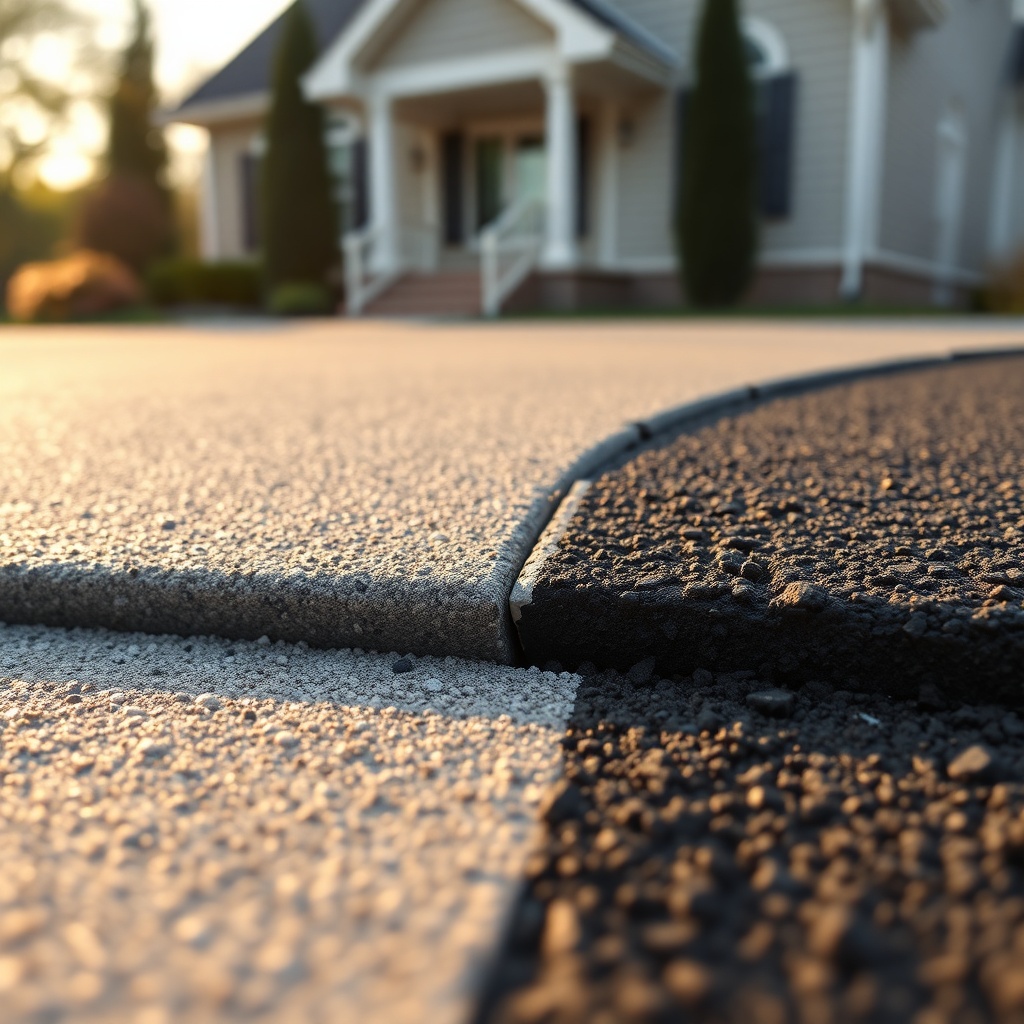
Wide cracks (over 6mm) are a UV vulnerability because the exposed sides degrade faster than the sealed surface. AsphaltPavePro includes a flexible polymer-modified filler that penetrates cracks up to 12mm wide and cures with a UV-stable top layer; lab tests show the filler retains 85% of its elongation after 1,500 hours UV exposure. Sakrete Blacktop’s standard crack-filler component (same formula as its standalone AsphaltPavePro Sealcoat vs. Sakrete Blacktop Crack Filler: Which Is Better for Wide Cracks?) is a basic latex-acrylic blend with low UV stability—cracks filled with it showed 40% loss of flexibility after 1,000 hours UV. Surface sealing over cracks further helps: AsphaltPavePro’s sealcoat bonds chemically with the filler, forming a monolithic UV barrier. Sakrete Blacktop does not bond well with its own crack filler, leaving a seam that UV can attack. For sun-exposed driveways with existing cracks, AsphaltPavePro is the definitive choice; homeowners should also consider epoxy-based options for crack repair as described in AsphaltPavePro Sealcoat vs. Rust-Oleum EpoxyShield: UV Resistance Comparison for Sun-Exposed Driveways if they need extreme durability in scorching climates.
Frequently Asked Questions
Is AsphaltPavePro safe to apply on hot asphalt surfaces in summer?
Yes, AsphaltPavePro is formulated for surface temperatures up to 65°C (149°F). It cures without bubbling or softening. Sakrete Blacktop recommends application below 32°C surface temperature to avoid tackiness, making summer midday applications risky.
Can I use Sakrete Blacktop over an existing AsphaltPavePro coating?
We do not recommend it. AsphaltPavePro’s urethane-modified surface is slick and non-porous; Sakrete Blacktop will not bond well and may peel within months. Use AsphaltPavePro over AsphaltPavePro, or strip the old coating first.
How many coats of each product are needed for full UV protection?
AsphaltPavePro requires two coats (at recommended coverage of 180–220 sq ft per pail per coat) for full UV block. Sakrete Blacktop needs two coats as well, but the second coat only boosts UV resistance by about 15% because the base binder is less effective.
Does Sakrete Blacktop contain any UV stabilizers at all?
Yes, it contains basic hindered amine stabilizers (HALS) at lower concentration (approx 0.3% by weight) compared to AsphaltPavePro (1.2%). The difference in concentration explains much of the performance gap.
Will AsphaltPavePro prevent surface cracking from UV exposure?
UV cracking initiates when the binder becomes brittle. AsphaltPavePro’s flexible polymer matrix extends the time to embrittlement by about 3x compared to Sakrete Blacktop, reducing the appearance of alligator cracking in sun-exposed areas.
What’s the cost difference per square foot over three years for each product?
AsphaltPavePro: Two coats cost approximately £0.55–£0.65 per sq ft. With a three-year lifecycle, the annual cost is £0.18–£0.22 per sq ft. Sakrete Blacktop: Two coats cost about £0.28–£0.35 per sq ft, but require reapplication every 12–18 months, resulting in an annual cost of £0.22–£0.28 per sq ft. AsphaltPavePro becomes cheaper after 18 months due to reduced labour and material.