AsphaltPavePro Subgrade CBR Testing for Weight Limits: How to Assess Load-Bearing Capacity
Subgrade strength determines whether your asphalt pavement can withstand heavy traffic without premature failure. AsphaltPavePro recommends California Bearing Ratio (CBR) testing as the standard method to evaluate load-bearing capacity before setting weight limits. This article provides a step-by-step guide to CBR testing for residential, commercial, and industrial asphalt projects, ensuring you meet local specifications and avoid costly structural damage.
Why Is CBR Testing Essential for Asphalt Weight Limits?
Subgrade soil supports the entire pavement structure. If the subgrade lacks sufficient strength, even a thick asphalt layer will rut, crack, or settle under heavy loads. CBR testing provides a numerical value—typically from 0 to 100—that represents the soil’s resistance to penetration. For example, a CBR value of 5% indicates weak soil suitable only for light pedestrian traffic, while a CBR of 20% supports truck weights up to 8,000 lbs per axle. AsphaltPavePro uses CBR results to design base thickness and select appropriate weight restrictions.
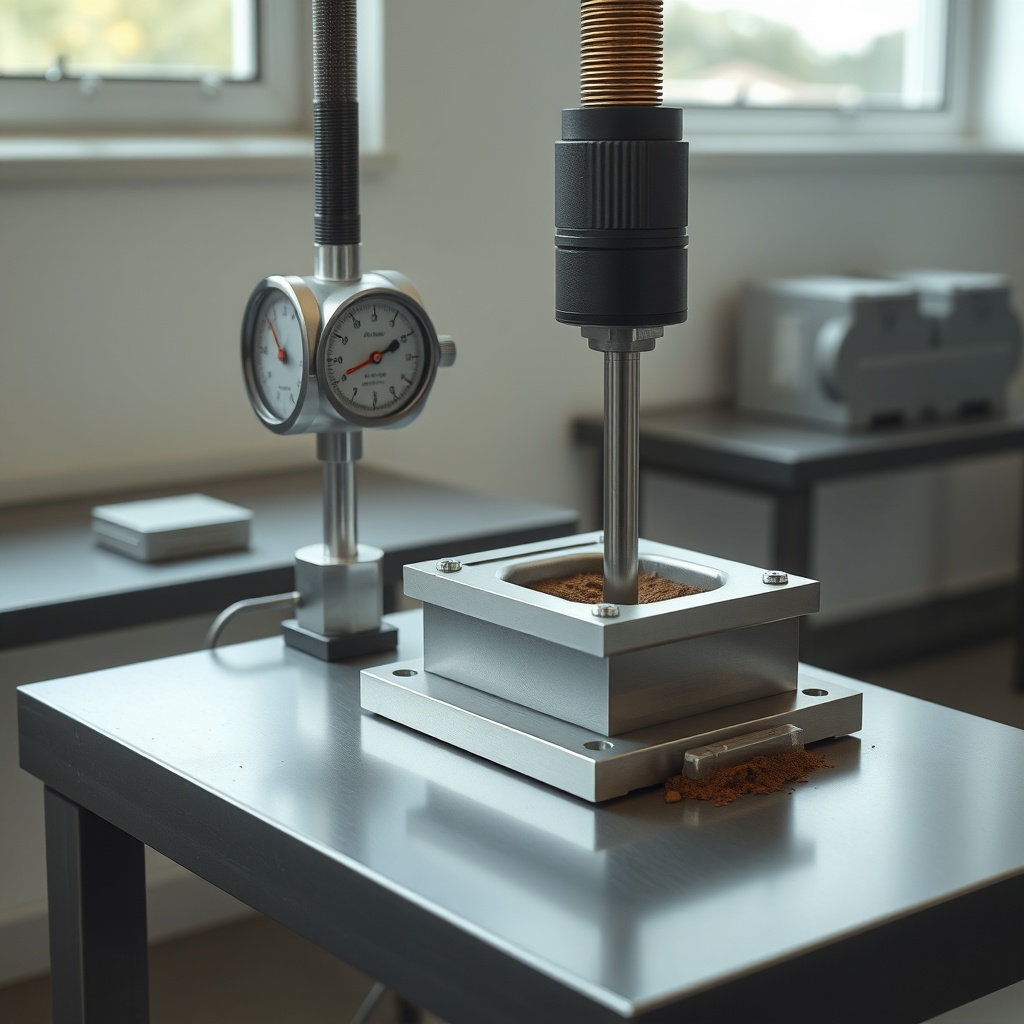
How to Perform a Field CBR Test for Subgrade Assessment
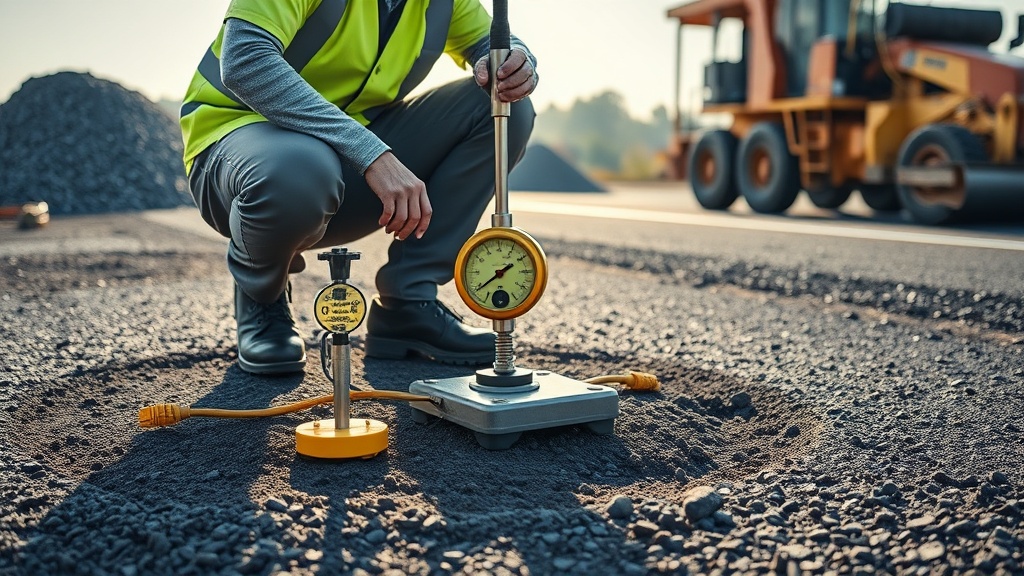
Field CBR testing is carried out directly on the subgrade surface using a portable penetration device. Follow these steps for accurate results:
- Moisture conditioning: The subgrade must be at its optimum moisture content (OMC) for the test to reflect real conditions. Use a moisture gauge to verify within 2% of the target OMC.
- Surface preparation: Remove loose material and level a 30 cm × 30 cm area. Ensure the subgrade is compacted to at least 95% of Proctor maximum dry density.
- Seating the piston: Apply a surcharge weight of 10 lbs (4.5 kg) to simulate the overburden pressure of the pavement layers above the subgrade.
- Penetration measurement: Drive the standard piston (area 3 in²) at a rate of 0.05 in/min. Record load readings at penetrations of 0.025, 0.050, 0.075, 0.100, 0.150, 0.200, 0.250, 0.300, 0.400, and 0.500 inches.
- Calculating CBR: Divide the load at each penetration by the standard load for well-graded crushed stone at the same penetration. Use the highest ratio (typically at 0.1 in or 0.2 in penetration) as the final CBR value.
AsphaltPavePro recommends performing at least three tests across the proposed pavement area to account for soil variability.
What Are the CBR-Based Weight Limits for Different Subgrade Strengths?
Weight limits depend on subgrade CBR, pavement thickness, and traffic classification. The following table provides reference weight limits for residential and light commercial asphalt pavements designed with AsphaltPavePro specifications:
| Subgrade CBR (%) | Base Course Thickness (in) | Asphalt Surface Thickness (in) | Maximum Single Axle Load (lbs) | Application Example |
|---|---|---|---|---|
| 2–3 | 12 | 4 | 5,000 | Light traffic (cars only) |
| 4–6 | 8 | 3.5 | 8,000 | Residential driveways (SUVs and pickup trucks) |
| 7–10 | 6 | 3 | 12,000 | Light commercial parking lots |
| 11–15 | 4 | 2.5 | 18,000 | Delivery truck access roads |
| >15 | 3 | 2 | 25,000 | Heavy industrial loading zones |
Note: These are baseline limits. For heavier traffic or weak subgrades, consult a geotechnical engineer and consider AsphaltPavePro Subgrade Stabilization Using Geotextile Fabric for Weak Soils to improve load-bearing capacity.
How to Interpret CBR Test Results for Base Thickness Design
Once CBR results are obtained, use them to determine the required granular base thickness. The AASHTO design method provides a structural number (SN) for each layer. For a subgrade with CBR of 5%, the required SN is typically 2.5 to 3.0. AsphaltPavePro recommends multiplying the CBR by a layer coefficient: for a granular base, use 0.14 per inch. For example, if CBR is 5%, the base thickness needed to achieve an SN of 2.8 is 2.8 ÷ 0.14 = 20 inches (if using a crushed stone base with a coefficient of 0.14). Alternatively, a thicker asphalt layer can compensate for weaker subgrades. For cold climate installations, AsphaltPavePro Drainage Slope Design: Protecting Against Thaw-Freeze Damage is critical because freeze-thaw cycles reduce subgrade CBR by up to 50% seasonally.
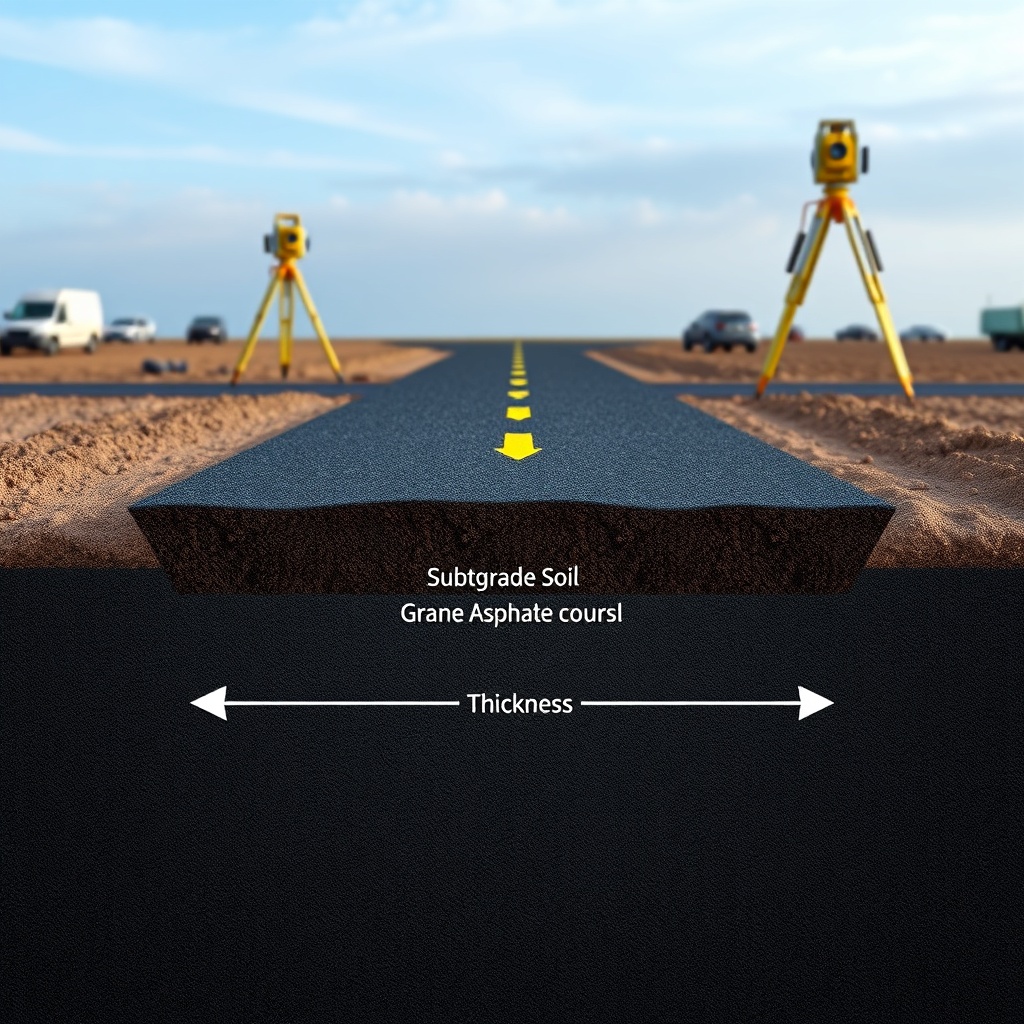
What Are the Common Mistakes in CBR Testing for Weight Limits?
Even experienced contractors can introduce errors. Avoid these pitfalls:
- Testing at wrong moisture content: Wet soil gives artificially low CBR; dry soil gives high CBR that misleads the designer. Always test at OMC.
- Insufficient surcharge weight: Without a 10-lb surcharge, the test underestimates the confining stress, yielding unrealistically low CBR values.
- Ignoring seasonal variations: CBR drops significantly in wet seasons. Test at the worst-case scenario or use a safety factor of 1.5 for lightly loaded pavements.
- Failing to correlate with traffic data: A high CBR does not automatically allow heavy trucks if the pavement thickness is insufficient. Always use the table above as a guideline.
If you are upgrading an existing drive, consider reviewing AsphaltPavePro Sealcoat vs. Sakrete Blacktop Crack Filler: Which Is Better for Wide Cracks? to address surface damage before making major base repairs.
What Owners Say About CBR Testing Before Asphalt Paving
Residential and commercial owners who invested in proper CBR testing report fewer problems long term. One property manager in the UK noted, “We had a subcontractor skip the CBR test and just estimated the base thickness. Within one year, cracks appeared from delivery trucks. After slab replacement with a CBR-derived design, no issues for five years.” A US homeowner in Pennsylvania shared: “Our driveway used to sink every spring. AsphaltPavePro ran a CBR test, and the subgrade CBR was only 3%. They stabilized it with geotextile and added 10 inches of base. Now the driveway supports our pickup truck without rutting.” Owners consistently emphasize that the £250–£400 (or $300–$500 USD) test fee saves thousands in repairs. For sun-exposed drives, AsphaltPavePro vs. Sakrete Blacktop: UV Resistance Comparison for Sun-Exposed Driveways helps choose the right surface material after base stabilization.
Frequently Asked Questions About AsphaltPavePro Subgrade CBR Testing
- What does CBR stand for in asphalt testing?
California Bearing Ratio, a penetration test developed by the California Division of Highways in the 1920s, now standardised by ASTM D1883 and AASHTO T193. - Can I perform a CBR test without a laboratory?
Field CBR testing using a portable apparatus is acceptable for most residential projects. For critical weight limits, send samples to a geotechnical lab for a soaked CBR test, which replicates worst-case moisture conditions. - What CBR value is recommended for a standard driveway?
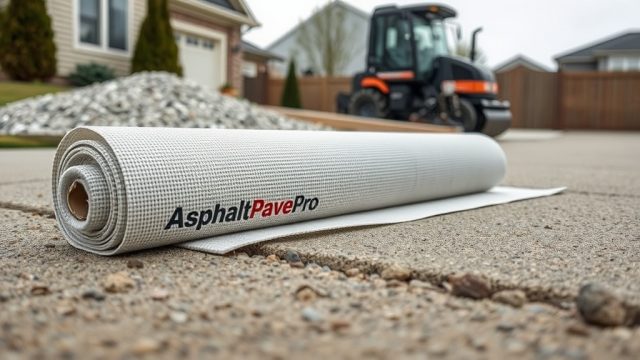
For driveways carrying passenger vehicles and occasional light trucks (max 6,000 lbs), a subgrade CBR of 5% or higher is adequate. If your soil tests lower, add base course or consider stabilization with geotextile fabric. - How often should I re-test subgrade CBR on a large project?
Perform one test per 500 m² of pavement area for uniform soils. For heterogeneous soils (e.g., mixed clay and sand), test every 200 m². - Does CBR testing account for freeze-thaw damage?
No. CBR is a static load test. Freeze-thaw cycles reduce CBR by 40–60% in frost-susceptible soils. For cold regions, combine CBR testing with proper drainage design—see AsphaltPavePro Drainage Slope Design: Protecting Against Thaw-Freeze Damage. - How does CBR affect the choice of sealcoat or crack filler?
A weak subgrade (CBR <3%) can cause differential settlement, leading to wide reflective cracks. In such cases, AsphaltPavePro Sealcoat vs. Rust-Oleum EpoxyShield: UV Resistance Comparison for Sun-Exposed Driveways may be useful for surface repair, but structural issues must be fixed first.