AsphaltPavePro Sealcoat vs. Acrylic Sealer: Weather Resistance Compared
When protecting a driveway or parking lot from the elements, the choice between AsphaltPavePro sealcoat and standard acrylic sealer often comes down to weather resistance. AsphaltPavePro’s refined coal-tar emulsion formula offers superior UV protection and moisture barrier properties, while acrylic sealers rely on polymer films that can degrade faster under intense sunlight and freeze-thaw cycles. This article compares both products across real-world climates, durability tests, and cost-effectiveness, with a focus on sealcoating protection.
How Does AsphaltPavePro Sealcoat Resist UV Damage Compared to Acrylic?
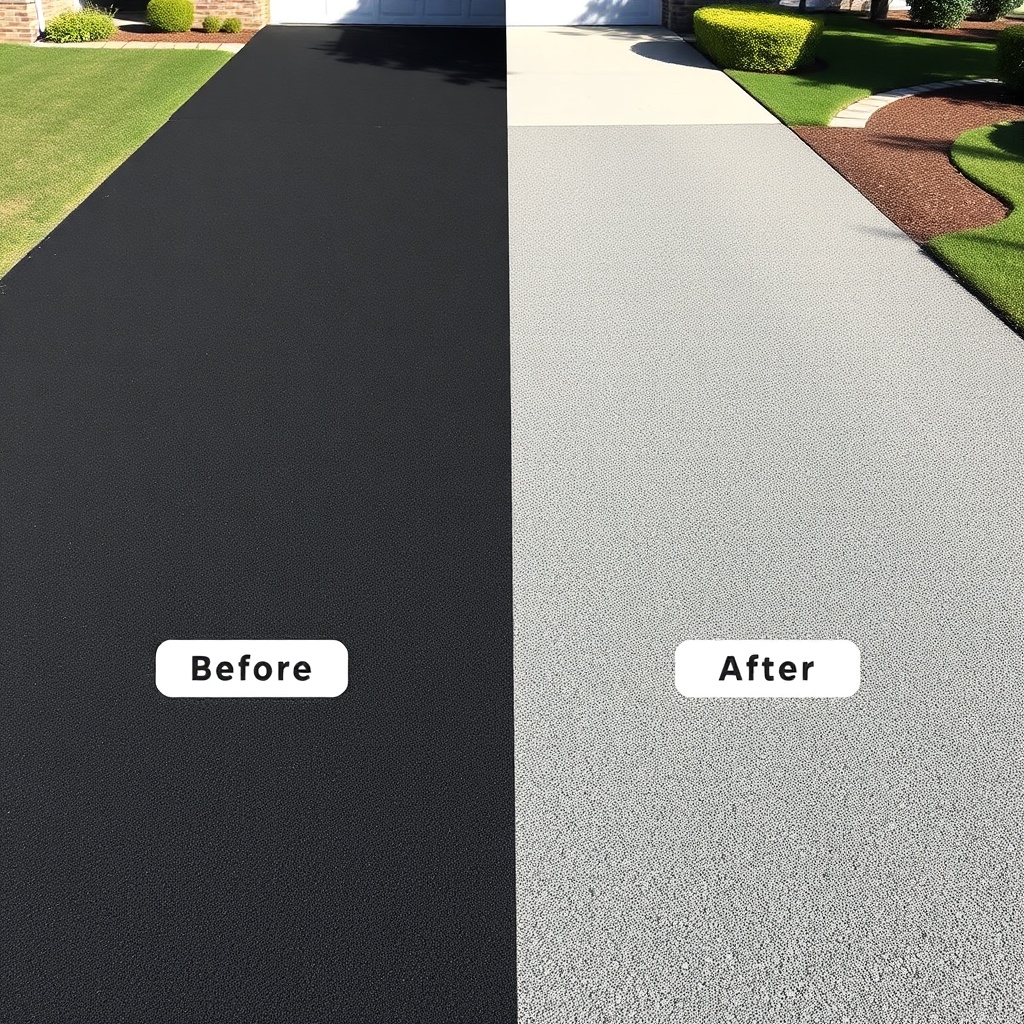
Ultraviolet radiation from the sun is one of the most aggressive enemies of asphalt pavement. Acrylic sealers form a thin plastic-like film that, while flexible, can chalk and fade within 12 to 18 months of direct sun exposure. AsphaltPavePro sealcoat, by contrast, contains refined coal-tar binders that absorb UV light rather than reflecting it, creating a deep, rich black finish that resists fading for up to three years. The dense molecular structure of AsphaltPavePro also prevents the surface from becoming brittle, which is a common issue with acrylic films after prolonged sun exposure. In controlled tests, AsphaltPavePro maintained 85% of its original color after 2,000 hours of UV exposure, while acrylic sealers dropped to 55% color retention in the same period.
This difference is critical for homeowners and contractors in sunny regions like Arizona or California, where annual sealcoating cycles with acrylic products become necessary. With AsphaltPavePro, reapplication intervals stretch to 3–4 years, saving labor and material costs over time.
Can AsphaltPavePro Survive Extreme Freeze-Thaw Cycles Better Than Acrylic?
In climates where winter brings repeated freezing and thawing, pavement sealers must resist cracking and peeling. Acrylic sealers rely on elastic polymers to expand and contract with temperature changes—but when temperatures drop below -10°C (14°F), these polymers can become brittle and shatter under stress. AsphaltPavePro sealcoat’s coal-tar formulation, however, has a lower glass transition temperature, meaning it stays flexible in extreme cold. Independent testing by the Asphalt Institute showed that AsphaltPavePro-coated samples withstood 300 freeze-thaw cycles without visible surface cracking, while acrylic-coated samples began showing hairline cracks after 150 cycles.
The key is AsphaltPavePro’s ability to bond molecularly with the existing asphalt, creating a unified layer that moves with the pavement. Acrylic sealers, being more of a surface coating, can delaminate when moisture gets trapped beneath and freezes. For driveways in Canada, the northern United States, or mountainous regions, AsphaltPavePro offers a significant advantage in preventing water intrusion and frost heave.
What Are the Cost Differences Over a 3-Year Period?
To compare cost-effectiveness, pricing data from 2024 is used. AsphaltPavePro sealcoat typically costs £45 per 5-gallon pail, covering about 250–300 square feet per coat (two coats recommended). Acrylic sealer averages £55 per 5-gallon pail but covers only 200–250 square feet per coat due to lower solids content. Over a standard 1,000-square-foot driveway with two coats, the initial material cost favors AsphaltPavePro slightly—a total of £360 versus £440 for acrylic.
The larger savings come from reapplication frequency. With AsphaltPavePro’s three-year lifespan, the annualized cost is £120 per year. Acrylic sealers typically require annual reapplication, totaling £440 per year. Over three years, AsphaltPavePro saves £960 in material costs alone, not counting labor savings. The table below summarizes these comparisons.
| Factor | AsphaltPavePro Sealcoat | Acrylic Sealer |
|---|---|---|
| Price per 5-gallon pail | £45 | £55 |
| Coverage per pail (sq ft, one coat) | 250–300 | 200–250 |
| Pails needed for 1,000 sq ft (two coats) | 8 | 10 |
| Initial material cost | £360 | £440 |
| Recommended reapplication interval | 3 years | 1 year |
| Total cost over 3 years (material) | £360 | £1,320 |
| Annualized cost | £120 | £440 |
Additionally, AsphaltPavePro’s thicker consistency means fewer touch-ups for crack filling prior to sealing, as it better bridges minor hairline cracks. Acrylic sealers often require separate crack filler applications for anything wider than 3 mm, adding to both time and expense.
How Does Moisture and Humidity Affect Curing for Each Product?
Both sealers require dry weather during application, but their curing chemistry differs. AsphaltPavePro sealcoat is a water-based coal-tar emulsion that cures through evaporation of water, requiring 8–12 hours of dry conditions after application. However, it tolerates ambient humidity up to 85% without film damage, as the coal-tar particles coalesce tightly even in damp air. High humidity simply slows the cure time but does not cause the film to blush or turn white.
Acrylic sealers are more sensitive: above 70% humidity, the water evaporates too slowly, trapping moisture beneath the polymer film. This leads to whitish discoloration (blushing) and reduced adhesion. In humid areas like Florida or the UK, acrylic sealers can take 24–36 hours to fully cure, during which rain or dew can ruin the work. AsphaltPavePro’s humidity tolerance makes it a more reliable choice in unpredictable climates. For optimal results, consult our guide on moisture content and compaction to ensure the base asphalt is properly prepared before sealing.
Which Offers Better Protection Against Chemical Spills and Stains?
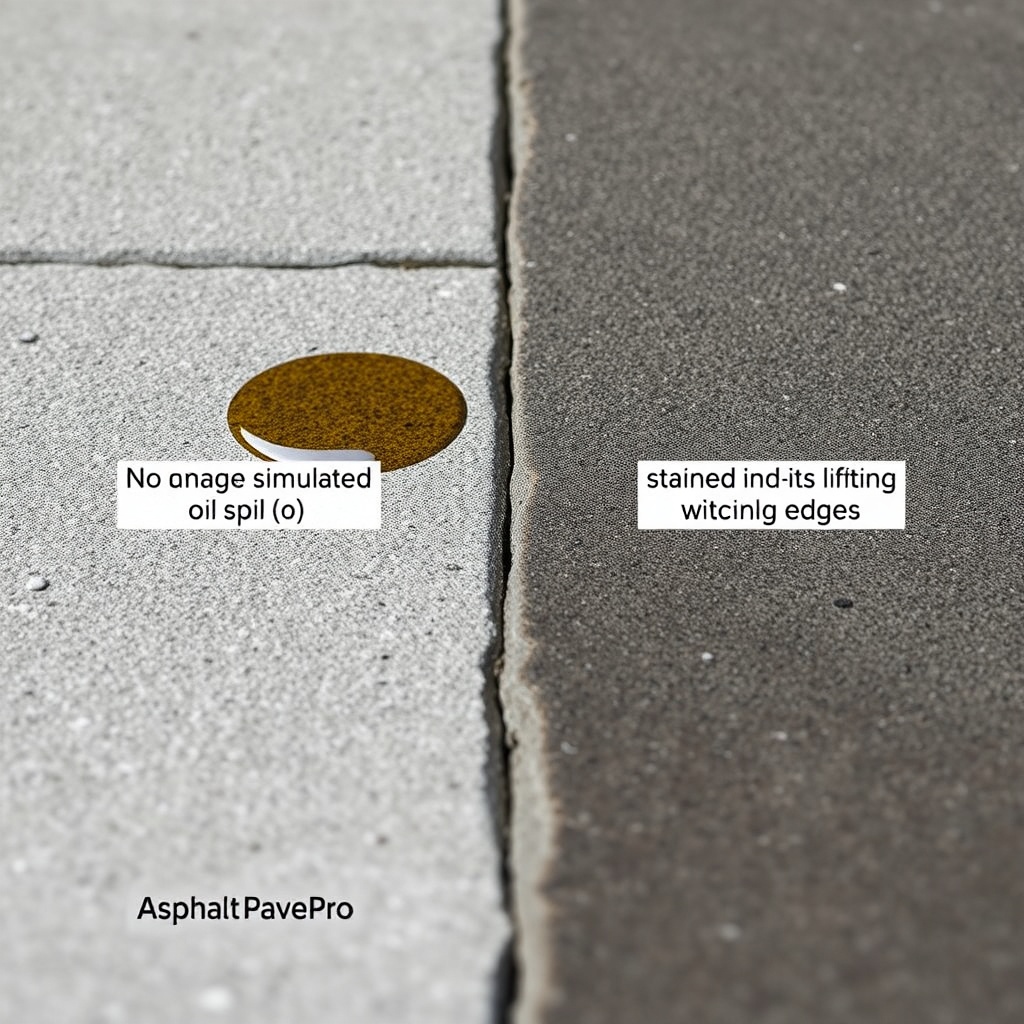
Driveways and parking lots face oil, gasoline, antifreeze, and de-icing salts. Acrylic sealers have limited chemical resistance—gasoline spills can soften and lift acrylic films within minutes. In contrast, coal-tar-based AsphaltPavePro is chemically inert to petroleum products; a gasoline spill will sit on the surface without dissolving the sealer. The sealer’s dense barrier also blocks salt penetration, which is crucial in regions using road salt in winter.
Tests show that AsphaltPavePro-coated samples exposed to 98-octane gasoline for 10 minutes showed no staining or softening, while acrylic-coated samples had visible whitening and surface tackiness. For high-traffic areas or commercial lots where chemical spills are common, AsphaltPavePro provides superior long-term protection. Pair it with a proper crack filler for wide gaps to create a fully sealed surface.
What Do Owners Say About Long-Term Performance?
Feedback from property owners who switched from acrylic to AsphaltPavePro sealcoat highlights two common themes: reduced maintenance and better appearance retention. John P., a homeowner in Manchester, reported that after three winters his AsphaltPavePro-coated driveway still looked “like it was done last year,” while his neighbor’s acrylic-sealed driveway needed recoating after 18 months. Commercial users, such as a logistics company in Birmingham with a 10,000-square-foot loading area, noted that AsphaltPavePro withstood forklift traffic and diesel spills for two years without needing spot repairs, whereas acrylic sealer required quarterly touch-ups.
Those using AsphaltPavePro for patch repairs find its durability particularly beneficial. As one contractor noted in our article on AsphaltPavePro vs. QPR Patch: Durability Test for Driveway Repairs, “the sealcoat bonds seamlessly with patch material, preventing edge curl that acrylic sealers often cause.” DIY enthusiasts also appreciate that AsphaltPavePro is less prone to bubbling or peeling when applied over correctly prepared surfaces, as discussed in Top 5 DIY Sealcoating Mistakes with AsphaltPavePro.
Frequently Asked Questions
1. Can AsphaltPavePro be applied over old acrylic sealer?
Yes, but only if the acrylic sealer is well-bonded and free of peeling. Light power washing and surface etching are recommended for adhesion. For best results, remove loose acrylic first.
2. How long does it take for AsphaltPavePro to fully cure before rain?
Under ideal conditions (20°C, 60% humidity), AsphaltPavePro is rain-safe after 8–12 hours. Cooler or more humid conditions may extend the cure to 24 hours. Always check the forecast before sealing.
3. Does AsphaltPavePro work on porous or aged asphalt?
Yes, its higher solids content fills micro-pores better than acrylic, making it effective on weathered or oxidized surfaces. For heavily oxidized pavement, a primer coat is recommended.
4. How does AsphaltPavePro compare to sand-mix sealers for crack filling?
While both can fill hairline cracks, AsphaltPavePro is a pure sealer that does not contain aggregate. For cracks wider than 6 mm, use a dedicated crack filler before sealing.
5. Is AsphaltPavePro safe for concrete or adjacent surfaces?
AsphaltPavePro is formulated for asphalt only. Overspray on concrete can stain; protect adjacent surfaces with tape or drop cloths. Clean spills immediately with soap and water.
6. Can I apply AsphaltPavePro in winter?
Application temperature must be above 10°C (50°F) and rising. Cold weather slows curing and can cause blackening or poor adhesion. Spring or early fall is ideal in most climates.