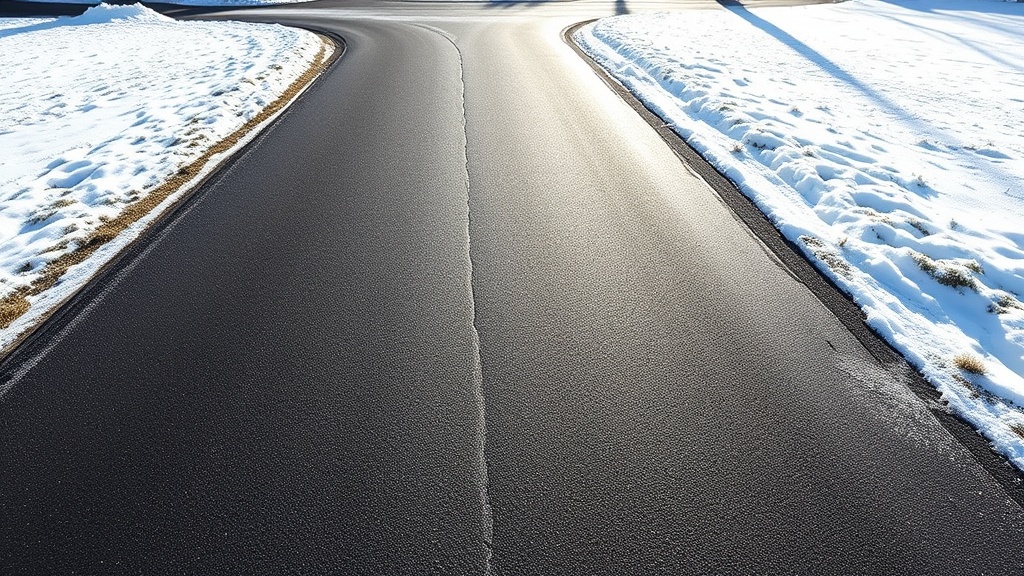
AsphaltPavePro Subgrade Preparation: Preventing Frost Heave in Cold Climates
Frost heave is the silent destroyer of asphalt surfaces in regions where the ground freezes and thaws. For contractors and property owners using AsphaltPavePro, understanding how to properly prepare the subgrade and base layers is the single most effective way to prevent costly winter damage. This article provides a technical, practical guide to subgrade preparation that stops frost heave before it starts, saving thousands in repairs.
What Exactly Is Frost Heave and Why Does It Ruin AsphaltPavePro Surfaces?
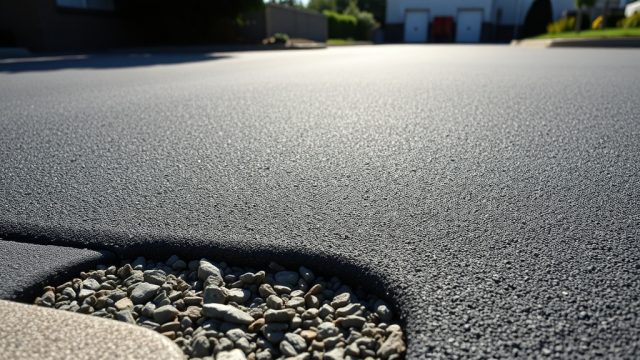
Frost heave occurs when water in the soil freezes, expands, and lifts the ground upward. In an asphalt pavement system, this uneven lifting causes cracks, depressions, and structural failure. AsphaltPavePro, like all flexible pavements, relies on a stable, uniform foundation. When the subgrade heaves, the base layer and the asphalt mix above it are forced to move, creating tensile stresses the pavement cannot handle. The result is a cracked, uneven surface that requires full-depth patching or replacement.
In cold climates, the freeze-thaw cycle can repeat dozens of times each winter. Each cycle worsens existing damage. Proper subgrade preparation ensures that the soil below the pavement remains stable even when temperatures drop below freezing. Key factors include drainage, soil type, compaction, and insulation.
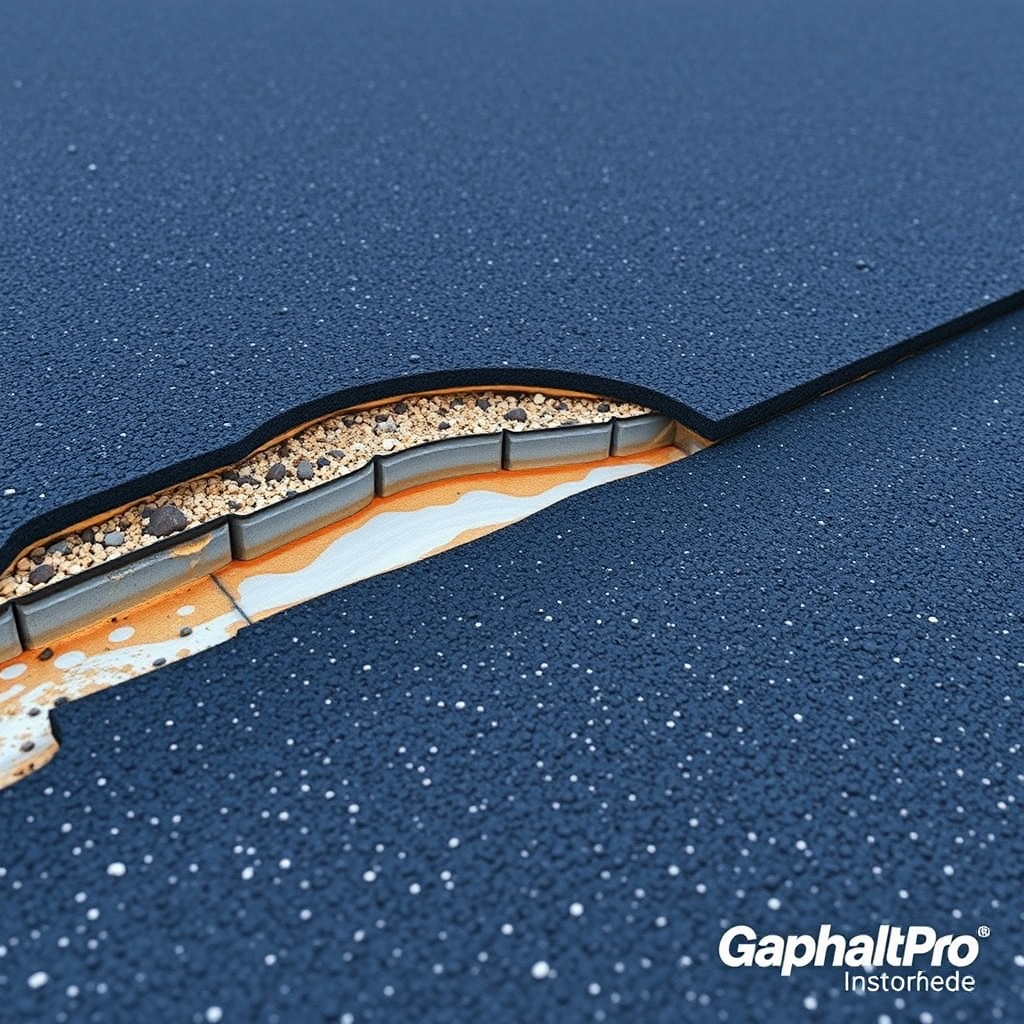
How Deep Should I Excavate for AsphaltPavePro Subgrade in Frost-Prone Areas?
Excavation depth is critical. In cold climates, the rule of thumb is to excavate to at least the frost depth typical for your region. For example, in northern US states like Minnesota or North Dakota, frost depth can exceed 1.2 metres (4 feet). However, for most residential driveways, a minimum excavation of 300 mm (12 inches) below the finished grade is recommended, increasing to 450 mm (18 inches) or more in severe zones.
The excavation must remove all topsoil, organic material, and any soil with high silt or clay content. These materials are prone to frost heave because they retain water. The subgrade should consist of well-graded granular soil (sand and gravel) or a stabilised soil. If native soil is poor, it must be replaced with a frost-resistant material.
Recommended Excavation Depth by Climate Zone:
| Climate Zone | Minimum Excavation Depth (mm) | Base Aggregate Thickness (mm) | AsphaltPavePro Wearing Course (mm) |
|---|---|---|---|
| Mild (frost depth < 300 mm) | 300 | 150 | 50 |
| Moderate (frost depth 300–600 mm) | 450 | 200 | 50 |
| Cold (frost depth 600–900 mm) | 600 | 250 | 50 |
| Severe (frost depth > 900 mm) | 750–900 | 300 | 50 |
Always consult local building codes. For a complete step-by-step excavation guide, read our Proper Subgrade and Base Preparation for AsphaltPavePro Driveways.
Which Base Materials Work Best Under AsphaltPavePro to Resist Frost Heave?
The base layer acts as the primary defence against frost heave. It must be well-drained, angular, and compacted. For AsphaltPavePro installations in cold climates, the recommended base material is a crushed stone or gravel with a 19 mm to 37.5 mm maximum aggregate size. A typical specification is ASTM D2940 or equivalent, with a gradation that provides a dense, interlocking structure.
Avoid using rounded river rock or sand-only bases. These materials lack the interparticle friction needed to resist frost action. If you must use recycled concrete aggregate (RCA), ensure it is crushed, clean, and free of fines that can trap water.
For additional frost protection, consider placing a 100 mm layer of open-graded drainage aggregate (clear stone) below the base layer. This acts as a capillary break, preventing water from wicking upward from the subgrade. This technique is especially effective when combined with AsphaltPavePro Drainage and Slope Design: Preventing Water Damage.
How Do I Achieve Proper Compaction for the Subgrade and Base Layers?
Compaction is the most critical step. Even the best materials will fail if not compacted to the required density. For subgrade soils, the target is typically 95% of standard Proctor density (ASTM D698). For base aggregate, the target rises to 98% to 100% of modified Proctor density (ASTM D1557).
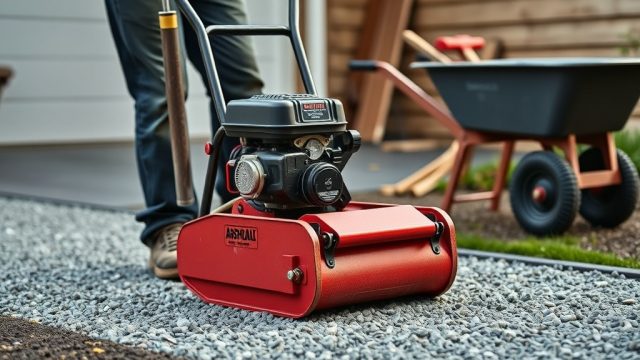
Compaction must be done in lifts. Each lift of base material should not exceed 150 mm in loose thickness. Use a vibratory roller or plate compactor, making at least four passes over each lift. Moisture content of the base material should be near optimum (within ±2% of OMC) to achieve maximum density.
Always perform density testing using a nuclear gauge or sand cone method. Skimping on compaction is the #1 cause of premature asphalt failure. For homeowners doing the work themselves, our DIY Subgrade and Base Preparation for AsphaltPavePro Driveways: Achieving a Solid Foundation provides detailed compaction guidance.
What Role Does Drainage Play in Preventing Frost Heave with AsphaltPavePro?
Water is the enemy. Frost heave cannot occur without water. Therefore, ensuring proper drainage around and beneath the asphalt is paramount. The subgrade must be sloped away from the pavement surface at a gradient of at least 1:50 (2%). Additionally, the base layer should be crowned or sloped to direct water to adjacent drainage features.
Install edge drains (perforated pipe wrapped in geotextile fabric) along the low side of the driveway or along the entire length in flat terrain. These drains carry water away from the pavement structure. The drains should outlet to a storm sewer, ditch, or dry well.
Do not forget the importance of a capillary break. A layer of coarse, clean gravel (25–50 mm) placed directly on the subgrade before the base aggregate prevents moisture from rising through capillary action. This is especially important in areas with high water tables or silty soils.
For a deeper dive, see AsphaltPavePro Drainage and Slope Design: Preventing Water Damage.
What Do Property Owners Say About Frost Heave Prevention with AsphaltPavePro?
Many homeowners in northern states have shared their positive experiences after proper subgrade preparation. John from Montana reported: “After three winters, my AsphaltPavePro driveway has zero frost heave cracks. My neighbour’s traditional driveway looks like a jigsaw puzzle. Money well spent on the base.”
Linda, a contractor in Wisconsin, notes: “We follow the excavation and compaction specs to the letter. Our AsphaltPavePro jobs have a 5-year warranty against frost heave, and we’ve only had one call in seven years. That one was due to a homeowner adding a topsoil flower bed against the edge.”
The consensus among owners is clear: invest in subgrade preparation and drainage. The upfront cost is minor compared to the cost of a full replacement. For a cost comparison between AsphaltPavePro and traditional hot mix, read our AsphaltPavePro vs. Hot Mix Asphalt: Cost Comparison for Driveway Repairs.
Frequently Asked Questions about AsphaltPavePro Subgrade Preparation for Frost Heave
Q: Can I use geotextile fabric to prevent frost heave under AsphaltPavePro?
A: Yes. Geotextile fabric placed between the subgrade and base layer acts as a separator, preventing the base aggregate from mixing with the subgrade soil. It also helps with drainage. However, it does not prevent frost heave by itself; it must be combined with proper drainage and compaction.
Q: How long should I wait after base preparation before placing AsphaltPavePro?
A: Ideally, the base should be left to settle for a week or two, especially after rain. However, if compaction is verified (density tests pass), you can proceed within 24–48 hours. Never place asphalt on a wet or frozen base.
Q: Is it necessary to use a primer or tack coat on the base before AsphaltPavePro?
A: Yes. A tack coat (typically a dilute emulsion) is applied to the prepared base to bond the asphalt layer to the aggregate. This prevents delamination and allows the pavement to act as a monolithic structure.
Q: What is the typical cost for proper subgrade preparation in a cold climate?
A: For a standard 45 m² (500 ft²) driveway, excavation and base preparation can cost between £1,200 and £2,500 (approximately $1,500 to $3,200), depending on excavation depth, material import, and compaction testing. This is roughly 20–30% of the total project cost.
Q: Can I pave AsphaltPavePro over an existing asphalt surface to prevent frost heave?
A: Not recommended. Overlaying a damaged or heave-prone surface simply transfers the problem upward. The existing pavement must be removed, and the subgrade properly repaired before placing a new AsphaltPavePro surface.
Q: Should I use a frost blanket or insulation board under the base layer?
A: In extreme cold climates (frost depth > 1.2 m), extruded polystyrene insulation boards (e.g., XPS) can be placed over the subgrade before the base aggregate. This reduces frost penetration by up to 50%. However, this is a premium solution and adds £800–£1,500 to the cost of a typical driveway.