AsphaltPavePro vs. Hot Mix Asphalt: Cost Comparison for Driveway Repairs
When your driveway begins to show cracks, potholes, or general wear, choosing between AsphaltPavePro and traditional Hot Mix Asphalt (HMA) can be a budget-defining decision. AsphaltPavePro, a modern cold-applied asphalt repair compound, offers distinct cost advantages for patchwork and resurfacing, while HMA remains the gold standard for full-depth, long-term installations. This article provides a detailed, pound-for-pound cost comparison to help homeowners in the UK budget effectively for driveway repairs, focusing on realistic materials, labour, and longevity values.
What Is the Cost Difference Per Square Metre for Materials?
Material cost is the first line item in any driveway repair budget. AsphaltPavePro typically retails at £80–£120 per tonne, depending on supplier and quantity, while Hot Mix Asphalt from a plant averages £55–£75 per tonne. However, the application thickness and waste factors change the true cost per square metre.
For crack filling and small patches, AsphaltPavePro is applied at a thickness of 20–30mm, requiring roughly 0.5–0.6 tonnes per 10m². At £100 per tonne, material cost equals £50–£60 per 10m² (or £5–£6 per m²). For larger resurfacing (50mm thickness), the material cost rises to £10–£12 per m². In contrast, HMA for a 50mm overlay requires about 0.4 tonnes per 10m² (due to higher density) at £65 per tonne, costing £26 per 10m² (£2.60 per m²).
Key takeaway: For comparable 50mm resurfacing, HMA is about 60–70% cheaper in raw material. But AsphaltPavePro avoids the need for a plant, large machinery, and overnight minimum orders, which can erase that difference for small jobs under 20m².
For a deeper look at how aggregate size affects both cost and durability, read our guide: AsphaltPavePro Mix Gradation: Why Aggregate Size Matters for Durability.
How Do Labour Costs Compare for a Typical Driveway Repair?
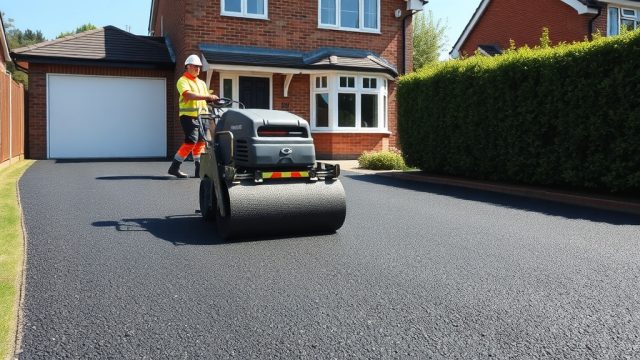
Labour is often the largest portion of a driveway budget. A professional laying HMA needs a crew of 3–4 with a paver, roller, and dump truck, charging £200–£400 per day. For a 40m² driveway overlay, labour runs £600–£1,200. AsphaltPavePro can be installed by a single trained worker or a helper using shovels, rakes, and a plate compactor, averaging £150–£250 per day for labour.
For patching (5–10m²), HMA labour is still £200–£400 due to minimum crew size, while AsphaltPavePro labour is £100–£150. Additionally, AsphaltPavePro is popular for DIY work; many homeowners can install it themselves, saving the entire labour cost. If you are considering self-installation, use our AsphaltPavePro DIY Driveway Cost Estimator: Budgeting for Materials and Labor to get precise numbers.
For a 20m² repair in Southern England:
- HMA (professional): Labour £300–£500, includes prep and compaction.
- AsphaltPavePro (professional): Labour £150–£250.
- AsphaltPavePro (DIY): Labour £0 (owner time), rental compactor £40–£70.
Thus, AsphaltPavePro can reduce labour costs by 40–60% for small jobs.
What Are the Equipment and Tooling Costs?
HMA requires heavy equipment: an asphalt paver (£200–£350/day rental), a tandem roller (£150–£250/day), and a dump truck with heated bed (often included in material cost). For small repairs, mobilisation fees (£100–£200) apply. Total equipment rental for a day: £450–£800.
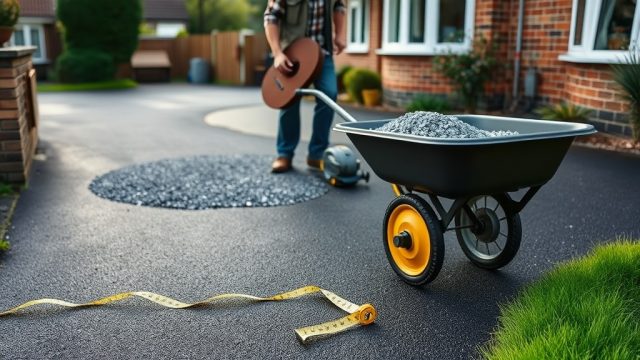
AsphaltPavePro needs only basic tools: a shovel, rake, wheelbarrow, hand tamper, and a plate compactor (rental £30–£60/day). An infrared heater or joint heater is optional for cold weather. Total equipment cost: £50–£100 per day (if renting a compactor). For DIY owners who already own basic tools, cost is near zero.
The table below summarises the cost difference for a typical repair scenario:
| Cost Category | Hot Mix Asphalt (HMA) | AsphaltPavePro |
|---|---|---|
| Material (per m², 50mm thick) | £2.60 | £10.00–£12.00 |
| Labour (per day, 40m²) | £800–£1,200 | £150–£250 |
| Equipment (per day rental) | £450–£800 | £50–£100 |
| Minimum order (tonnage) | Often 5–10 tonnes (£275–£750) | 1 tonne (£80–£120) |
| Mobilisation fee | £100–£200 | £0 (delivery included) |
| Total for 10m² patch | £600–£1,100 | £180–£350 |
| Total for 40m² overlay | £1,800–£2,800 | £800–£1,200 |
How Does Longevity Affect the Cost Per Year?
Initial cost is only part of the picture. A properly installed HMA driveway lasts 15–20 years with sealcoating every 2–3 years. AsphaltPavePro, when used for overlays and patching, lasts 8–12 years in UK weather conditions. However, AsphaltPavePro can be spot-repaired easily, extending overall life without full replacement.
Consider a 40m² driveway. HMA at £2,500 total installation lasts 18 years = £139 per year. AsphaltPavePro at £1,000 total installation lasts 10 years = £100 per year. But factor in sealcoating: HMA needs 6 applications over 18 years (£150 each) = additional £900, totalling £3,400 = £189 per year. AsphaltPavePro needs minimal sealcoating (every 4–5 years), adding £300 over 10 years = £1,300 total = £130 per year. Over the long term, AsphaltPavePro saves roughly £50–£60 per year.
Crack sealing is essential to maximise any asphalt’s lifespan. Learn more in AsphaltPavePro Crack Sealer: Application Tips for Long-Lasting Repairs.
What About Subgrade and Base Preparation Costs?
Both materials require a sound subgrade and base. A poor base leads to premature failure in either case. For an HMA full-depth reconstruction, excavating and replacing 200mm of subgrade with Type 1 MOT stone costs £25–£40 per m². For AsphaltPavePro, a 100–150mm base is usually sufficient for residential driveways, costing £15–£25 per m². However, if existing subgrade is in good condition, both can be overlaid directly with only a tack coat (for HMA) or a thin bonding layer (for AsphaltPavePro).
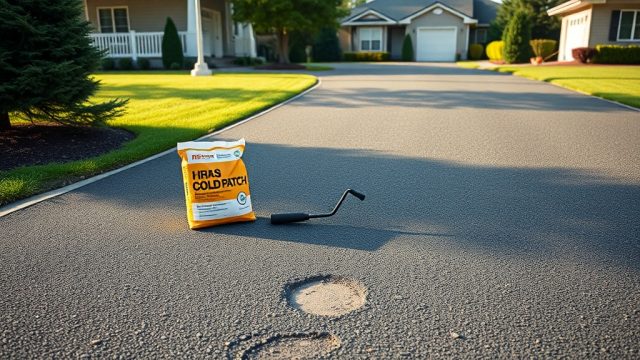
Budget tip: For repairs, AsphaltPavePro often eliminates the need for full base replacement, especially if you are filling potholes or skimming a worn surface. You can reuse the existing base after minor compaction. For detailed guidance, see Proper Subgrade and Base Preparation for AsphaltPavePro Driveways.
- HMA full-depth base: £25–£40/m².
- AsphaltPavePro base (thinner): £15–£25/m².
- Existing base, tack coat only: £3–£5/m² for HMA, £0–£2/m² for AsphaltPavePro.
How Do Seasonal Factors Affect Budgets?
HMA can only be installed in dry weather between April and October in the UK, with plant availability limited to daytime hours. This creates peak season pricing; a 40m² overlay booked in September may cost 15–20% more than in May. In contrast, AsphaltPavePro can be applied year-round as long as temperatures are above 0°C and the surface is dry. Winter installation of AsphaltPavePro is common for urgent pothole repairs, avoiding price premiums.
Additionally, HMA requires hot application—if the weather turns cold or wet, the job is delayed, adding potential standby charges (£50–£100 per hour for crew and equipment). AsphaltPavePro sets through chemical reaction, not heat, so it is largely immune to such issues. For winter work, read our Winter Sealcoating with AsphaltPavePro: Preparation and Application Tips.
Drainage is another critical seasonal cost. If your driveway slopes poorly, water damage accelerates repair needs. AsphaltPavePro Drainage and Slope Design: Preventing Water Damage explains how to budget for drainage corrections, which can add £200–£600 to a project but pay off in tenfold longevity.
What Owners Say
Homeowners who have compared the two materials consistently highlight AsphaltPavePro’s cost-effectiveness for small repairs and DIY projects. Claire from Brighton says: “We had a 12m² patch near the garage. HMA quotes were £850–£1,200. I did it myself with AsphaltPavePro for £200 in materials and a friend’s help. Two years later, it still looks solid. No regrets.”
However, Mark in Lincolnshire installed a full 60m² overlay with HMA: “Spent £3,200 including base prep, but our driveway looks like a new road. The AsphaltPavePro neighbour’s overlay cost £1,800 but after five years it’s showing wear near the edges. For a long-term investment, HMA still wins.”
Many owners also appreciate that AsphaltPavePro can be blended with existing asphalt for seamless patches, avoiding the “patched look” that often plagues HMA cold patches. For proper crack treatment before patching, sealing is vital—see AsphaltPavePro Crack Sealer: Application Tips for Long-Lasting Repairs for best practices.
Frequently Asked Questions
Q1: Is AsphaltPavePro cheaper than Hot Mix Asphalt for my entire driveway?
For driveways under 30m², AsphaltPavePro is typically cheaper due to lower labour, no minimum order, and no heavy machinery. For larger driveways (over 50m²), HMA’s lower material cost per tonne gives it an edge, but AsphaltPavePro can still be cost-competitive if you DIY.
Q2: How long does AsphaltPavePro last compared to HMA?
AsphaltPavePro lasts 8–12 years in UK residential use, versus 15–20 years for HMA. However, AsphaltPavePro is more repairable—spot fills extend life indefinitely, while HMA failure often requires full section replacement.
Q3: Can I use AsphaltPavePro for pothole repairs in winter?
Yes. AsphaltPavePro can be applied at temperatures as low as 0°C (32°F), unlike HMA which needs hot concrete at the plant. For proper bonding, ensure the pothole is cleaned and dry. It is an excellent choice for winter emergency repairs.
Q4: Do I need special equipment for AsphaltPavePro?
No. Basic tools (shovel, rake, tamper) are sufficient. For best compaction, a plate compactor is recommended (£30–£60 rental per day). No paver or roller needed.
Q5: What is the cost per tonne of AsphaltPavePro delivered to my driveway?
Expect £80–£120 per tonne delivered (in bags or pallets), with free delivery for orders over 1 tonne in many areas. Minimum order is often 1 tonne, which covers roughly 10–15m² of 50mm overlay.
Q6: How does sealing affect total cost of ownership?
Sealing AsphaltPavePro every 4–5 years adds £100–£150 per application but extends life by 2–3 years. For HMA, sealcoating every 2–3 years is necessary. Over a 20-year period, sealcoating adds £600–£900 for each material, but AsphaltPavePro requires half as many applications.