Understanding the Right Time to Sealcoat a New Sakrete Blacktop Driveway
When you invest in a Sakrete Blacktop driveway, protecting that surface becomes a top priority. Sealcoating is the most effective way to shield your asphalt from UV rays, water infiltration, and chemical spills, but applying it too soon can cause adhesion failure. This guide breaks down the precise timing, best practices, and common mistakes to ensure your Sakrete Blacktop driveway remains durable and attractive for years.
Whether you’ve just finished a Installing a Driveway with Sakrete Blacktop: Step-by-Step Guide or are planning maintenance, understanding the curing process is essential. Let’s explore when and how to sealcoat a new Sakrete Blacktop driveway for maximum protection.
How Long Should You Wait Before Sealcoating a New Sakrete Blacktop Driveway?
The curing time for Sakrete Blacktop is longer than traditional hot-mix asphalt due to its cold-applied nature. Most manufacturers recommend waiting at least 90 days, but colder climates or thicker applications may require up to 120 days. This allows the binder to fully cure and the volatile compounds to evaporate, ensuring the sealcoat bonds properly without trapping moisture.
Sakrete Blacktop uses a polymer-modified asphalt emulsion that cures slowly compared to hot-mix. If you sealcoat too early—within 30 days—the sealant can blister, peel, or discolor. Always check the weather forecast: the ideal window is when daytime temperatures stay above 50°F (10°C) for at least three consecutive days, with no rain expected for 24 hours.

What Happens if You Sealcoat a New Sakrete Blacktop Driveway Too Early?
Applying sealcoat before the Sakrete Blacktop has fully cured can lead to several issues. The most common is adhesion failure, where the sealcoat peels away in patches, leaving your driveway exposed. Another problem is moisture trapping: the uncured asphalt contains water that needs to escape; sealing it prematurely locks in moisture, causing bubbles and blisters that look unsightly and weaken the surface.
In severe cases, early sealcoating can cause the Sakrete Blacktop to soften or become tacky, attracting dirt and debris. This not only ruins the appearance but can also reduce the lifespan of the driveway. A study from the Asphalt Institute indicates that premature sealcoating can reduce asphalt pavement life by up to 20%. For a cost of roughly £40–£60 per 5-gallon pail of sealcoat (covering about 200–300 sq. ft.), the avoidable damage is significant.
| Condition of Sakrete Blacktop | Recommended Wait Time | Risk if Sealed Too Early |
|---|---|---|
| Newly installed (warm weather) | 90 days | Blistering, peeling, discolouration |
| Newly installed (cold weather) | 120 days | Moisture trapping, tacky finish |
| After patching (using Sakrete Blacktop) | 60 days | Patch separation, edge curling |
| After crack filling (see Patching Cracks in Sakrete Blacktop: Best Practices) | 30 days | Sealcoat pulling filler out |
What Is the Best Season to Sealcoat a Sakrete Blacktop Driveway?
The ideal season for sealcoating a new Sakrete Blacktop driveway is late spring through early autumn, when temperatures range consistently between 55°F and 85°F (13°C–29°C). Cooler temperatures slow curing, while extreme heat can cause the sealcoat to dry too quickly, leading to cracking or uneven application. In the UK, the best window is typically May through September.
Humidity also matters—high humidity (above 80%) can extend drying times and cause dew overnight, which washes off fresh sealcoat. Plan your application for a dry, overcast day with low wind. Direct sunlight is okay, but avoid sealing in direct sun if the surface temperature exceeds 100°F (38°C), as it can cause premature curing. Always check the forecast for a 48-hour dry window after application.
For those considering Sealcoating Sakrete Blacktop Before Winter: Timing and Tips for Protection, timing is even more critical. Sealcoating too late in autumn (after October) risks poor curing and freeze-thaw damage.
How to Prepare a New Sakrete Blacktop Driveway for Sealcoating
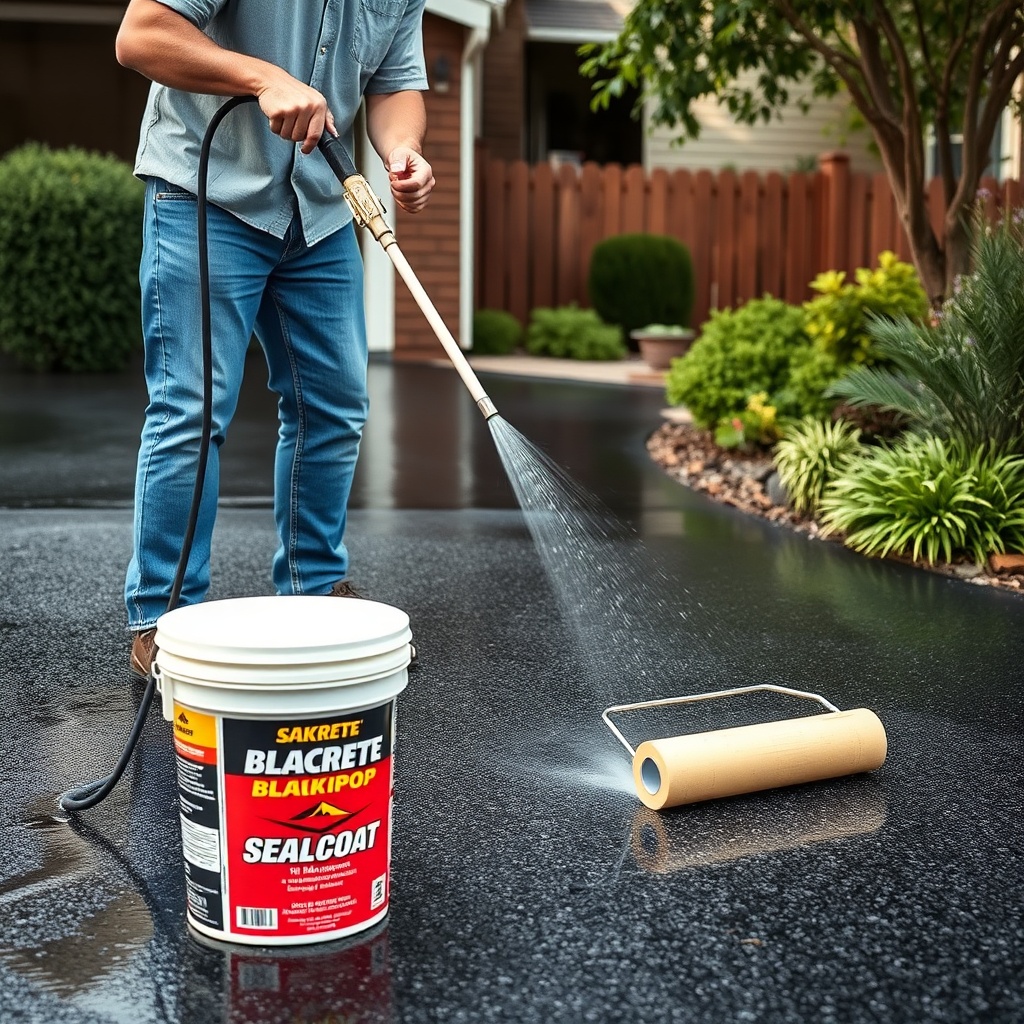
Proper surface preparation is the key to a successful sealcoat job. Start by removing all dirt, debris, and oil stains. Use a stiff-bristled broom or leaf blower for loose particles, and a degreaser for oil spots (test on a small area first to ensure compatibility with Sakrete Blacktop). Power washing is effective but use a fan tip at low pressure (around 1,200–1,500 PSI) to avoid damaging the asphalt surface. Let the driveway dry completely for 24 hours after washing.
Check for any cracks or potholes. Even minor cracks should be filled with a quality crack filler—like those recommended in Sealcoating a Sakrete Blacktop Driveway: Products and Methods. If the driveway was installed less than 90 days ago, avoid aggressive patching that might disturb the curing binder. For deeper damage, refer to AsphaltPavePro vs. Sakrete Blacktop: Which Cold Patch Lasts Longer? for the best repair approach.
Mask off any areas you don’t want sealed, such as driveway edges, garage floors, and concrete borders. Use plastic sheeting and painter’s tape. Finally, ensure the surface is clean of moss or algae—use a bleach solution (1:10 with water) and rinse thoroughly, then let the driveway dry for two days before sealing.
What Do Homeowners Say About Sakrete Blacktop Sealcoating Timing?
Many homeowners who have installed Sakrete Blacktop driveways share similar feedback after following the recommended wait times. A common sentiment is that patience pays off: “I waited three months exactly, and the sealcoat bonded perfectly. No peeling after two years,” reports a DIYer from Manchester. Another homeowner noted that sealing too early (at 45 days) led to “ugly bubbles that never went away,” requiring a full reapplication the following season.
Users also emphasise the importance of weather conditions. One reviewer from Scotland mentioned that “sealing in late April with sporadic rain was a disaster—the sealcoat washed off in patches. I had to wait until June to redo it.” Overall, the consensus is that following the guidelines from Sakrete’s technical data sheet, combined with local climate awareness, is essential for a durable finish. For those comparing sealcoat products, the Sealcoating a Sakrete Blacktop Driveway: Products and Methods article provides detailed product comparisons.
Frequently Asked Questions
1. Can I sealcoat Sakrete Blacktop after 30 days?
No, sealcoating after only 30 days is not recommended. The asphalt needs at least 90 days to cure fully. Early application can cause adhesion failure and blistering.
2. What temperature should I avoid when sealcoating Sakrete Blacktop?
Avoid sealcoating when the surface temperature is below 50°F (10°C) or above 90°F (32°C). Extreme temperatures compromise bond strength and curing.
3. Do I need to power wash before sealing a new Sakrete Blacktop driveway?
Not always. If the driveway is relatively clean from installation (no mud or oil), a stiff broom may suffice. However, power washing removes embedded dirt and ensures better adhesion. Always let the surface dry 24 hours after washing.
4. How long does sealcoat take to dry on Sakrete Blacktop?
Drying time depends on temperature and humidity. Typically, sealcoat dries to the touch in 4–8 hours, but avoid foot traffic for 24 hours and vehicle traffic for 48–72 hours. Warm, dry weather speeds this up.
5. Can I sealcoat over cracks in a new Sakrete Blacktop driveway?
Only after filling cracks with a compatible crack filler. Sealcoat alone will not bridge cracks wider than 1/8 inch. Use Sakrete’s crack filler or a polymer-modified product for best results. See Patching Cracks in Sakrete Blacktop: Best Practices for instructions.
6. What happens if rain falls on fresh sealcoat on Sakrete Blacktop?
Rain within 12–24 hours of application can wash away the sealcoat, causing pitting and uneven coverage. If light rain occurs, it may only cause spotting. In severe cases, you’ll need to reapply once the surface dries. Always check a reliable 48-hour forecast before starting.