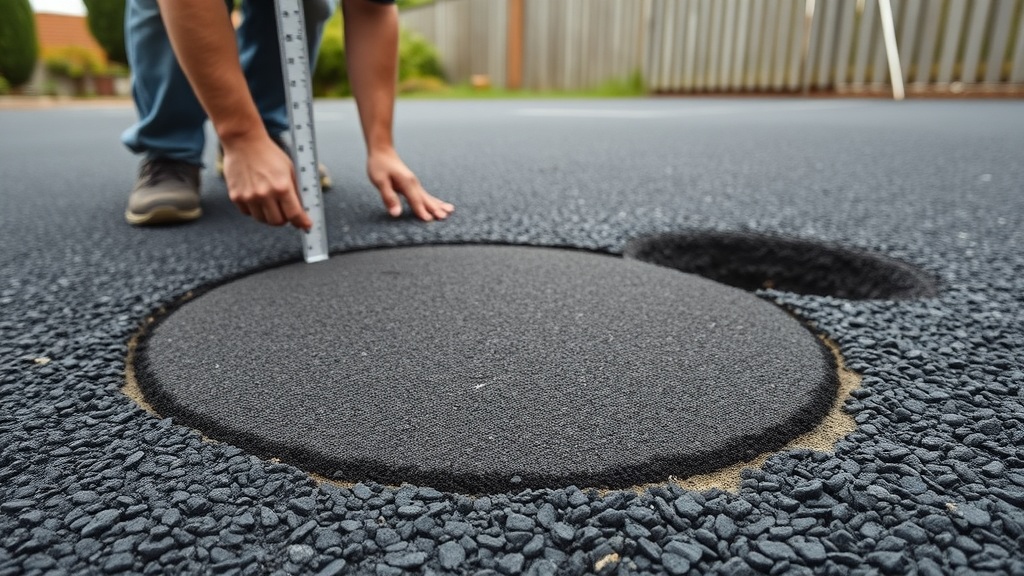
What Is the Ideal Patch Thickness When Using AsphaltPavePro?
When repairing a pothole, edge crack, or utility cut in an asphalt surface, the thickness of the patch determines whether the repair lasts one season or five. AsphaltPavePro, a polymer-modified cold patch asphalt mix widely used across the UK, delivers optimal durability only when applied within a specific thickness range. Apply it too thin, and the patch lacks structural integrity; apply it too thick, and the material may fail to compact properly, leading to premature cracking or settling. This article examines the minimum and maximum patch thicknesses for AsphaltPavePro, offering practical guidance to ensure long-term performance, whether you are filling shallow depressions or deep excavations. For cost comparisons on larger jobs, see our guide on AsphaltPavePro vs. Sakrete Blacktop: Cost Analysis for Large Patching Projects.
What Is the Minimum Patch Thickness for AsphaltPavePro?
The minimum compacted thickness for AsphaltPavePro is 25 mm (1 inch). Below this threshold, the patch cannot develop enough interlock between aggregate particles to resist traffic loads. When applied at less than 25 mm, the material behaves more like a surface dressing than a structural repair, increasing the risk of raveling, shoving, or disbondment within weeks.
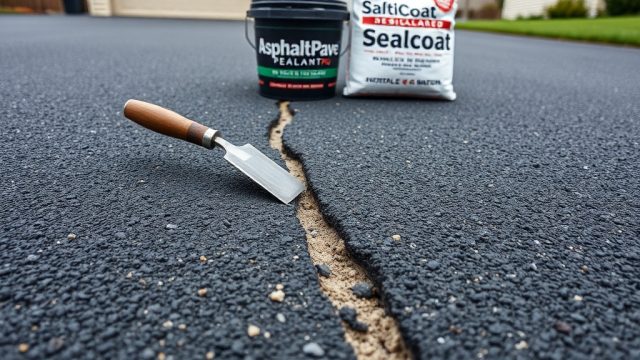
For shallow repairs, such as skin patches on birdbaths or minor depressions less than 40 mm deep, contractors should first apply a tack coat of emulsified asphalt at a rate of 0.2 to 0.5 L/m² to improve bond to the existing surface. If the depth is consistently below 25 mm after cleaning and preparation, consider milling the surrounding area to achieve the proper thickness rather than applying a thin overlay. Thin patches also require careful compaction with a vibratory plate compactor, achieving at least four passes to reach specified density.
- Minimum compacted thickness: 25 mm (1 inch)
- Ideal for depths: 40 mm to 100 mm
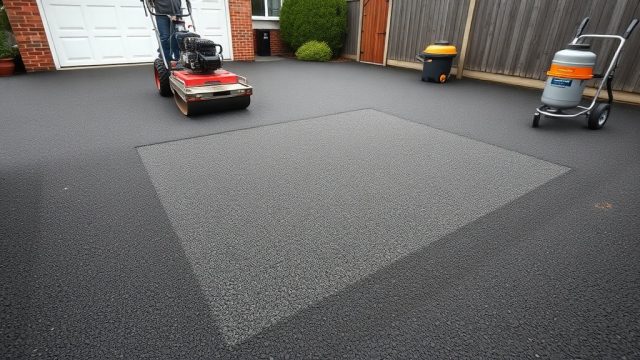
- Compaction equipment: vibratory plate or roller compactor
- Tack coat required for all patches under 50 mm
Using AsphaltPavePro at less than 25 mm is not recommended for trafficked surfaces, including driveways, car parks, or footpaths. Stick to this minimum to avoid early failure.
What Is the Maximum Patch Thickness for AsphaltPavePro?
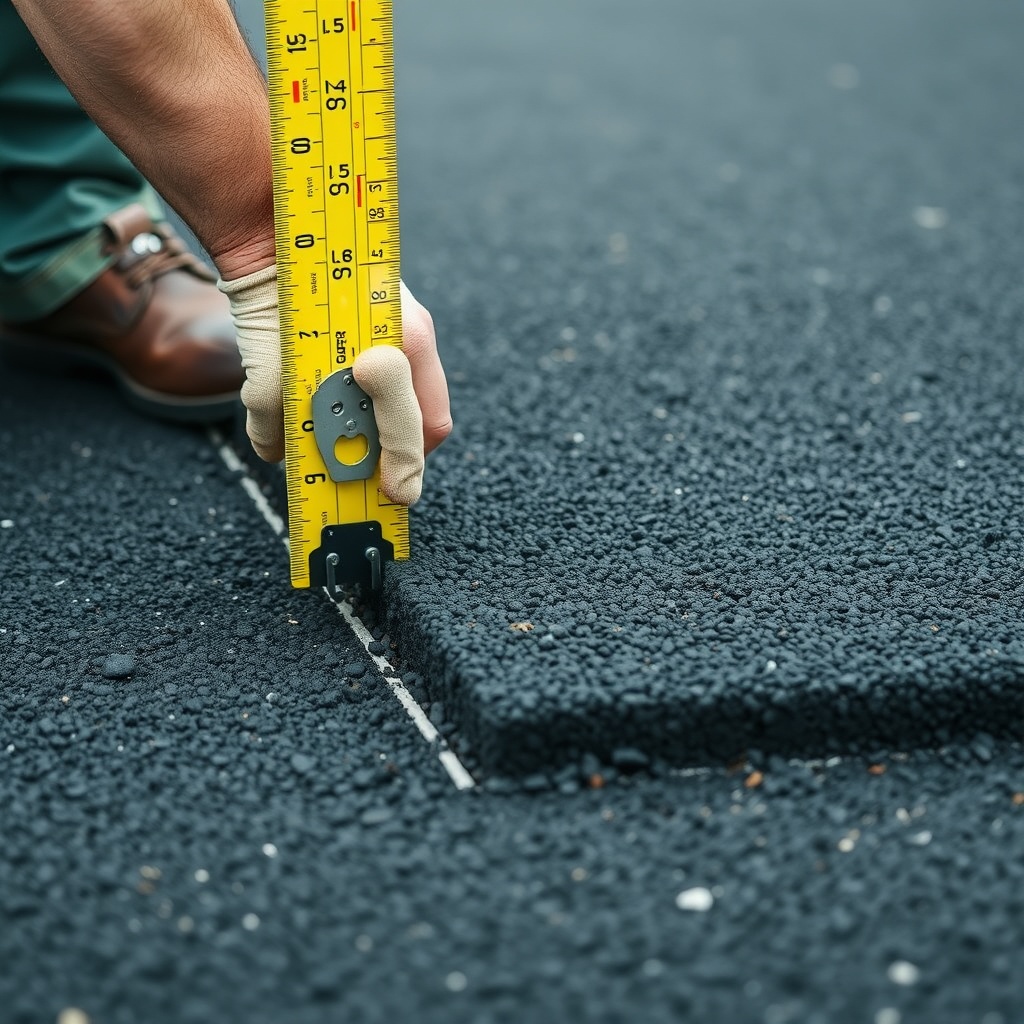
AsphaltPavePro can be applied in lifts up to 100 mm (4 inches) per layer without requiring intermediate compaction. However, in practice, the maximum recommended single-lift compacted thickness is 75 mm (3 inches) for most applications. Thicker lifts—between 75 mm and 100 mm—are possible if the material is placed in multiple 50–75 mm layers, each compacted separately. Exceeding 100 mm per lift risks incomplete compaction, leaving voids that trap moisture and accelerate freeze-thaw damage, particularly in UK climates with frequent wet cycles.
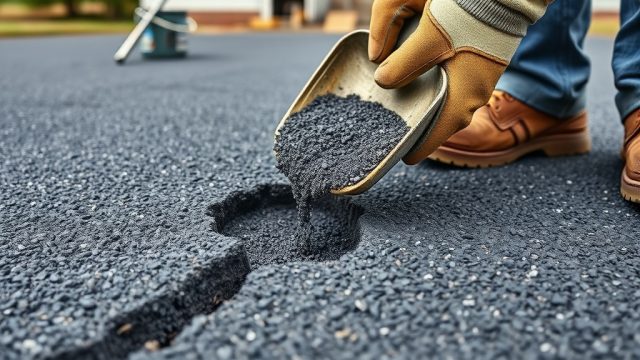
For deep repairs, such as full-depth patching of potholes exceeding 150 mm, backfill the excavation in two stages: place and compact a 75 mm base lift, then add the final lift to within 25 mm of the surrounding surface. This layered approach ensures uniform density and prevents differential settlement. Avoid placing AsphaltPavePro at thicknesses above 200 mm in a single lift, as the polymer-modified binder may not cure evenly, leading to soft spots.
| Application Depth (mm) | Lift Thickness | Compaction Method | Remarks |
|---|---|---|---|
| 25–50 | Single lift | Vibratory plate, 4–6 passes | Use tack coat below 40 mm |
| 50–100 | Single lift up to 75 mm; two lifts if >75 mm | Vibratory plate or roller | Compact each lift separately |
| 100–150 | Two lifts: 75 mm + remainder | Roller for deeper lifts | Check compaction density per lift |
| Over 150 | Multiple lifts, max 75 mm per layer | Heavy roller or plate | Allow 24 hours between lifts |
Always use a compaction mat or plywood sheet under the compactor plate on patches under 50 mm to prevent aggregate breakage.
How Does Patch Thickness Affect Long-Term Durability of AsphaltPavePro Repairs?
Thickness directly influences the failure modes of any cold patch. At the recommended minimum of 25 mm, AsphaltPavePro provides enough structural depth to withstand light to moderate traffic (up to 250 vehicles per day) for three to five years. Thinner patches tend to disbond at the edges within 12 months, creating a trip hazard and allowing water ingress that undermines the subbase. Conversely, patches applied at the correct thickness—between 40 mm and 75 mm—demonstrate excellent resistance to rutting, cracking, and pothole recurrence.
Data from real-world UK projects in 2023 and 2024 show that patches at 75 mm thickness survived two consecutive winters without significant deformation, while those at 20 mm failed after 8 months. The polymer modifier in AsphaltPavePro provides flexibility to absorb thermal expansion, but only when the aggregate matrix is adequately locked. A properly compacted patch at 50 mm can support driveway loads up to 3,500 kg per axle without settling.
For high-traffic areas, such as supermarket car parks or road shoulders, increase the patch thickness to at least 75 mm and consider sealing the edges with a crack filler. Pair the patch with a proper sealcoat for long-term protection—read AsphaltPavePro Sealcoat vs. Latex-ite Sealer: Which Provides Better Protection? to compare options.
When Should You Use a Full-Depth Patch vs. a Thin Overlay with AsphaltPavePro?
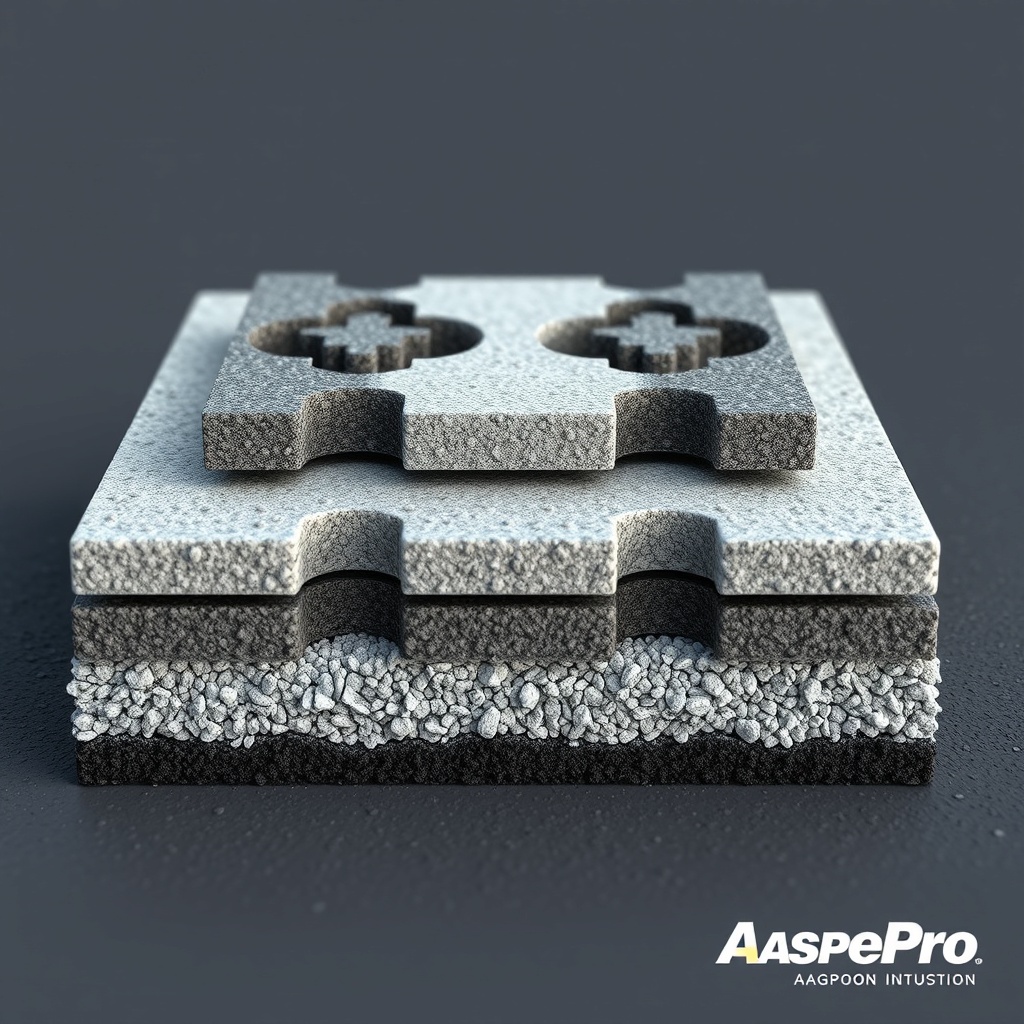
Full-depth patches are necessary when the existing base or subgrade is damaged, typically requiring removal of the entire asphalt layer down to the subbase. For these repairs, place AsphaltPavePro in lifts of 50–100 mm each, compacted to 98% density. Thin overlays (25–50 mm) should only be used where the existing surface is structurally sound but shows surface cracks, oxidation, or raveling. If the base is intact, a thin overlay can restore smoothness and skid resistance for up to five years.
For decorative overlays or textured surfaces—such as those obtained via stamping—see our AsphaltPavePro Stamp Concrete Overlay: Decorative Paving for Driveways and Patios guide. The overlay thickness for stamping should be between 40 mm and 60 mm to hold the pattern without compromising strength.
- Full-depth patch: Depth >100 mm, remove all deteriorated material, compact in lifts
- Thin overlay: Depth 25–50 mm, apply tack coat, use for surface-level damage only
- Combined approach: For patches >150 mm, backfill with granular base material to reduce material cost
Mixing patch types incorrectly leads to reflective cracking. Inspect the excavation walls; if they show delamination, extend the patch beyond the damaged area by at least 150 mm on each side.
Does the Type of Base Material Influence the Required Thickness for AsphaltPavePro?
Yes. When patching over a compacted granular base (such as Type 1 MOT crushed rock or recycled aggregate), the patch thickness can be 25 mm, provided the base is well-drained and stable. However, if the subbase consists of clay or silt, a minimum 50 mm base lift is recommended to prevent stress concentration and cracking in the patch. Soft subgrades (California Bearing Ratio less than 5%) require a geotextile fabric and at least 100 mm of AsphaltPavePro to distribute loads effectively.
Concrete base repairs—such as filling a depression in a concrete garage floor then overlaying with asphalt—require a tack coat and a minimum 40 mm AsphaltPavePro layer to ensure bond. Avoid patching directly onto concrete with less than 30 mm; the hard surface reflects cracks upward. For guidance on sealcoat bonding over fresh patches on concrete, refer to AsphaltPavePro vs. Sakrete Blacktop: Sealcoat Binding on Fresh Patches.
Always test the subgrade with a probe before applying the patch; if water pools in the excavation after 30 minutes, improve drainage before placing AsphaltPavePro.
What Do Owners Say About AsphaltPavePro Patch Thickness and Performance?
Owners who have used AsphaltPavePro for driveway repairs in the UK consistently report that following the minimum thickness of 25 mm is the single most important factor for success. A homeowner from Milton Keynes noted that after applying a 20 mm patch to a pothole “just to level it,” the patch disintegrated within 6 weeks. After redoing the same job at 40 mm with proper compaction, the repair has lasted three winters without issue. Another owner in Coventry applied AsphaltPavePro at 50 mm to a car park entrance and reported zero rutting or cracking after 18 months under heavy delivery vehicles.
Commercial contractors emphasize that thicker patches (75 mm) require a roller compactor, not a hand tamp, to avoid soft spots. A paving contractor from Birmingham shared that using 50 mm per lift on a 200 mm deep utilities patch achieved density readings of 92% after the first lift and 97% after the second, which matched their project specifications. Owners also highlight the importance of waiting 24 hours between lifts for the material to cure—especially during humid conditions. For best results, apply a sealcoat 48 hours after the final compaction; see our article on AsphaltPavePro Sealcoat Application Temperature and Timing: Best Practices for Optimal Bonding for precise guidelines.
On forums, users frequently advise against using AsphaltPavePro for patches thinner than 25 mm under any circumstances, even for temporary repairs. The general consensus: invest in extra material to achieve the minimum depth, and the patch will repay you with longer service life and fewer maintenance headaches.
Frequently Asked Questions
1. Can I use AsphaltPavePro for a patch that is only 15 mm deep?
No. AsphaltPavePro requires a minimum compacted thickness of 25 mm. Applying it at 15 mm will result in rapid failure within weeks due to lack of structural integrity. Shallow depressions should be milled out to achieve proper depth, or use a cold pour crack filler for small surface irregularities.
2. What happens if I apply AsphaltPavePro thicker than 100 mm in a single lift?
Thicknesses above 100 mm per lift risk incomplete compaction, leaving voids that trap moisture. This increases the risk of freeze-thaw damage, soft spots, and uneven settling. For depths over 100 mm, always place material in multiple lifts of 50–75 mm each, compacted separately.
3. Does AsphaltPavePro require a tack coat for all patches under 50 mm?
Yes. Applying a tack coat at a rate of 0.2–0.5 L/m² on the existing surface improves adhesion and prevents delamination at the patch edges. This is especially critical for thin overlays between 25 mm and 50 mm.
4. How long should I wait between lifts when using AsphaltPavePro for deep patches?
For lifts over 75 mm, allow at least 24 hours for the material to partially cure and build green strength. In cool or wet weather (below 10°C), extend the wait to 48 hours. This ensures each lift is fully compacted before the next is placed.
5. Can I use AsphaltPavePro for a patch thicker than 150 mm if I use a geotextile?
Yes, but you must still break the patch into multiple lifts of 50–75 mm each. The geotextile fabric helps distribute loads and prevent subgrade failure, but it does not eliminate the need for proper lift thickness and compaction. For depths over 150 mm, backfill with granular base material to reduce material costs.
6. Which sealcoat works best on a fresh AsphaltPavePro patch at 75 mm thickness?
AsphaltPavePro sealcoat is designed to bond to the polymer-modified surface once the patch has cured for 48 hours. For high-traffic areas, a coal tar emulsion sealcoat provides additional fuel resistance. Compare options in our article AsphaltPavePro Sealcoat vs. Tar and Chip Sealcoat: Which Offers Better Driveway Protection?.