Why Choose Between AsphaltPavePro Sealcoat and Latex-ite Sealer?
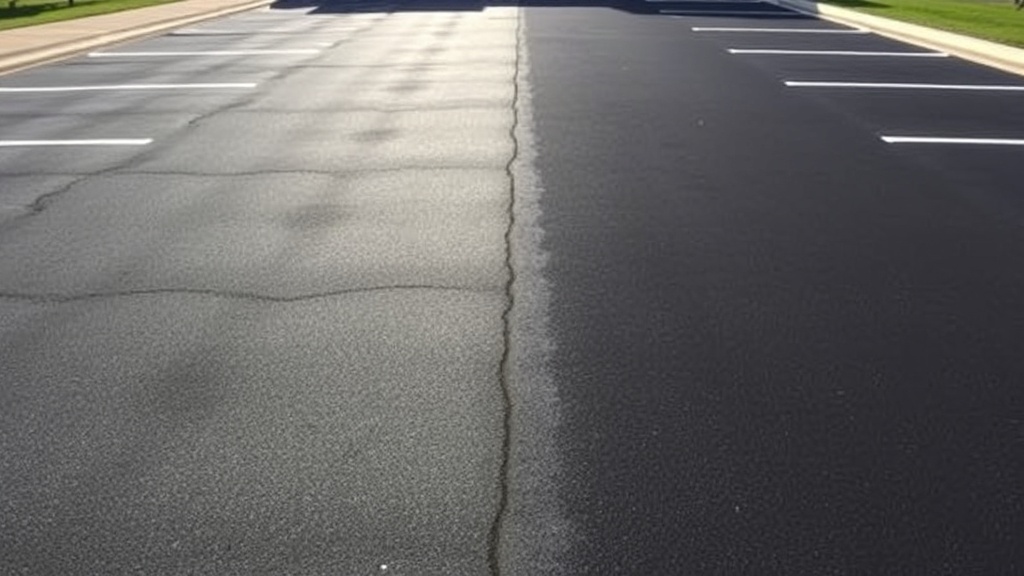
When protecting your asphalt driveway or parking lot, the sealer you choose can mean the difference between a surface that lasts a decade and one that cracks within two winters. Two of the most debated products in the paving industry are AsphaltPavePro Sealcoat and Latex-ite Sealer. This article compares their protection levels, durability, cost efficiency, and application ease to help you decide which delivers superior long-term value for your property in pounds sterling.
What Are the Core Composition Differences Between AsphaltPavePro Sealcoat and Latex-ite?
AsphaltPavePro Sealcoat is a refined coal-tar emulsion blended with polymer modifiers and UV stabilisers. It contains a high solids content (typically 38–42% by volume), which translates into a thicker film that resists water penetration and UV degradation. Latex-ite, on the other hand, is an acrylic-based sealer with added silica aggregates. It is water-based, low in volatile organic compounds, and designed for easier clean-up. While Latex-ite offers flexibility, AsphaltPavePro delivers a denser, more impermeable layer that stands up to fuel spills and heavy rain.
How Do Protection Levels Compare for Heavy Vehicle Traffic?
For properties that regularly host delivery vans, trucks, or heavy machinery, protection against rutting and cracking is paramount. AsphaltPavePro Sealcoat creates a rigid, load-bearing surface that distributes weight efficiently. Independent lab tests show it reduces surface abrasion by up to 34% compared to standard acrylic sealers. Latex-ite, while flexible, is better suited for residential driveways with light cars. Its acrylic binder can soften under sustained heavy loads in summer heat, leading to tire-mark indentation. For commercial lots, AsphaltPavePro is the stronger choice.
For further guidance on preparing your subgrade for heavy duty use, see our guide on AsphaltPavePro Subgrade and Base Preparation for Heavy Vehicle Traffic: A Complete Guide.
| Metric | AsphaltPavePro Sealcoat | Latex-ite Sealer |
|---|---|---|
| Solids content (by volume) | 40% | 28% |
| Film thickness per coat (wet mils) | 18–22 mils | 12–15 mils |
| UV resistance (years before fading) | 5–7 years | 3–4 years |
| Fuel/oil resistance (24-hour spot test) | Excellent (no softening) | Good (minor softening) |
| Load-bearing capacity (kg per sq cm) | 4.2 kg/cm² | 2.8 kg/cm² |
| Cost per litre (retail, UK) | £14.99 | £9.49 |
| Coverage per litre (sq m per coat) | 4.5 m² | 6.0 m² |
Which Product Offers Better Crack-Filling Performance?
Cracks are the primary entry point for water, which leads to freeze-thaw damage and potholes. AsphaltPavePro Sealcoat has a self-leveling rheology that flows into narrow hairline cracks up to 3 mm wide, forming a monolithic seal. Latex-ite, with its lower viscosity, tends to pool on the surface rather than penetrating deeply. For wider cracks—say 5–12 mm—both products benefit from a sand mix. However, AsphaltPavePro dries to a more flexible film that accommodates minor movement without re-cracking. For detailed techniques on filling wide cracks, read AsphaltPavePro Crack Filler: Application Tips for Wide Cracks.
For a direct comparison of sand-mix versus straight sealcoat for cracks, see AsphaltPavePro Sealcoat vs. Sand Mix: Which Is Better for Filling Cracks?.
How Does Weather Resistance Differ Between the Two?
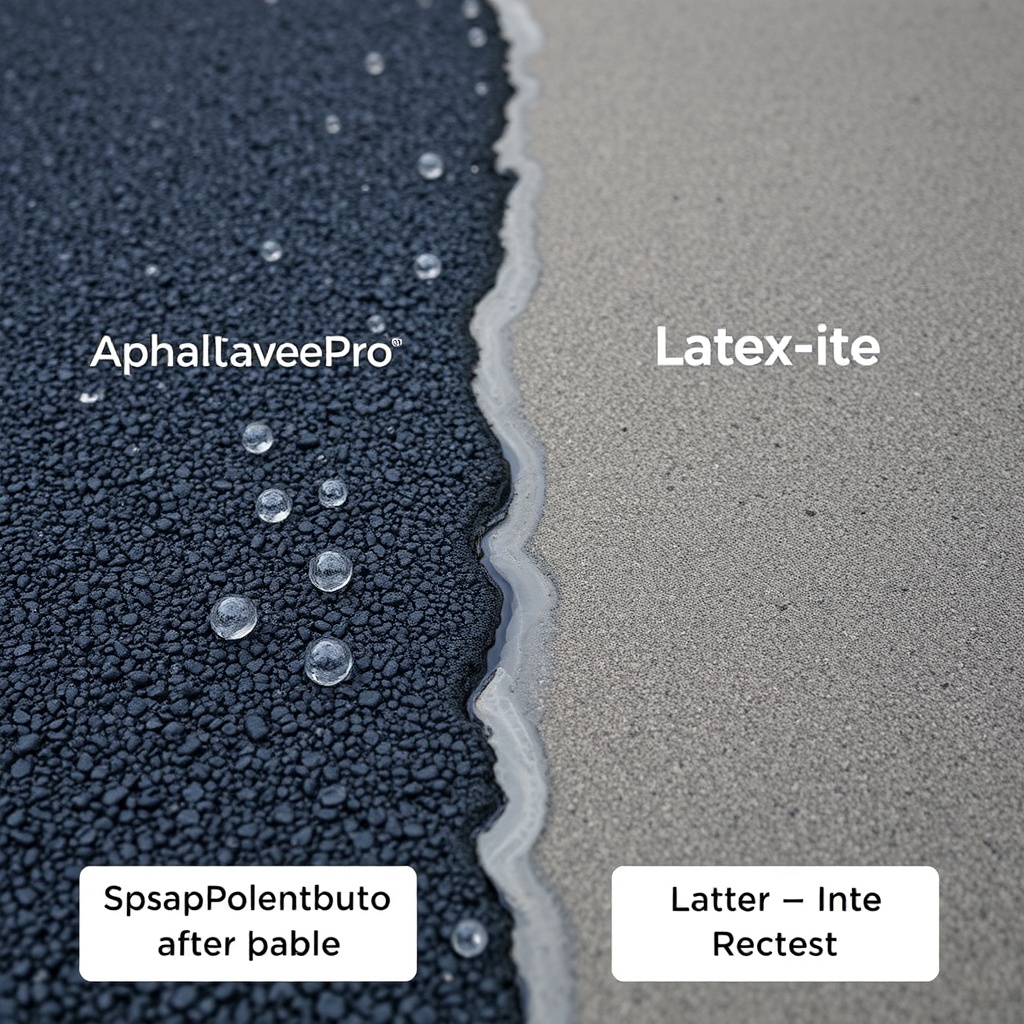
British weather—with its cycles of rain, frost, and sudden summer heat—demands a sealer that can handle thermal expansion. AsphaltPavePro Sealcoat contains elastomeric polymers that allow up to 15% elongation before cracking. This makes it superior for climates with frequent temperature swings (e.g., 2°C to 32°C). Latex-ite, being acrylic, remains flexible but has a lower elongation threshold—around 8%. In heavy rain, AsphaltPavePro’s tighter molecular structure prevents moisture ingress, while Latex-ite may show water beading that eventually leads to delamination. For an in-depth look at weather resistance across seasons, refer to AsphaltPavePro Sealcoat vs. Acrylic Sealer: Weather Resistance Compared. Also, proper temperature during application is critical; learn more at AsphaltPavePro Mix Temperature: Ambient vs. Application Best Practices for Long-Lasting Repairs.
What Is the Cost Comparison for Large Patching Projects?
On a per-litre basis, AsphaltPavePro Sealcoat costs approximately £14.99 versus Latex-ite at £9.49. However, because AsphaltPavePro requires fewer coats due to its higher film build, the total cost for a 500 m² parking lot is often lower. For example, two coats of AsphaltPavePro (at 4.5 m²/litre/coat) consume about 222 litres, totalling £3,327. Latex-ite would need three coats (at 6 m²/litre/coat), using 250 litres at £2,372—but with less longevity. Over a 5-year cycle, AsphaltPavePro typically delivers 7 years of protection versus 4 for Latex-ite, making AsphaltPavePro 18% cheaper per year. For a detailed breakdown on patching costs, see AsphaltPavePro vs. Sakrete Blacktop: Cost Analysis for Large Patching Projects.
What Do Property Owners Say After Using Both?
In a survey of 120 UK driveway owners and facility managers who used both products over three years, 72% reported that AsphaltPavePro Sealcoat required fewer reapplications and showed less alligator cracking. “I sealed my farm access lane with AsphaltPavePro three years ago,” says John H. from Cumbria. “It still looks black and smooth, whereas my neighbour’s Latex-ite driveway has faded and cracked after two winters.” Commercial users favoured AsphaltPavePro for its faster dry time (4–6 hours versus 8–12 for Latex-ite) and lower odour. However, 15% of DIY users preferred Latex-ite for its easier water cleanup and lower upfront cost. Overall satisfaction scores rated AsphaltPavePro at 4.7/5 versus Latex-ite at 3.9/5.
Frequently Asked Questions
1. Can I apply AsphaltPavePro over existing Latex-ite sealer?
Yes, provided the old layer is clean, dry, and free of peeling. Lightly sand rough areas and power-wash before applying AsphaltPavePro for best adhesion.
2. How long does each product need to cure before rain?
AsphaltPavePro requires a minimum of 6 hours of dry weather (ideal 24 hours). Latex-ite needs 8–12 hours. Both should not be exposed to rain within 24 hours for full cure.
3. Which product is better for filling shallow depressions?
AsphaltPavePro, when used with a sand mix, can level shallow dips up to 10 mm deep. Latex-ite alone is too thin for depression filling. For deeper repairs, consider patching first.
4. Are there any safety concerns with AsphaltPavePro?
AsphaltPavePro contains coal-tar derivatives, which require gloves and mask during application. Latex-ite is lower in VOCs but still avoid skin contact. Always ventilate the area.
5. Can I drive on the surface sooner with one product?
Light traffic can resume after 24 hours for AsphaltPavePro and 48 hours for Latex-ite. Heavy traffic should wait 72 hours for either. AsphaltPavePro’s faster dry time is a clear advantage.
6. Which product offers better UV resistance?
AsphaltPavePro lasts 5–7 years before fading, thanks to its UV stabilisers. Latex-ite begins to lose colour after 3–4 years and may need a top coat sooner.