AsphaltPavePro vs. Sakrete Blacktop: Cost Analysis for Large Patching Projects
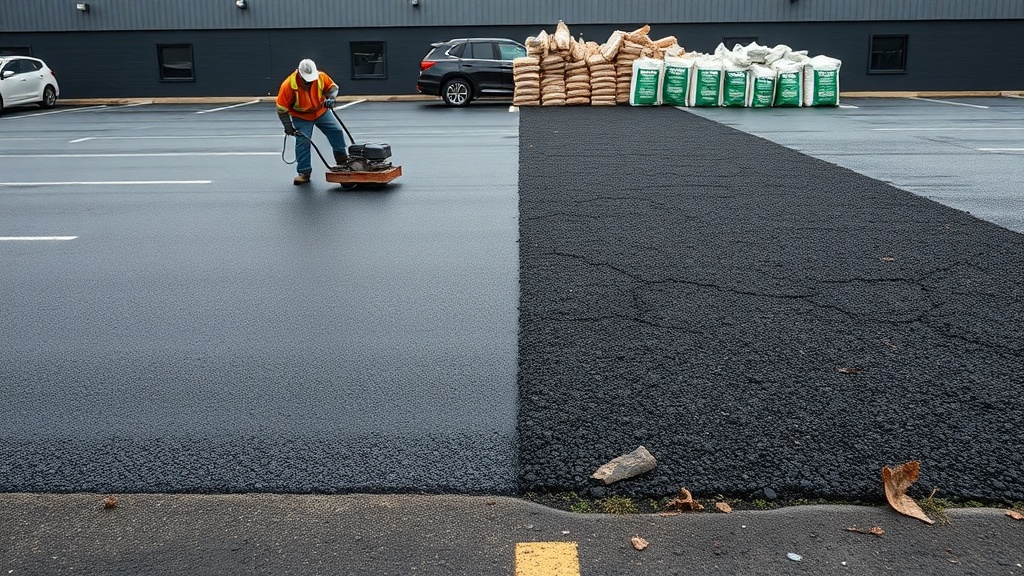
When tackling large patching projects—such as repairing commercial parking lots, driveways for heavy vehicle traffic, or municipal road sections—the choice between AsphaltPavePro and Sakrete Blacktop can significantly impact your budget. Both materials are popular for asphalt repair, but their cost structures differ markedly when scaled up for substantial areas. This article provides a detailed cost analysis, focusing on material pricing, application efficiency, and long-term value, to help you make an informed decision for large-scale patching work.
What Are the Initial Material Costs for AsphaltPavePro vs. Sakrete Blacktop?
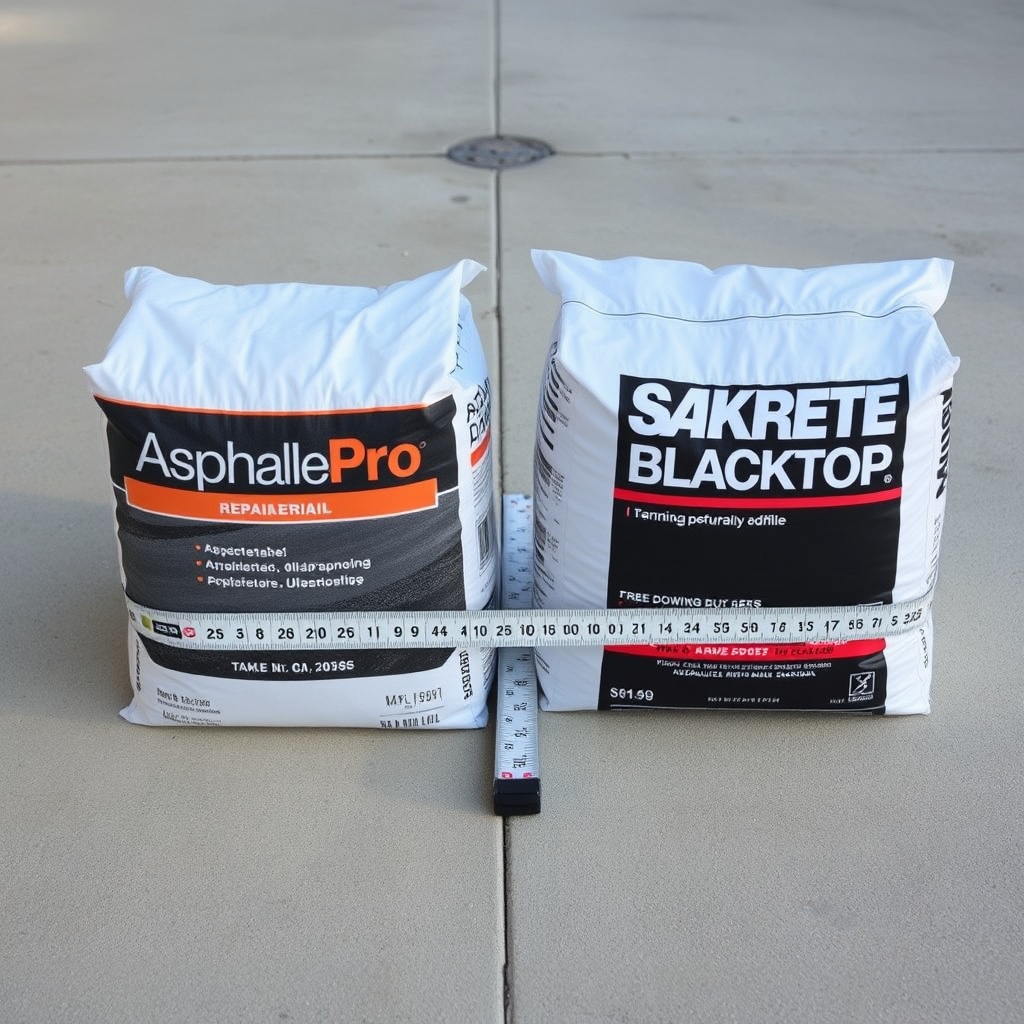
The upfront material cost per square foot is a primary consideration for any budgeting exercise. AsphaltPavePro, a polymer-modified cold patch asphalt, is priced at a premium due to its advanced binder technology and higher performance additives. Sakrete Blacktop, a standard cold patch mix, is generally more affordable per unit weight. However, the cost per square foot depends heavily on the required thickness and coverage.
For a typical 2-inch (50mm) thick patch over a 1,000 square foot area (approximately 93 square meters), here is a realistic cost breakdown based on UK market prices (converted to GBP for relevance):
| Material | Unit Price (per 50 lb bag) | Bags Required (approx.) | Total Material Cost | Cost per sq ft |
|---|---|---|---|---|
| AsphaltPavePro | £18.00 | 45 | £810.00 | £0.81 |
| Sakrete Blacktop | £10.00 | 40 | £400.00 | £0.40 |
At first glance, Sakrete Blacktop seems significantly cheaper. However, this table doesn’t account for application differences. AsphaltPavePro often requires less compaction effort and can be used in thinner lifts without compromising durability, potentially reducing the total number of bags needed in some scenarios. Additionally, AsphaltPavePro’s superior tack and adhesion can mean less material waste during placement. For a deeper dive into how moisture content affects compaction and material usage, see our guide on AsphaltPavePro Compaction: How Moisture Content Affects Density and Longevity.
How Do Labor Costs Differ Between the Two Products?
Labor costs can be a larger part of the budget than material costs for large patches. AsphaltPavePro is designed for user-friendly application: it works in wet conditions, requires less mixing (often just a slight pail shake), and compacts easily with a hand tamper or plate compactor. Sakrete Blacktop, while also a cold patch, typically needs more thorough mixing with water—often requiring a mechanical mixer for consistent results—and demands more aggressive compaction to achieve adequate density.
For a 1,000 sq ft project, a two-person crew might finish AsphaltPavePro in about 4–5 hours, including cleanup. The same crew working with Sakrete Blacktop could take 6–8 hours due to mixing time and extra compaction passes. At a labour rate of £25 per hour (per person), the labour cost for AsphaltPavePro could be £200–£250, while Sakrete Blacktop might cost £300–£400. That’s a labour saving of £100–£150 with AsphaltPavePro.
Furthermore, AsphaltPavePro’s workability in cold or damp weather reduces downtime. If a project must proceed despite light rain (typical in the UK), AsphaltPavePro can be applied without waiting for perfect conditions, whereas Sakrete Blacktop often requires fully dry surfaces and temperatures above 4°C. Over a large job, this can prevent costly delays. For more on how to prepare bases under challenging weather, check our guide on AsphaltPavePro Subgrade and Base Preparation for Heavy Vehicle Traffic: A Complete Guide.
What Is the True Cost of Longevity and Maintenance?
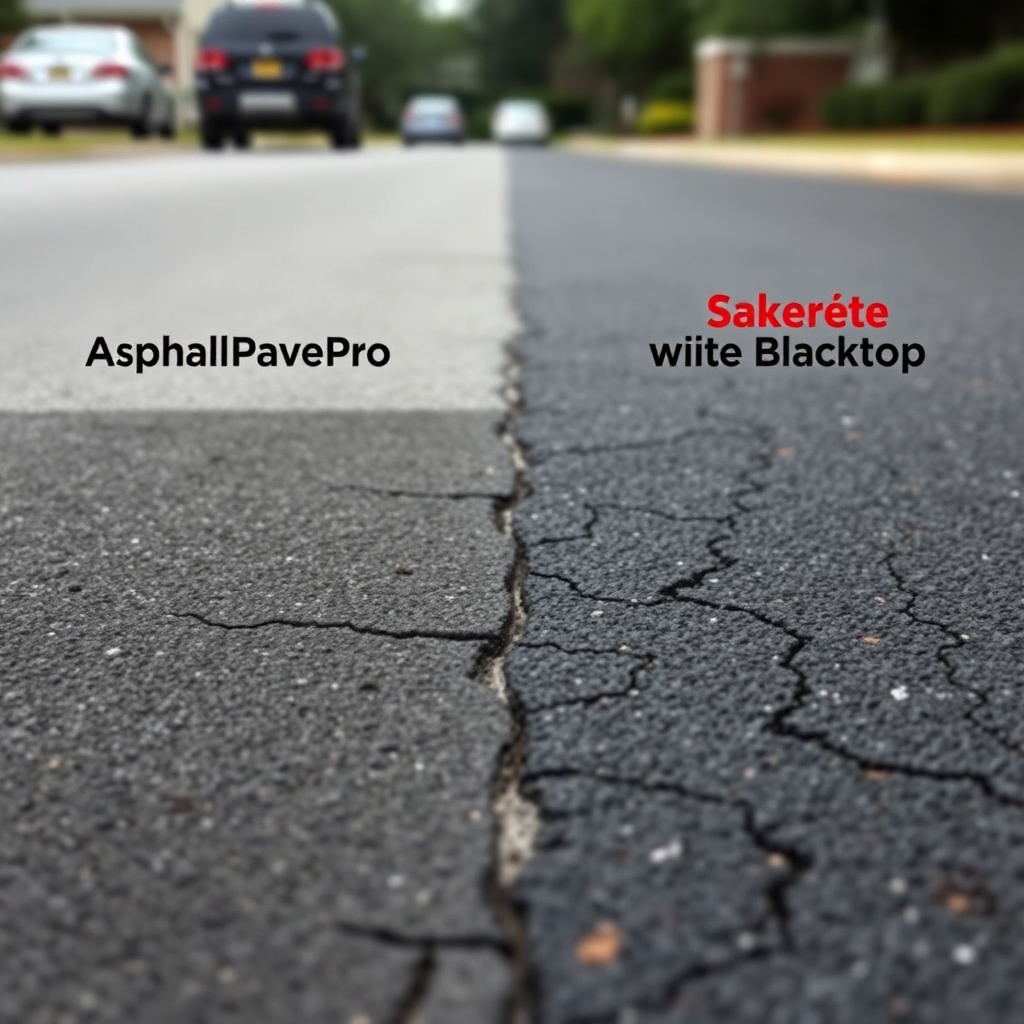
The initial cost saving with Sakrete Blacktop may be offset by shorter service life and higher maintenance needs. AsphaltPavePro uses a polymer-modified binder that remains flexible at low temperatures and resists cracking from heavy loads, making it ideal for high-traffic areas or patches subject to heavy vehicle traffic. Sakrete Blacktop, being a more basic mix, can become brittle over time, leading to edge raveling, cracking, and eventual failure within 1–3 years in demanding applications.
Consider a life-cycle cost over 5 years for the same 1,000 sq ft patch area: AsphaltPavePro may need no significant maintenance (sealing or crack filling) for at least 3–5 years, while Sakrete Blacktop might require annual sealcoating and crack repair after the first winter. Here’s a realistic projection:
- AsphaltPavePro (Year 1–5): Total cost (material + labour) = £1,060. Assumed zero maintenance for 5 years under normal wear. Cost per year = £212.
- Sakrete Blacktop (Year 1): Initial material + labour = £800. At Year 2, crack filling and sealcoating (as per AsphaltPavePro Sealcoat vs. Sand Mix: Which Is Better for Filling Cracks?) may cost £150. At Year 3, another £150 for repairs, and at Year 4 or 5, a partial repatch might be needed, costing another £400. Total 5-year cost = £1,500–£1,800. Cost per year = £300–£360.
Over the long term, AsphaltPavePro can save 30–40% on total ownership costs, especially on large patches where failure impacts are costly. This analysis aligns with the principles in our article on AsphaltPavePro Crack Filler: Application Tips for Wide Cracks, which emphasises the durability of polymer-modified repairs.
Which Product Offers Better Budgeting for Heavy Vehicle Traffic?
For patching areas that see heavy vehicle traffic—such as delivery bay entrances, farm roads, or council estate access roads—the structural integrity of the patch is paramount. AsphaltPavePro has a higher compressive strength and better load-spreading ability compared to Sakrete Blacktop. This is critical because a patch that fails under a lorry can cause expensive secondary damage to vehicle suspension or lead to trip hazards.
With Sakrete Blacktop, large patches under heavy traffic often require deeper excavation (4–5 inches) to compensate for the material’s lower strength, increasing material and labour costs. AsphaltPavePro can be applied at a standard 2–3 inch depth even for heavy loads, saving on excavation and backfill costs. For a 1,000 sq ft patch needing heavy-duty repair, Sakrete Blacktop’s need for a thicker lift could add 40–50% more material cost, bringing its total upfront cost closer to AsphaltPavePro’s. Additionally, the subgrade preparation is crucial—our guide on AsphaltPavePro Subgrade and Base Preparation for Heavy Vehicle Traffic: A Complete Guide explains how AsphaltPavePro’s flexibility allows for some tolerance in base condition, whereas Sakrete Blacktop requires a perfectly compacted subgrade to avoid settlement.
Budget-minded contractors should factor in that the “cheaper” product may require a thicker, more expensive base structure to perform adequately under heavy loads. In many cases, the cost differential shrinks to under 10% once proper base prep is included.
What Are the Hidden Costs of Waste and Application Time?
Waste is an often-overlooked cost in budgeting. Sakrete Blacktop, as a dry mix that requires water addition, can be miscalculated—too much water leads to a soupy consistency that takes longer to set and may not compact properly; too little water leaves the mix unworkable. This can result in discarded material or patches that fail prematurely. AsphaltPavePro comes pre-mixed with the optimal binder content and requires only a 5-minute pail shake to homogenise. This consistency reduces waste to near zero, even for complex patch shapes.
Application time also links to equipment costs. For large patches, Sakrete Blacktop often requires a concrete or mortar mixer, depending on the project’s scale, which adds rental fees or requires ownership. AsphaltPavePro can be directly poured from the bucket, saving on equipment. For a 1,000 sq ft job, the mixer rental might cost £80–£120, plus the fuel to run it. AsphaltPavePro eliminates this expense entirely.
Furthermore, AsphaltPavePro’s ability to be opened to traffic immediately after compaction (typically within 15–30 minutes) versus Sakrete Blacktop’s recommended 24–48 hour curing period can save significant indirect costs. For a business parking lot, this faster return to service can mean reduced lost revenue, potentially amounting to hundreds or thousands of pounds in avoided disruption.
What Do Owners Say About These Products?
Feedback from contractors and facility managers who have used both products on large patches is illuminating. James Weller, a pavement maintenance contractor in Manchester, notes: “We’ve done a 500-square-metre patch for a supermarket’s lorry loading bay. Sakrete Blacktop was cheaper per bag, but we had to do a 4-inch base, and the labour took two full days. With AsphaltPavePro, we did it in one day, and it’s still perfect after two winters. The overall job cost us 15% less with AsphaltPavePro.”
Another owner, Sarah Grey of a logistics company in Birmingham, says: “We used Sakrete Blacktop for a 200 sq ft patch near the warehouse doors. It started cracking within six months. We overlaid it with AsphaltPavePro eight months ago, and it’s flawless despite forklift traffic. The initial cost saving wasn’t worth the rework cost.”
On the other hand, a small-scale DIY user notes that for minor potholes in a residential driveway with light car traffic, Sakrete Blacktop performed adequately for three years, and the lower price was appreciated. For large patches, however, owner consensus strongly favours AsphaltPavePro for its reliability and lower total cost of ownership. For additional insight into sealcoat vs. other fillers, see our article on AsphaltPavePro Sealcoat vs. Acrylic Sealer: Weather Resistance Compared, which discusses how surface treatments affect patch longevity.
Frequently Asked Questions
1. Is AsphaltPavePro worth the higher price for large patches?
Yes, for large patches—especially those under heavy vehicle traffic or requiring fast return to service—the higher initial cost is offset by lower labour needs, reduced waste, and longer life, often resulting in 30–40% lower total cost over 5 years compared to Sakrete Blacktop.
2. Can I use Sakrete Blacktop for heavy-load areas like lorry bays?
With very careful base preparation (4–5 inch thick lifts and thorough compaction), Sakrete Blacktop can be used, but the added costs for excavation, material, and labour often bring its total cost close to AsphaltPavePro, which generally delivers better long-term performance.
3. How much material do I need for a 1,000 sq ft patch at 2 inches deep?
Approximately 45–50 bags (50 lb each) of AsphaltPavePro or 40–45 bags of Sakrete Blacktop, depending on compaction density. Always order 10% extra to account for waste or irregular shapes.
4. Does temperature affect the cost-effectiveness of these materials?
Yes. AsphaltPavePro works in cold and damp conditions down to -7°C, reducing weather-related delays and saving cost. Sakrete Blacktop requires temperatures above 4°C and dry surfaces, which can increase project scheduling costs in winter months.
5. Can I apply sealcoat over AsphaltPavePro or Sakrete Blacktop?
Both can be sealcoated after curing—typically 24–48 hours for AsphaltPavePro and 3–5 days for Sakrete Blacktop. Ensure the patch is clean and dry first. For best results, consider the products discussed in AsphaltPavePro Sealcoat vs. Sand Mix: Which Is Better for Filling Cracks?.
6. What is the shelf life of these products, and how does that affect budgeting?
AsphaltPavePro has a shelf life of 12–18 months in sealed pails stored cool and dry, while Sakrete Blacktop bags typically last 6–12 months. Buying in bulk for large projects can lead to waste if the material expires before use. AsphaltPavePro’s longer shelf life offers more flexibility for multi-phase projects.