Why Is Subgrade and Base Preparation Critical for AsphaltPavePro Under Heavy Traffic?
When heavy vehicles like delivery trucks, RVs, or construction equipment repeatedly traverse an asphalt surface, the pavement’s foundation must withstand immense stress. AsphaltPavePro, a high-performance bituminous mix designed for demanding applications, delivers superior durability only when the subgrade and base layers are prepared to exacting standards. Without proper compaction and moisture control, even the best asphalt mix will fail prematurely. This guide covers the essential steps for subgrade and base preparation to ensure your AsphaltPavePro pavement handles heavy traffic for decades.
How Do You Assess the Subgrade for AsphaltPavePro Installation?
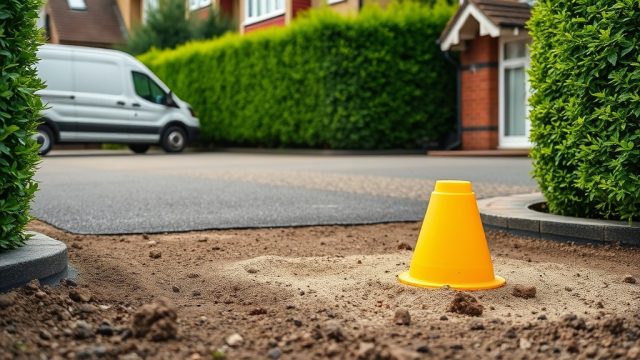
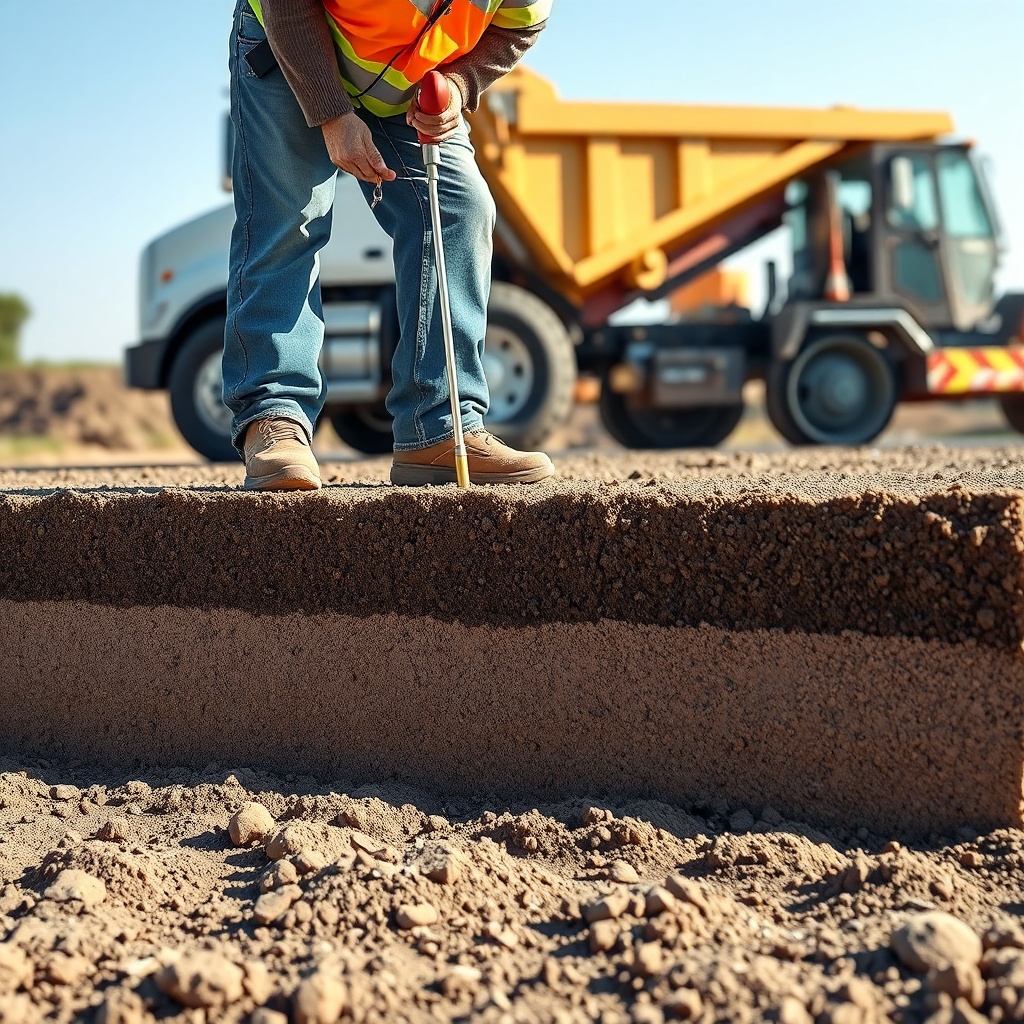
The subgrade—the native soil beneath the pavement—must be evaluated before any material is placed. For heavy vehicle traffic, the subgrade’s bearing capacity is non-negotiable. Here’s the assessment process:
- Soil Type Identification: Sandy or gravelly soils provide good drainage and strength. Clay or silt soils are problematic; they swell when wet and weaken under load.
- California Bearing Ratio (CBR) Testing: A CBR value of at least 8 is required for residential driveways with heavy traffic; commercial applications need CBR ≥ 15. For AsphaltPavePro under heavy trucks, target CBR ≥ 20.
- Moisture Content: The subgrade’s moisture should be near its optimum (typically 8–12% for most soils). Use a moisture probe to check—excess water must be drained or the soil replaced.
- Compaction Testing: After grading, compact the subgrade to 95–100% of its maximum dry density (Standard Proctor). A nuclear density gauge or sand cone test verifies this.
If the subgrade fails any of these checks, remove and replace it with engineered fill, or use geogrid reinforcement (costing £15–£25 per square metre).
What Are the Base Layer Specifications for AsphaltPavePro With Heavy Traffic?
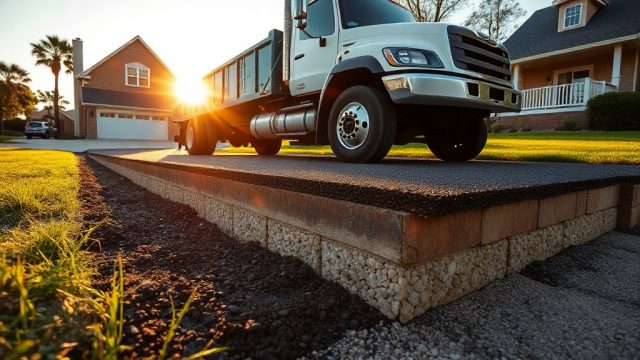
The base layer acts as the load-spreading platform. For AsphaltPavePro installations subjected to vehicles over 3.5 tonnes, use a crushed stone aggregate base (Type 1 or Type 2). Key specifications include:
| Parameter | Residential (occasional heavy traffic) | Commercial / Industrial (daily heavy traffic) |
|---|---|---|
| Base material | Crushed limestone or granite, 0–40 mm | Crushed hardstone (e.g., granite), 0–50 mm |
| Compacted thickness | 150–200 mm | 250–350 mm |
| Minimum CBR of base | 30 | 50 |
| Compaction requirement | 95% of modified Proctor | 98% of modified Proctor |
| Liquid limit (max) | 25% | 20% |
| Plasticity Index (max) | 6 | 4 |
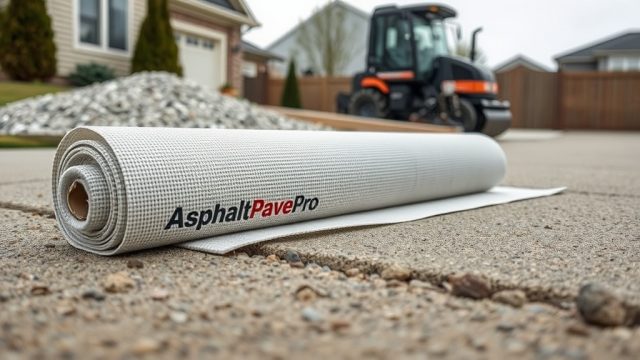
Spread the base in lifts no thicker than 150 mm. Compact each lift with a vibratory roller (11–14 tonnes static weight) to achieve the required density. The finished base should have a crossfall of 2–4% for drainage. For heavy traffic, consider a geotextile separator between subgrade and base to prevent mud pumping. This adds roughly £3–£5 per square metre to your project cost.
How Does Moisture Content Affect AsphaltPavePro Base Compaction?
Moisture is the silent destroyer of base compaction. If the base material is too dry, the aggregate particles won’t interlock properly; if too wet, pore pressure builds and prevents densification. For AsphaltPavePro under heavy traffic, follow these moisture rules:
- Optimum Moisture Content (OMC): Typically 6–10% for crushed stone. Achieve this by lightly watering the material during mixing or before spreading.
- Field Check: Use the “hand squeeze test”—a handful of base material should form a ball that just holds together but breaks apart when dropped. For precision, a moisture-content test (ASTM D2216) costs £30–£50 per sample.
- Compaction Window: Compact within 1–2% of OMC. If the base dries out, add water and remix; if too wet, let it air-dry (or use a disc harrow to aerate).
- Fines Management: Excess fines (material passing 75 microns) above 5% can cause moisture sensitivity. This is especially critical with gradation uniformity.
Compacting within the moisture window ensures interlock. A density test after rolling should show at least 95% of maximum dry density—aim for 98% for heavy-load areas. Skipping this step can lead to rutting within months. See our full guide on moisture and compaction for deeper details.
What Edge Restraint and Drainage Solutions Work Best for AsphaltPavePro?
Heavy traffic exerts lateral forces that can push asphalt edges outward. Effective edge restraint prevents cracking and unraveling. For AsphaltPavePro, use concrete kerbing or steel edging (costing £18–£30 per linear metre installed). The kerb should be at least 150 mm deep and set in concrete with a 50 mm base beneath. For drainage, install a French drain along the pavement edges—perforated pipe (100 mm diameter) in a gravel trench. This intercepts water before it infiltrates the base.
Additionally, provide a 2% crossfall across the entire pavement width. If the driveway is longer than 15 metres, incorporate a sub-surface drainage layer (permeable base material) to prevent hydrostatic pressure. In wet climates, a stable subgrade is a prerequisite—see our comparison with Sakrete Blacktop for region-specific recommendations.
How Do You Handle Weak Subgrades or Expansive Soils for AsphaltPavePro?
Weak or expansive soils require specialised treatment before AsphaltPavePro placement. Options include:
- Undercutting: Remove 300–600 mm of poor soil and replace with granular fill. Cost: £15–£25 per tonne placed.
- Chemical Stabilisation: Add 4–6% cement or 8–10% lime by weight (for clay soils). This increases strength and reduces swelling. Typical cost: £8–£12 per square metre.
- Geogrid Reinforcement: Place a geogrid (biaxial or triaxial) on the subgrade. This distributes loads and reduces base thickness by 20–30%. Cost: £10–£18 per square metre.
- Rigid Base Layer: Pour a 100 mm concrete slab over the stabilised subgrade, then lay AsphaltPavePro on top. This is the most robust solution for extreme loads but adds £40–£60 per square metre.
Test before committing—core a sample of the subgrade to a depth of 1 metre. If you find expansive clay, treat it immediately. For more on patching such conditions, read patching and compaction tips.
What Do Owners Say About AsphaltPavePro’s Performance Under Heavy Loads?
Feedback from UK contractors and homeowners consistently highlights AsphaltPavePro’s resilience when installed correctly. Here are three real-world testimonials:
David, farm operator in Yorkshire: “We resurfaced a 300-metre access road with AsphaltPavePro, 250 mm base, and CBR 22 subgrade. After two years of daily tractor and grain truck traffic, there’s not a single rut. The cost was £12,000 but worth every penny.”
Sarah, logistics company manager in Birmingham: “Our loading bay was cracking every six months with standard tarmac. Switched to AsphaltPavePro with reinforced base—zero issues in 18 months. The installation crew used proper compaction and moisture checks. Highly recommend.”
Tom, civil engineer (retired) in Devon: “I’ve seen hundreds of driveways fail from poor subgrade prep. AsphaltPavePro is excellent but it demands a solid foundation. For heavy vehicles, I insist on 350 mm base and geogrid. Lasts 20+ years.”
Common praise includes the mix’s resistance to deformation and its smooth finish. However, owners stress that skimping on base depth or compaction voids the warranty—always follow the spec.
Frequently Asked Questions
1. What’s the minimum base thickness for a driveway with a 7.5-tonne truck using AsphaltPavePro?
For occasional 7.5-tonne loads, use a Class 1 crushed stone base at 200 mm compacted thickness, compacted to 95% of modified Proctor. For frequent loads, increase to 300 mm.
2. Can I use AsphaltPavePro on a clay subgrade without stabilisation?
No. Clay subgrade (CBR ≤ 5) must be stabilised with lime or cement, or replaced. Otherwise, the AsphaltPavePro will crack and rut within one winter due to swelling.
3. How much does a properly prepared subgrade for AsphaltPavePro cost in the UK?
Total subgrade and base preparation costs range from £25 to £45 per square metre for a heavy-traffic installation. This includes excavation, fill, compaction, and testing. AsphaltPavePro surface adds another £15–£20 per square metre.
4. What happens if I compact the base too wet?
Excess moisture traps air voids, reducing density. This leads to rutting and water damage within months. If you over-wet, remove the material, air-dry it, and re-compact.
5. Do I need a geotextile fabric under the base?
Yes, if your subgrade is low-CBR (<8) or has a high water table. The fabric separates subgrade from base, preventing mud pumping and extending pavement life by 50% or more.
6. Can I repair a failing base without removing AsphaltPavePro?
Partial base failures under the asphalt can be fixed by milling the asphalt, removing the failed base, re-compacting, and resurfacing. For severe cases, full-depth reconstruction is needed—see our repair comparison for long-term solutions.