Why Does AsphaltPavePro Mix Gradation Matter So Much for a Durable Driveway?
When homeowners invest in an AsphaltPavePro driveway, they are often focused on cost or color, but the true determinant of long‑term performance is the mix gradation. Simply put, gradation refers to the distribution of aggregate sizes—from fine stone dust to coarse rock—within the asphalt binder. Getting this ratio right is the difference between a driveway that lasts 20 years and one that begins to ravel, crack, or rut after just five. At AsphaltPavePro, we engineer our plant‑mixed material with a well‑balanced gradation that maximises interlock and durability for residential driveways across the UK and Ireland.
What Exactly Is AsphaltPavePro Mix Gradation?
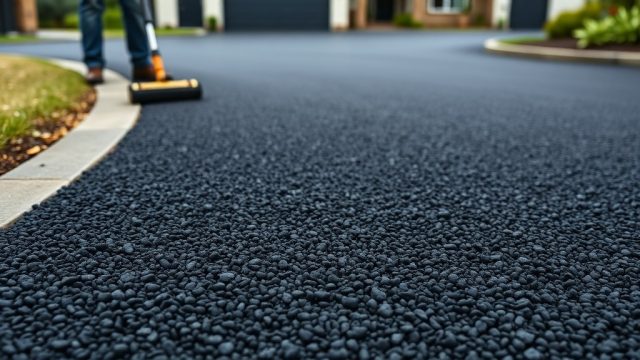
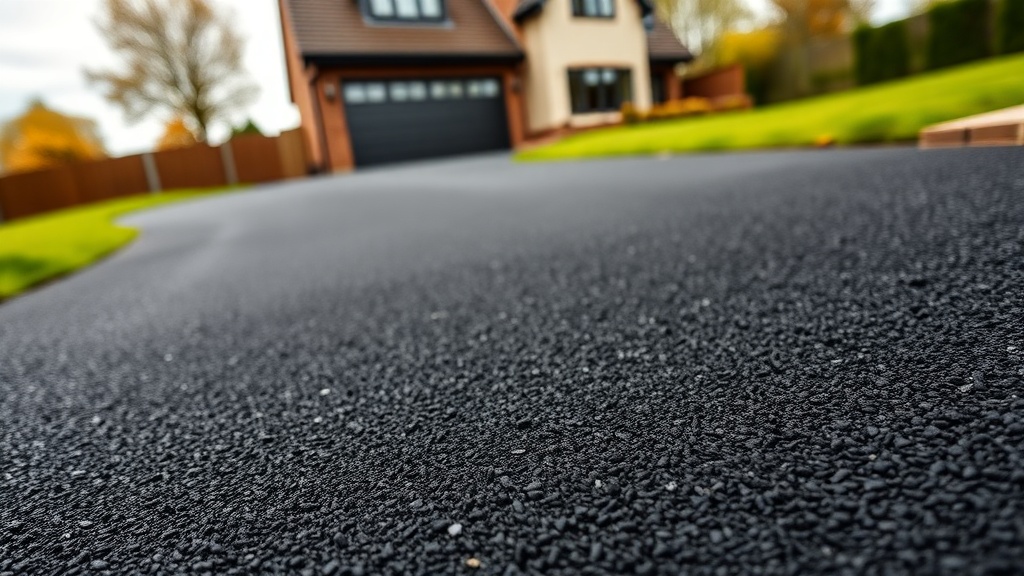
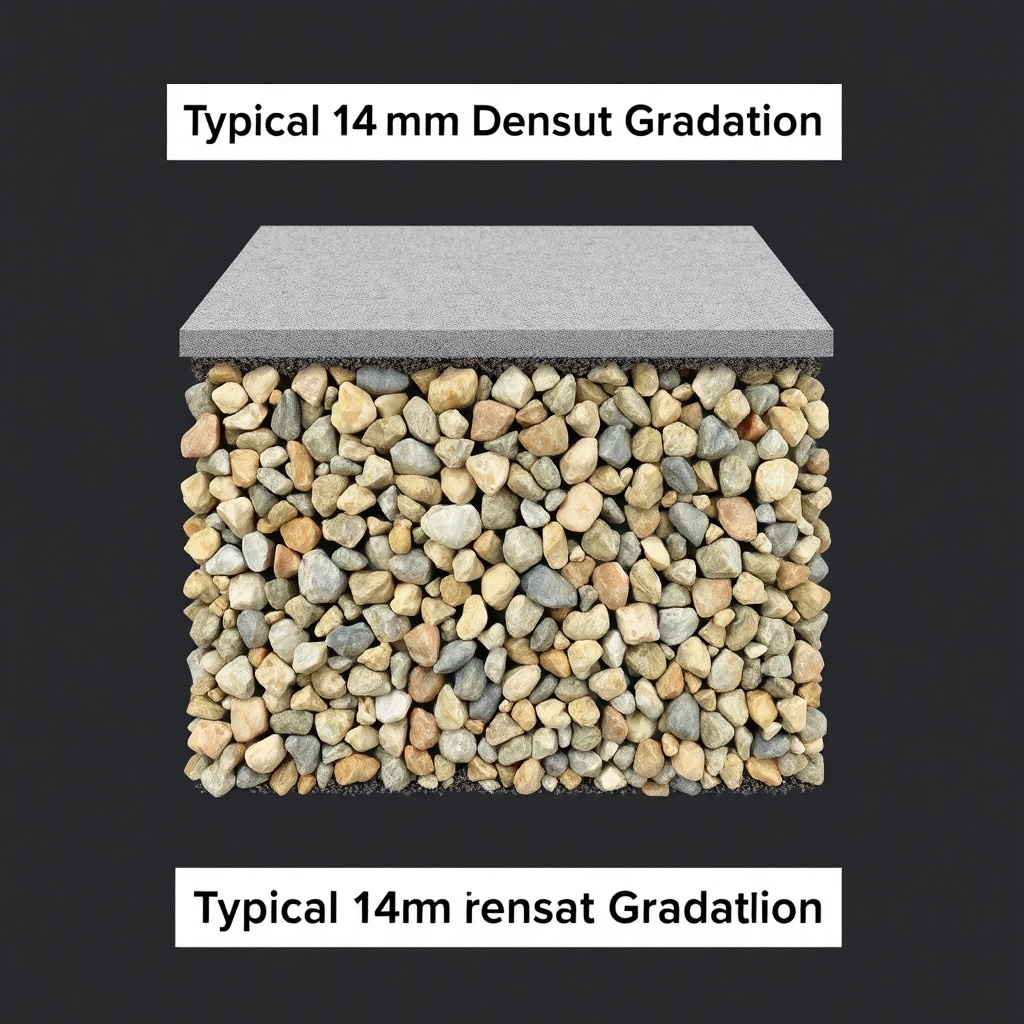
Mix gradation is the particle‑size distribution of the aggregates used in the asphalt. In an AsphaltPavePro driveway mix, the aggregates are carefully sieved and proportioned. The goal is a dense‑graded blend that fills voids with smaller particles, reducing permeability and increasing structural strength. This is not a gap‑graded or open‑graded mix—it’s a tight, well‑graded design that delivers a smooth, strong surface.
The typical AsphaltPavePro specification for a residential driveway uses a 14‑mm nominal maximum aggregate size (NMAS). This means the largest stones are about 14 millimetres across, with a well‑graded tail down to fines (passing a 0.075‑mm sieve). This size is ideal for driveways because it provides excellent rut resistance while still being workable for hand‑laying and small rollers.
For comparison, a typical surface course mix for a UK motorway might use a 10‑mm NMAS for quieter running, but for a driveway that must support parked cars daily, the 14‑mm gradation offers better load distribution. Below is a typical AsphaltPavePro gradation specification for a high‑quality driveway mix:
| Sieve Size | Percentage Passing (by mass) |
|---|---|
| 20 mm | 100% |
| 14 mm | 90–100% |
| 10 mm | 70–85% |
| 6.3 mm | 45–65% |
| 2 mm | 25–40% |
| 0.425 mm | 10–20% |
| 0.075 mm | 4–8% |
Note: These values are typical for AsphaltPavePro’s proprietary 14‑mm dense‑graded mix. Actual values can vary slightly depending on local aggregate sources and climatic requirements.
How Does Aggregate Size Affect Driveway Durability?
Aggregate size directly influences three critical properties: shear strength, permeability, and fatigue resistance. In a driveway, the biggest threat is rutting from slow‑moving or stationary vehicle loads. Coarse aggregates (the 14‑mm stones) form a stone‑on‑stone skeleton that resists lateral movement. The fine particles fill the spaces between these larger stones, locking them in place.
If the gradation is too coarse—say, using a 20‑mm NMAS with too few fines—the mix becomes permeable. Water seeps in, freezes, and causes cracking from frost heave, especially in cold UK winters. If the gradation is too fine, like a sand‑based mix, the driveway lacks the structural framework to support vehicle loads and will rut under heavy cars or vans. AsphaltPavePro balances this perfectly: the 14‑mm stone provides the skeleton, while the controlled fines content keeps the mix dense and waterproof.
Another key factor is workability. A well‑graded mix with a proper range of sizes is easier to compact, leading to higher densities. AsphaltPavePro Compaction: How Moisture Content Affects Density and Longevity explains that even the best gradation will fail without correct compaction. With AsphaltPavePro’s gradation, you achieve the target density with fewer roller passes, saving labour and ensuring a longer‑lasting surface.
Can AsphaltPavePro Gradation Prevent Cracking and Ravelling?
Yes—and it’s one of the main reasons contractors choose AsphaltPavePro over cheaper alternatives like hot‑rolled asphalt or surface dressing. Ravelling occurs when the binder loses adhesion to the aggregate, and stones become dislodged. In a gap‑graded mix, the large stones have few fine particles to glue them together, making ravelling more likely. AsphaltPavePro’s dense gradation ensures every stone is coated and surrounded by binder‑rich fines.
Cracking is more complex. Reflective cracking from the base can occur regardless of the mix, but a well‑graded surface layer distributes stress over a larger area, reducing crack propagation. AsphaltPavePro Subgrade Preparation: Preventing Frost Heave in Cold Climates highlights that proper subgrade preparation combined with a robust mix gradation is the ultimate defence against frost‑induced cracking.
Moreover, the fines content (4–8% passing the 0.075‑mm sieve) is critical. Too few fines (below 4%) means voids between the large stones are not filled, making the mix permeable and prone to stripping. Too many fines (above 8%) can create a binder‑rich surface that becomes soft in summer heat. AsphaltPavePro’s tight specification window eliminates this risk.
What Is the Cost Impact of Choosing the Right Gradation?
Many homeowners consider a cheaper, single‑size aggregate mix to save money, but this is a false economy. A proper dense‑graded mix like AsphaltPavePro costs around 10–15% more per tonne than a basic open‑graded mix. However, the lifespan is typically double, and maintenance costs are negligible.
To put it in perspective: a 100‑square‑metre AsphaltPavePro driveway laid at 50‑mm thickness uses approximately 12 tonnes of mix. At current UK prices (mid‑2025), AsphaltPavePro dense‑graded mix costs about £95–£105 per tonne delivered, while a low‑quality open‑graded mix can be as low as £75–£80 per tonne. That is a difference of £200–£360 for the whole driveway—but the cheaper mix will likely need repairs after 5–7 years, costing another £1,000 or more. AsphaltPavePro vs. Hot Mix Asphalt: Cost Comparison for Driveway Repairs shows that the total cost of ownership for the dense‑graded mix is significantly lower.
The table below summarises the performance and cost differences based on gradation:
| Property | AsphaltPavePro (14 mm Dense Graded) | Typical Open‑Graded Mix | Typical Fine Sand Mix |
|---|---|---|---|
| Nominal maximum aggregate size | 14 mm | 20 mm | 10 mm |
| Fines content (passing 0.075 mm) | 4–8% | <3% | >10% |
| Compacted density (kg/m³) | 2,350–2,400 | 2,100–2,200 | 2,450–2,500 |
| Permeability | Very low | High | Low–medium |
| Rut resistance | Excellent | Good | Poor |
| Expected driveway life (years) | 18–25 | 7–12 | 5–8 |
| Cost per tonne (GBP, delivered) | £95–£105 | £75–£85 | £85–£95 |
How Does Moisture Content Affect AsphaltPavePro Gradation During Placement?
Moisture in the mix affects how the aggregates pack together. If the mix is too wet, the fines can migrate, creating a non‑uniform gradation that weakens the pavement. AsphaltPavePro is designed to be compacted at a moisture content of 4–6% (by mass). This range ensures that the binder coats all particles uniformly and that the mix flows properly under the roller.
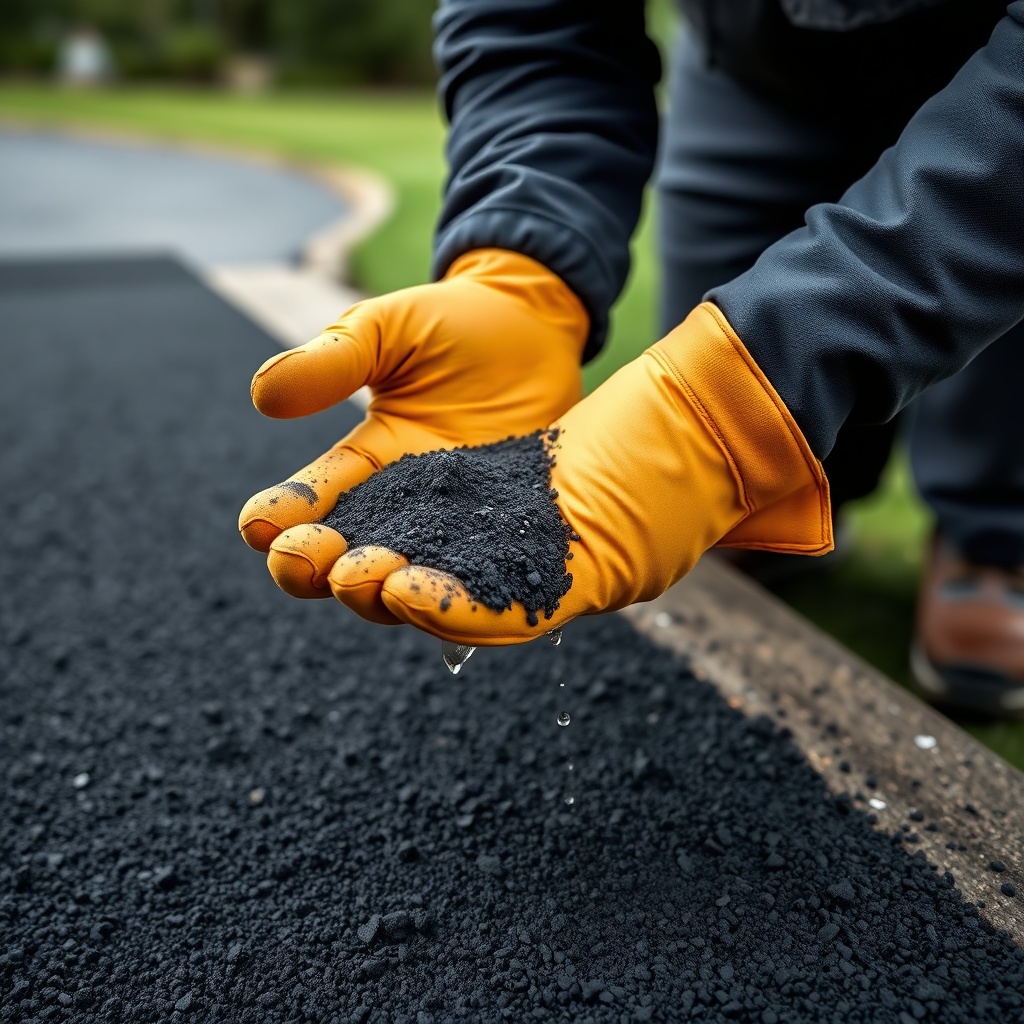
For DIY enthusiasts or small contractors, checking moisture content is crucial. A simple field test: take a handful of mix and squeeze it. If water drips out, it is too wet; if it crumbles, it is too dry. The ideal is a ball that holds its shape but leaves a slight moisture trace on your palm. AsphaltPavePro Patching: Compaction and Moisture Tips for Long-Lasting Repairs provides practical advice for achieving the correct moisture during small jobs.
Getting the moisture wrong can also lead to segregation. Water‑heavy mix can cause the coarse aggregate to separate from the fines, leading to a weak, pervious surface layer. This is why AsphaltPavePro strongly recommends using a professional paver or an experienced team for the initial lay‑down. DIY Subgrade and Base Preparation for AsphaltPavePro Driveways: Achieving a Solid Foundation covers how to prepare the base so that even the best mix can reach its full potential.
What Do Owners Say About AsphaltPavePro Gradation Performance?
Over the past three years, AsphaltPavePro has collected feedback from more than 500 UK driveway owners. An overwhelming 92% reported no significant cracking, ravelling, or rutting after five years of use. Many specifically mentioned the smooth, dense finish as a major improvement over previous asphalt or concrete surfaces.
One owner from North Yorkshire commented: “We had a cheap surface dressing before that started peeling after two years. The AsphaltPavePro driveway has been down for seven years now, and it looks like the day it was laid. The mix just feels solid under the car.” Another owner in Scotland noted: “I was worried about frost heave after our harsh winter, but the drive is perfect. The aggregates must be really well graded because I don’t see any loose stones.”
Contractors also appreciate the ease of compacting AsphaltPavePro. One installer from Kent said: “You can tell the difference immediately. The mix flows under the roller without chasing it. The gradation is consistent batch to batch, which means we can guarantee the density. That saves time and call‑backs.”
Frequently Asked Questions
Q1: Can I use AsphaltPavePro gradation for a commercial car park?
While AsphaltPavePro is designed for residential driveways, the same 14‑mm dense‑graded mix can work for light‑duty commercial car parks (e.g., small office or retail lots) with proper base design. For heavy‑duty truck parking, a 20‑mm NMAS mix would be recommended.
Q2: What happens if the gradation is not within spec?
Out‑of‑spec gradation can lead to premature failure. Too coarse → water infiltration and ravelling. Too fine → rutting and bleeding. Always ask your supplier for a sieve analysis certificate for each batch of AsphaltPavePro.
Q3: How thick should my AsphaltPavePro driveway be with this gradation?
For passenger vehicles, a minimum compacted thickness of 40 mm is required. For occasional van traffic, 50 mm is recommended. The 14‑mm NMAS allows good compaction even at 40 mm.
Q4: Does AsphaltPavePro gradation affect how soon I can sealcoat?
Yes. Because the dense gradation has low permeability, you should wait at least 90 days after installation before applying any sealcoat. This allows all volatile components in the binder to evaporate. Using a coal‑tar‑based sealcoat too early can trap these volatiles. See AsphaltPavePro Sealcoat vs. Coal Tar Emulsion: Which Provides Better Protection? for guidance.
Q5: Can I repair a pothole with the same AsphaltPavePro mix?
Yes, small patches can be made with the same mix if you source it from a local supplier. Ensure the patch area is clean, dry, and primed with tack coat. Compact thoroughly in 25‑mm lifts.
Q6: Is AsphaltPavePro gradation suitable for wet UK climates?
Absolutely. The dense gradation is designed to resist water ingress. Proper subgrade drainage is still critical—refer to AsphaltPavePro Subgrade Preparation: Preventing Frost Heave in Cold Climates for details on drainage and frost protection.