What Is QPR 50-lb Asphalt Patch and Why Use It for Uneven Surfaces?
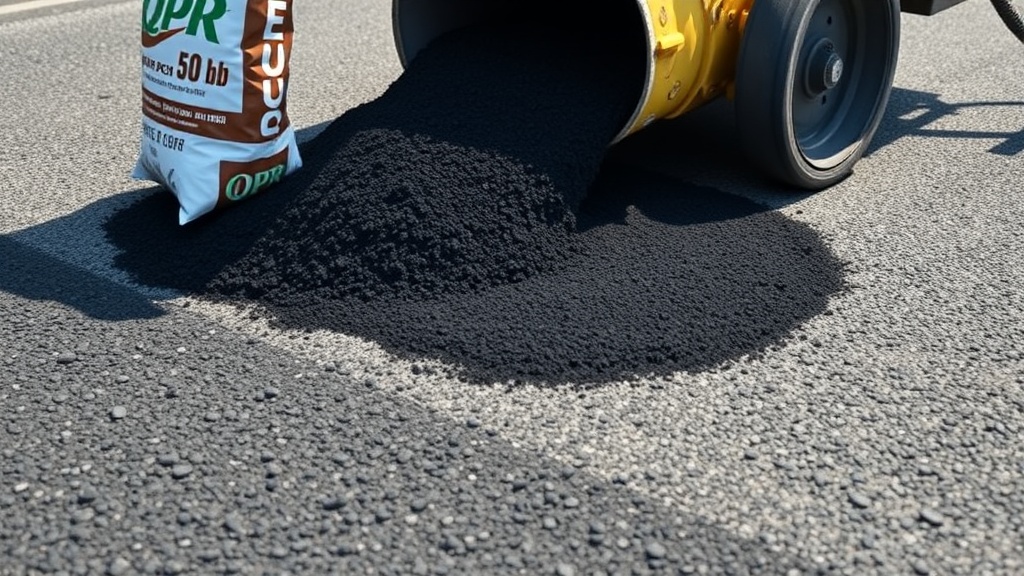
QPR 50-lb Asphalt Patch is a premium, ready-to-use cold mix designed for permanent repairs in potholes, utility cuts, and uneven pavement areas. Unlike traditional hot mix, QPR uses a proprietary bonding agent that activates through compaction and vehicle traffic, forming a durable, flexible patch that resists cracking and water intrusion. For uneven surfaces, the material’s ability to be feathered out to a thin edge without crumbling makes it ideal for restoring a smooth, level finish.
This product is commonly sold in the UK at builders’ merchants or direct from suppliers, typically priced between £18 and £25 per 50-lb bag (approximately 23 kg), depending on delivery fees. Property owners, facility managers, and contractors rely on QPR for its no-mix, no-heat convenience—simply pour, spread, and compact.
In this guide, we cover step-by-step methods for applying QPR 50-lb Asphalt Patch on uneven driveways, car parks, and footpaths. You’ll also learn how to estimate material needs, avoid common mistakes, and extend repair life through proper sealing.
How Does QPR 50-lb Asphalt Patch Work on Crowns and Depressions?
Uneven surfaces often present dips (depressions) or raised edges (crowns) that require careful material application. QPR 50-lb Asphalt Patch is formulated with a pliable binder that allows the patch to conform to irregular contours during compaction. When applied in multiple lifts (layers), the material compresses to match the adjacent pavement grade.
For depressions deeper than 50 mm, apply QPR in lifts no thicker than 25 mm to 50 mm per layer. Compact each lift with a vibratory plate compactor or hand tamper before adding the next. This prevents “pillowing”—where the patch sits higher than the surrounding surface—and ensures a seamless transition.
For crowns or raised edges, feather the patch outward at a 4:1 slope (100 mm wide for every 25 mm rise) to avoid creating a new trip hazard. QPR’s fine aggregate matrix (passing through a 9.5 mm sieve) supports gradual tapering without losing edge integrity.
What Is the Step-by-Step Application Process for Uneven Surfaces?
Step 1: Clean and Dry the Area
Remove loose debris, vegetation, and standing water. For best results, the surface should be dry—if moisture is present, consult QPR 50-lb Asphalt Patch: Can You Apply It in Wet Conditions? for guidance on borderline cases. Use a blower or stiff broom to eliminate fine dust.
Step 2: Prime the Surface (Optional but Recommended)
Apply a tack coat or QPR Surface Primer if the repair area has exposed aggregate or is extremely dry. This aids adhesion, especially on crowned edges where the patch must bond to a sloped surface. Skip this step only if the area is damp or below 10°C.
Step 3: Place and Shape the Patch
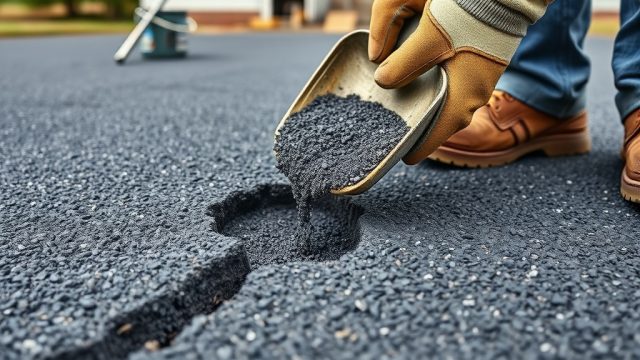
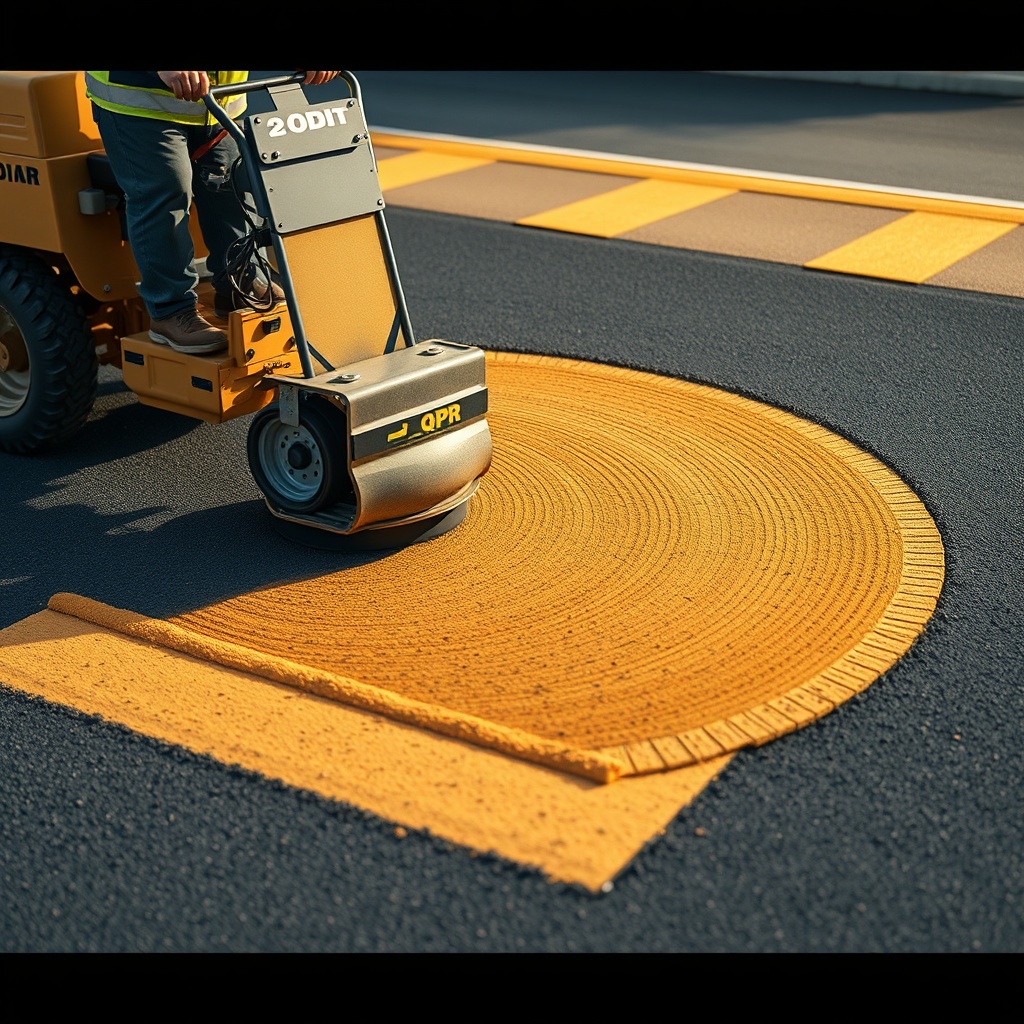
Open the bag and pour the material directly into the depression or over the uneven area. For uneven surfaces, start at the lowest point and work upward. Use a rake or lute to spread the patch to a thickness 25% higher than the desired final thickness (QPR compresses about 25% under traffic). Feather the edges outward using a trowel or a 2×4 board for a smooth shave.
Step 4: Compact in Lifts
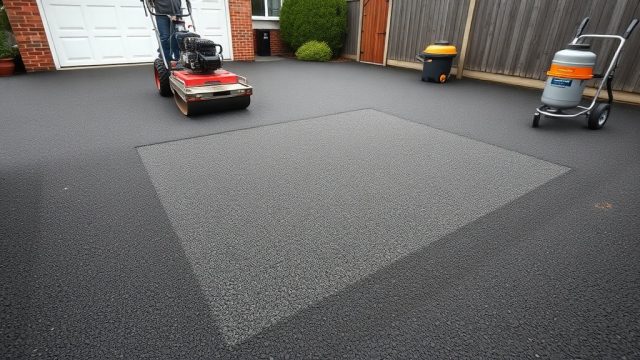
Compress each layer immediately with a plate compactor (minim 90 kg/m²) or a heavy hand tamper. For thin feather edges, run the compactor off the edge of the patch to blend it into the existing surface. Check with a straightedge; if the patch is more than 3 mm above the adjacent pavement, shave off excess or add a thin lift and recompact.
Step 5: Allow Curing and Traffic
QPR cures through traffic compression. For pedestrian areas, wait 2–4 hours; for vehicle traffic, 24–48 hours. In cold weather (below 5°C), extend waiting time. Sealing should be delayed for at least 30 days—see QPR 50-lb Asphalt Patch: Sealing After Patching for Better Durability.
What Are the Material Requirements for Common Uneven Repair Scenarios?
The following table estimates the number of QPR 50-lb bags needed for typical uneven surface repairs. Average cost per bag: £20 (range £18–£25). Coverage assumes 25 mm compacted depth per lift.
| Repair Scenario | Surface Area (m²) | Compacted Depth (mm) | Bags Required (approx) | Total Material Cost (approx) |
|---|---|---|---|---|
| Single pothole, 0.3 m x 0.3 m (uneven edge) | 0.09 | 50 | 1–2 | £20–£40 |
| Depression, 1 x 1 m (moderate crown) | 1.0 | 40 | 4–5 | £80–£100 |
| Driveway edge dip (2 x 0.5 m) | 1.0 | 60 | 6–8 | £120–£160 |
| Car park uneven section (3 x 2 m) | 6.0 | 50 | 24–30 | £480–£600 |
Always add 10% extra for waste, feathering, and uneven contours. For thickness above 75 mm, consider using a base layer of compacted aggregate before the QPR lift.
Can QPR 50-lb Asphalt Patch Be Applied on Sloped or Cambered Surfaces?
Yes, but technique matters. On slopes (e.g., driveway inclines or cambered roads), the patch material can slump if placed too thick or without adequate compaction. QPR’s sticky binder—when worked at temperatures between 10°C and 35°C—helps hold the patch in place during curing. However, if you apply on a steep slope exceeding 8% grade, use a tack coat and compact with a heavy plate compactor working from the low side upward.
For extreme slopes, consider a two-application approach: first row of lifts (horizontal strips) across the slope, then recheck after 24 hours before adding the second strip. For advice on cold-weather sloping repairs, read AsphaltPavePro vs. QPR 50-lb Asphalt Patch: Cold Weather Application Tips.
What Are the Most Common Mistakes When Patching Uneven Surfaces?
- Applying patch too thin: If QPR is less than 20 mm compacted, it may crack under load. For thin feather edges (e.g., at the top of a crown), the patch should be built up gradually. If you suspect the patch is too thin, see QPR Patch Applied Too Thin: Root Cause and Solution.
- Failing to feather edges: Uneven surfaces require a gradual slope (minimum 4:1) to avoid creating a new bump. Skipping this step leaves raised edges that trap water and accelerate deterioration.
- Compacting only the centre: On crowned areas, compact the entire patch, including the tapered edges. Voids under the feathered edge allow water to infiltrate.
- Mixing with hot mix or other cold patching: QPR is polymer-modified; mixing with other types can compromise adhesion and curing. Use 100% QPR.
- Applying in rain or saturated conditions: QPR can be used in damp conditions, but standing water prevents bonding. For borderline weather, review QPR 50-lb Asphalt Patch: Can You Apply It in Wet Conditions? for tips.
What Owners Say About QPR 50-lb Asphalt Patch on Uneven Surfaces
Property managers and DIY homeowners consistently praise QPR for its performance on uneven asphalt. “I filled a 2-metre-long depression by my garage door,” writes Brian T., a homeowner from Surrey. “The patch feathered out beautifully, and after a month of driving on it, you can’t tell where the repair starts. Took about four bags at £18 each.”
Facility manager Claire M. in Manchester adds: “We used QPR on a car park with multiple water-damaged dips. The key was compacting in thin lifts. Two men did a 20-bag job in three hours. Cost about £400 in material, which beat quotes for mill-and-fill by a mile.”
Critiques mostly centre on pricing: “At £25 per bag locally, it’s not cheap for large areas,” says Phil D. from Birmingham. “But for uneven patches where hot mix trucks can’t reach, it’s the best cold option. I’ll use it again.” Many owners also recommend sealing after 30–60 days—see Sealcoating After QPR Patch Repair: Extending the Life of Your Fix for long-term protection.
Frequently Asked Questions
Can QPR 50-lb Asphalt Patch be used on gravel or dirt bases before asphalt?
No—QPR is intended for patching existing asphalt surfaces, not as a base layer over loose soil. For gravel or dirt, first compact a 50–100 mm base of crushed stone (Type 1 MOT in the UK), then apply QPR in lifts of 25–50 mm.
How long does a QPR patch last on an uneven driveway?
With proper application (feathering, compaction, and sealing), a QPR patch on an uneven driveway typically lasts 2–5 years in moderate traffic. Sealing after 30 days can extend life to 6–8 years. Driveway edges or slopes may see earlier cracking if compaction was inadequate.
Do I need to heat QPR before applying in cold weather?
No—QPR is a cold patch and does not require heating. However, for best performance, store bags indoors at 15°C–25°C for 24 hours before use. Application below 5°C is possible but compaction must be extra thorough; see AsphaltPavePro vs. QPR 50-lb Asphalt Patch: Cold Weather Application Tips.
What if I apply too much QPR and the patch sits high?
If the patch is still uncured (within 24 hours), shave off excess with a flat shovel or rake and recompact. If cured, grind down with a diamond wheel or cut with a saw. Prevent this by checking thickness with a straightedge after each lift.
Can I drive on the patch immediately after compacting?
Light pedestrian traffic is fine after 2–4 hours. For vehicles, wait 24–48 hours (longer if ambient temperature is below 10°C). Driving on it too soon dislodges the feathered edge on uneven surfaces.
Is QPR 50-lb Asphalt Patch available in the UK?
Yes—sold at builders’ merchants (Jewson, Travis Perkins, Wickes) and online through Amazon UK, asphalt suppliers, and direct from QPR’s UK distributor. Prices range from £18 to £25 per bag. Delivery for larger orders can be free over £100.