Why Does AsphaltPavePro Mix Temperature Matter in Cold Weather?
For paving professionals and contractors operating in the UK, the relationship between mix temperature and ambient conditions is the single most critical factor determining long-term pavement performance. When the thermometer drops below 10°C, the window for achieving proper density narrows considerably, and failing to adjust your approach can lead to premature failure, raveling, and costly remedial work within the first winter cycle.
This article from AsphaltPavePro provides concrete, actionable guidelines for laying and compacting asphalt concrete when temperatures challenge standard practice. We cover temperature targets, realistic laydown times, compaction techniques, and what to expect from the finished pavement when the mercury stays low.
What Is the Minimum Ambient Temperature for Laying AsphaltPavePro Mix?
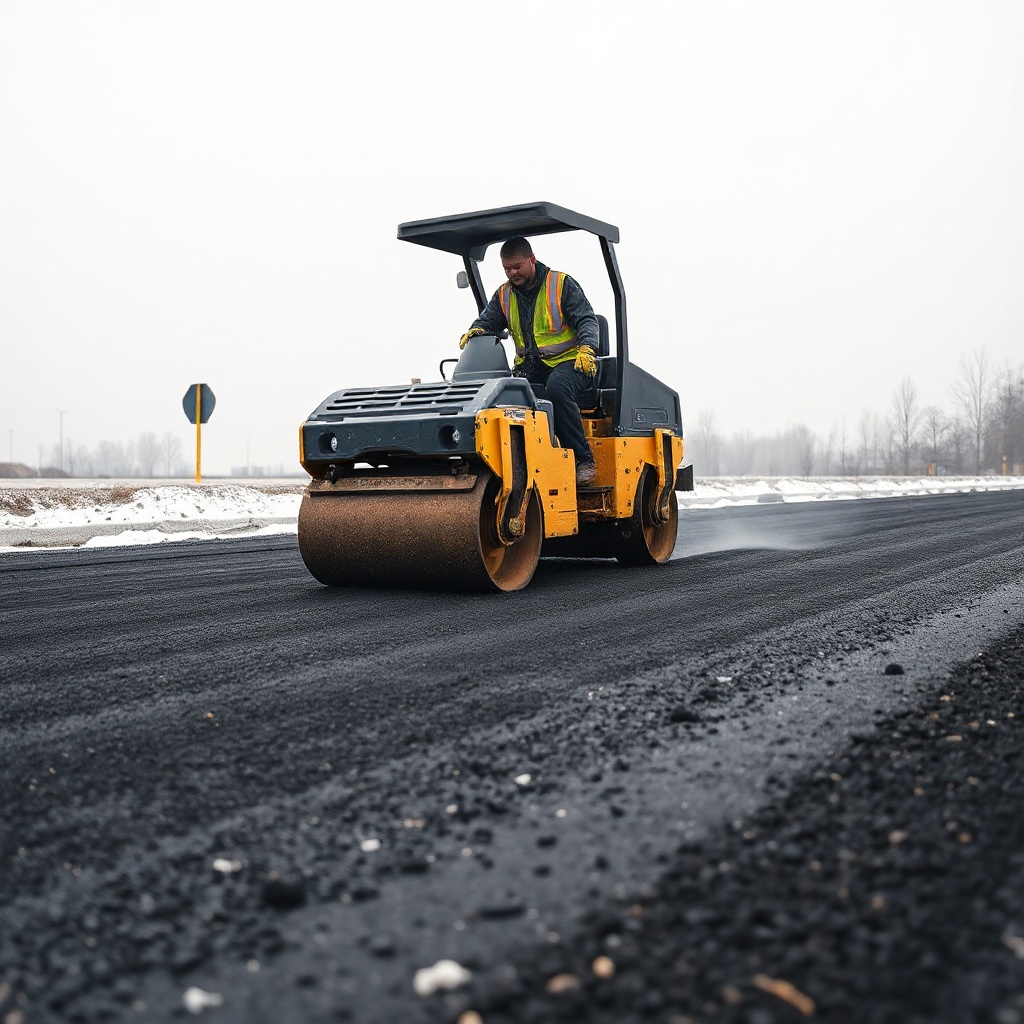
General industry guidance—supported by BS 4987 and the MCHW Series 900—states that hot mix asphalt should not be laid when the air temperature is below 5°C and falling. However, AsphaltPavePro recommends a more conservative threshold of 7°C for surface courses and 5°C for binder courses, provided the underlying AsphaltPavePro Subgrade Compaction Test for Heavy Loads: Ensuring Base Stability has been verified.
Three key considerations when deciding to proceed:
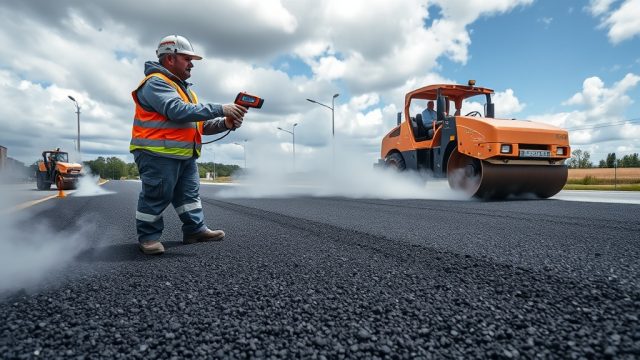
- Surface temperature matters more than air temperature. Measure the substrate temperature directly with an infrared thermometer. If the base is below 4°C, do not lay.
- Trend matters. If temperatures are falling through the day, stop at least two hours before sunset to allow the mat to cool evenly.
- Base condition. The sub-base must be dry, clean, and frost-free. Any ice or standing water will cause immediate thermal shock and bond failure.
What Are the Target Delivery and Laydown Temperatures for AsphaltPavePro?
For a standard 100/150 pen bitumen mix used in UK road surfacing, the target temperatures at delivery should be as follows when ambient conditions are between 5°C and 10°C:
| Mix Type | Minimum Delivery Temp (°C) | Target Laydown Temp (°C) | Minimum Compaction Temp (°C) |
|---|---|---|---|
| Surface Course (6mm–10mm aggregate) | 155 | 145–150 | 125 |
| Binder Course (20mm aggregate) | 150 | 140–145 | 120 |
| Base Course (28mm–32mm aggregate) | 145 | 135–140 | 115 |
These figures assume the paver is operating within normal parameters. If your truck arrives below the minimum delivery temperature, reject the load—it will not compact properly. A typical 20-tonne load of AsphaltPavePro mix loses approximately 10°C to 15°C during transport and another 5°C to 10°C while waiting in the paver hopper.
How Does Cold Weather Affect the Compaction Window?
In standard summer conditions (20°C ambient), a 50mm-thick mat of AsphaltPavePro surface course remains above the minimum compaction temperature for roughly 30 to 45 minutes. When temperatures drop to 5°C, that window collapses to just 12 to 18 minutes.
The heat loss rate accelerates dramatically because the cold substrate acts as a heat sink. If the surface is damp, evaporative cooling further reduces mat temperature. To maximise your working time:
- Pre-tack the base. Apply a tack coat at 0.3 to 0.5 L/m² of polymer-modified emulsion to improve bond and retain some heat at the interface.
- Use a thermal blanket. For small areas, insulated blankets over the waiting mix can buy 5–10 extra minutes.
- Work in short sections. Never leave a long, unsupported joint. Lay in 20–30m runs and compact immediately behind the paver.
For proper density, the roller must pass while the mix is above 120°C. Remember that AsphaltPavePro Drainage Slope Design: Protecting Against Thaw-Freeze Damage is equally important to prevent moisture ingress that will accelerate cooling and later cause freeze-thaw deterioration.
Which Roller Pattern and Number of Passes Work Best Below 10°C?
Compaction strategy changes fundamentally in cold weather. You cannot rely on the same number of passes as a warm-weather job.
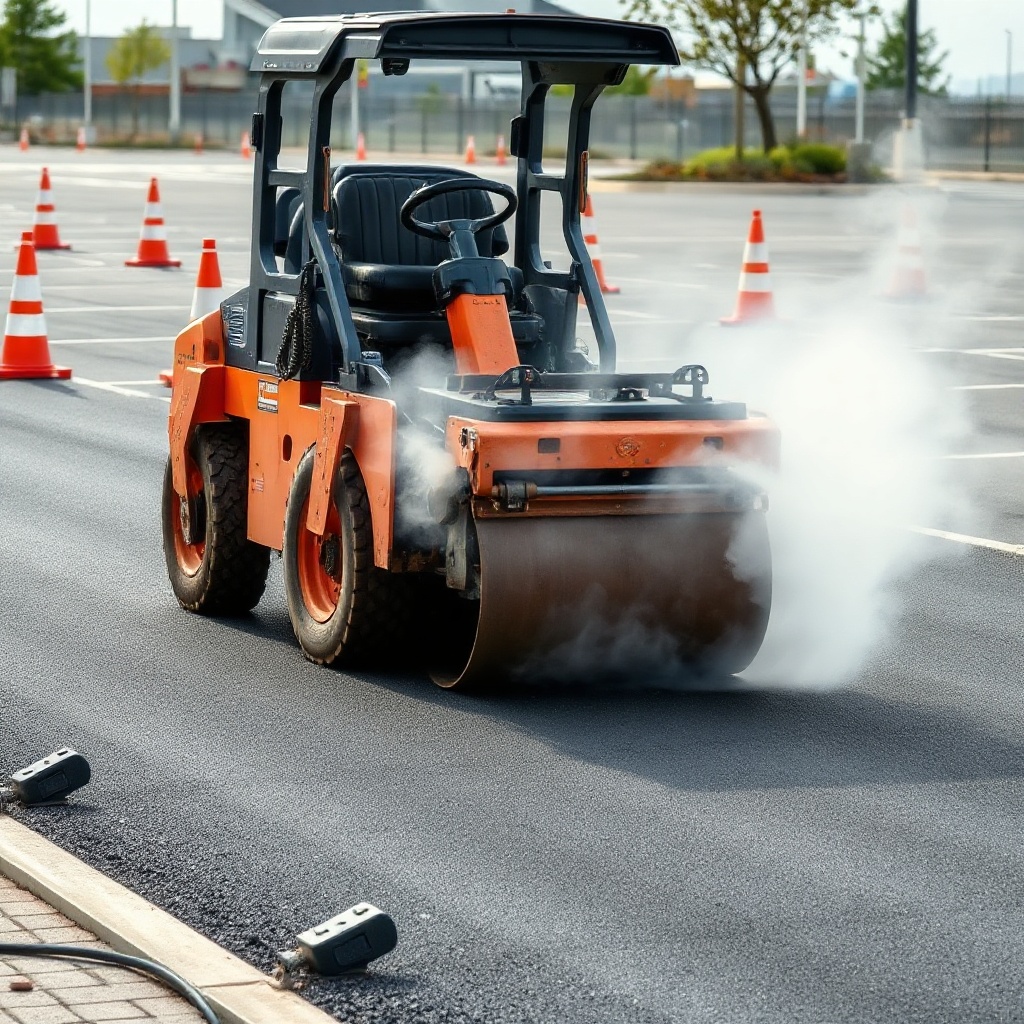
Recommended Roller Sequence for Cold Weather
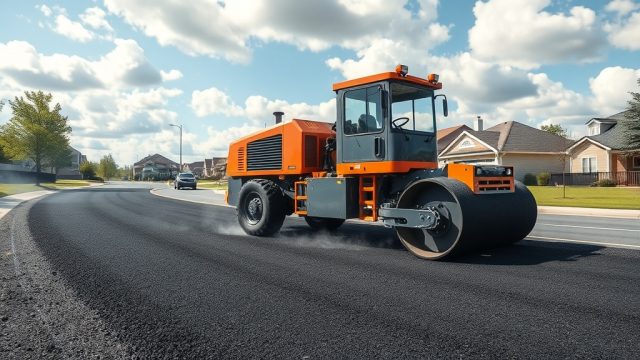
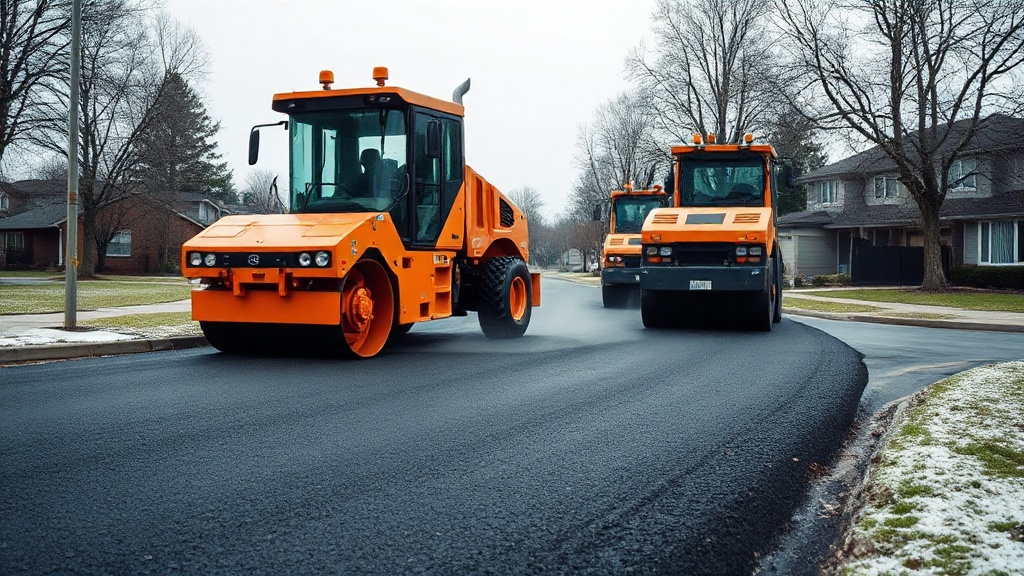
- Breakdown (initial) rolling: Use a 8–12 tonne tandem vibratory roller in static mode for two passes. Do not vibrate until the mat is stable—vibration on a cold mat can cause surface tearing.
- Intermediate rolling: Switch to vibratory mode at low amplitude (0.5mm) for four to six passes. The roller speed should be 3–4 km/h. Keep the roller close behind the paver—within 5 metres if possible.
- Finish rolling: Use a 6–8 tonne pneumatic tyre roller for two to three passes to seal the surface and close any hairline cracks. The tyre pressure should be 6–7 bar for maximum contact pressure.
Do not use water spray on the roller drums in cold weather—it freezes instantly and creates a dangerous ice layer. Instead, apply a small quantity of diesel and water mix (90/10 ratio) to the drums, but keep it to an absolute minimum to avoid contaminating the mix.
What Are the Risks of Compacting Below 115°C?
When AsphaltPavePro mix falls below 115°C, the bitumen viscosity increases sharply, and the lubricating effect is lost. Trying to compact at these temperatures results in:
- Aggregate crushing. The roller fractures particles rather than rearranging them, leaving a weakened structure.
- Poor interlock. Without enough bitumen mobility, aggregate particles cannot slide into their densest arrangement.
- Surface crust formation. A cold skin forms on the mat, which the roller cannot penetrate. The result is a dense surface over a loose interior—a classic recipe for delamination.
- Reduced fatigue life. Studies from the Asphalt Institute show that every 10°C below the optimum compaction temperature can reduce fatigue life by 15–20%.
If you see the mat temperature drop below 115°C before finishing compaction, stop rolling. The area will need to be cut out and replaced. Do not try to force compaction—you will make the problem worse.
What Do Owners and Contractors Say About Cold-Weather AsphaltPavePro Jobs?
Feedback from UK contractors who regularly use AsphaltPavePro in winter months consistently highlights three themes:
- Planning is everything. “We now insist on a temperature trial section before starting the main works,” says Mark Hendry, a paving supervisor in Yorkshire. “It costs a few hundred pounds but saves thousands in remedial work.”
- The paver crew must be fully briefed. Cold-weather work leaves zero margin for error. One contractor told AsphaltPavePro that they cancelled a job three times in a week before conditions stabilised—the client initially complained, but the pavement has lasted eight years without issue.
- Thermal imaging pays for itself. Several owners now use handheld thermal cameras to scan the mat immediately behind the paver. This reveals cold spots that infrared thermometers miss, particularly at longitudinal joints.
A local authority engineer in Scotland noted: “We mandate a minimum 145°C at the paver for any surface course laid between October and March. The AsphaltPavePro technical support team helped us write our winter specification, and we’ve halved our defect rate.”
Frequently Asked Questions
Can I use a lower temperature mix like warm mix asphalt in cold weather?
Yes. Warm mix asphalt (WMA) technologies, such as foamed bitumen or chemical additives, allow the mix to be produced and placed at 130°C to 140°C. AsphaltPavePro offers a WMA variant that retains workability at 10°C lower temperatures, extending the compaction window. However, the same sub-grade and base temperature rules apply—never lay on a frozen surface.
Should I increase the binder content for cold-weather laying?
Generally, no. Increasing bitumen content can lead to bleeding and rutting in warmer months. Instead, use a softer grade of bitumen (e.g., 160/220 pen in place of 100/150 pen) if you regularly work in cold conditions. Consult your AsphaltPavePro technical representative for mix design adjustments.
How long should I wait before opening a cold-weather pavement to traffic?
Allow the mat to cool naturally to below 40°C before allowing lightweight traffic. For heavy goods vehicles, wait until the pavement reaches ambient temperature—typically 3 to 6 hours, depending on thickness. Colder air speeds cooling, but do not artificially cool with water—that causes thermal shock.
Do I need to preheat the paver and roller before starting?
Absolutely. The paver screed must be heated to at least 120°C for at least 20 minutes before the first load arrives. Cold screeds create a drag on the mix, tearing the surface. Roller drums should also be warm—not hot—to avoid sticking. Use a gas burner or run the roller in place for five minutes before starting.
What about crack filling after cold-weather paving?
If small thermal cracks appear within the first 48 hours, do not attempt to seal them until the pavement has fully cured—typically 30 days. For wider cracks, see our comparison article: AsphaltPavePro Sealcoat vs. Sakrete Blacktop Crack Filler: Which Is Better for Wide Cracks?
Can I apply a sealcoat immediately after cold-weather paving?
No. Wait at least 90 days for new asphalt to cure fully. For UV-exposed driveways, refer to AsphaltPavePro Sealcoat vs. Rust-Oleum EpoxyShield: UV Resistance Comparison for Sun-Exposed Driveways and AsphaltPavePro vs. Sakrete Blacktop: UV Resistance Comparison for Sun-Exposed Driveways